
 Back
Back





IN THE HIGH COURT OF KARNATAKA AT BENGALURU
M. NAGAPRASANNA, J.
Chethan C.G. S/o Gangadhar – Appellant
Versus
The State of Karnataka – Respondent
Criminal Petition No. 16860 of 2025
Decided On : 09-01-2026
| Table of Content |
|---|
| 1. petitioner challenges legal proceedings initiated under ipc and sc/st act. (Para 1 , 2) |
| 2. allegations stem from consensual relationship and breach of promise. (Para 3 , 4 , 5) |
| 3. court analyzes consent and false promise in conjunction with various precedents. (Para 6 , 8) |
| 4. continuation of prosecution viewed as abuse of legal process due to consensual nature. (Para 9 , 10) |
ORDER :
1. The petitioner is before this Court calling in question the proceedings in Spl.C.No.616/2021 registered for offences punishable under Sections 376, 328, 323, 417 of Indian Penal Code, 1860 and Sections 3(1)(r), 3(1)(s), 3(1)(w)(i)(ii), 3(2)(v) of the Scheduled Castes and Scheduled Tribes (Prevention of Atrocities) Act, 1989.
2. Heard Sri.Mukunda P, learned counsel appearing for the petitioner, Sri.Vinay Mahadevaiah, learned HCGP appearing for respondent No.1, Sri.K.N.Pyrejan, learned counsel appearing for respondent No.2.
3. The second respondent is the complainant, the petitioner is the accused. A complaint comes to be registered by the complainant on 16.02.2021 alleging that the petitioner and the complainant were in a relationship for five years and the petitioner has had physical relationship in the year 2020 with the complainant on the pretext of marriage or on the promise of marriage. The breach of promise of marriage is said to have resulted in the registration of the crime. The police conduct investigation and file a charge sheet against the petitioner for the aforesaid offences. The filing of the charge sheet is what has driven the petitioner to this Court in the subject petition.
4. The learned counsel appearing for the petitioner submits that the acts between the petitioner and respondent No.2 were consensual. Even if it is on the pretext of promise of marriage, the relationship did not fructify into a marriage due to the caste equations and the family members not agreeing to the marriage. Learned counsel submits that all these acts were consensual and cannot be dubbed to be to become an offence of rape as obtaining under Section 376 of IPC.
5. Learned counsel appearing for the respondent No.2 submits that the complainant is not willing to pursue the matter any further and therefore, wants to settle the matter and close the issue and would leave the decision to the hands of the Court.
6. I have given my considered my anxious consideration to the submissions made by the learned counsel for the respective parties and have perused the material on record.
7. The afore narrated facts are not in dispute. The duration of the relationship between the two is also not in dispute. The complaint comes to be registered against the petitioner on 16.02.2021. Since the entire issue is now triggered from the registration of the complaint, the same is necessary to be noticed, which reads as follows:
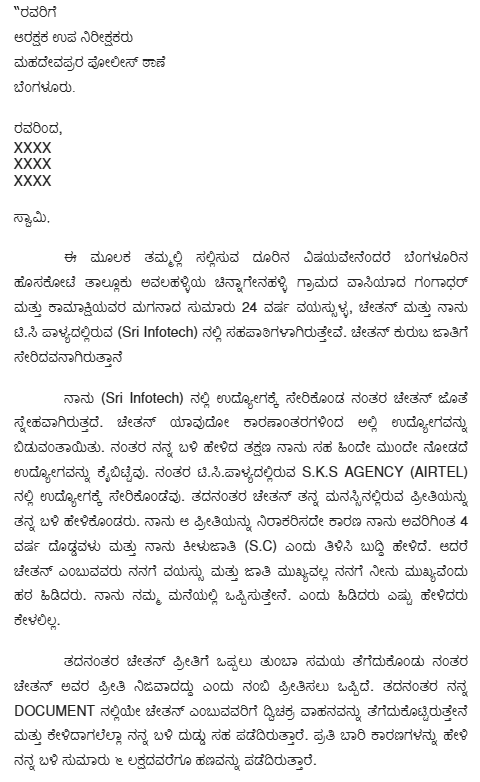
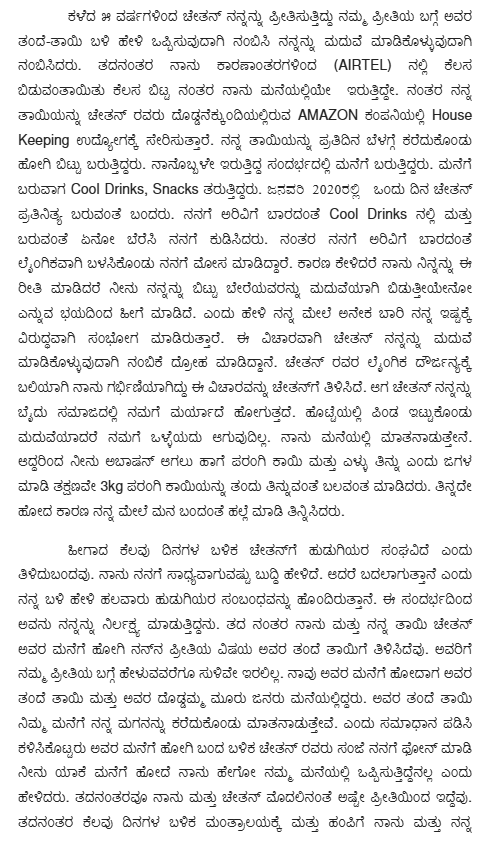
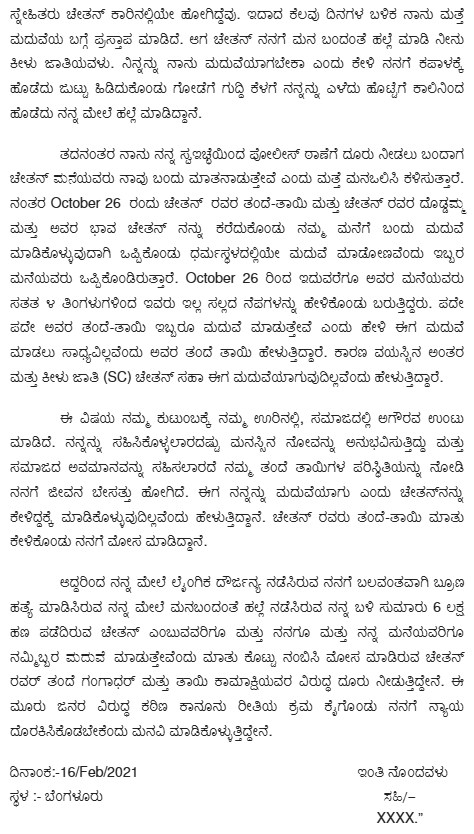
The police after investigation, file a charge sheet in the matter. Summary of the charge sheet as obtaining in Column No.7 reads as follows:
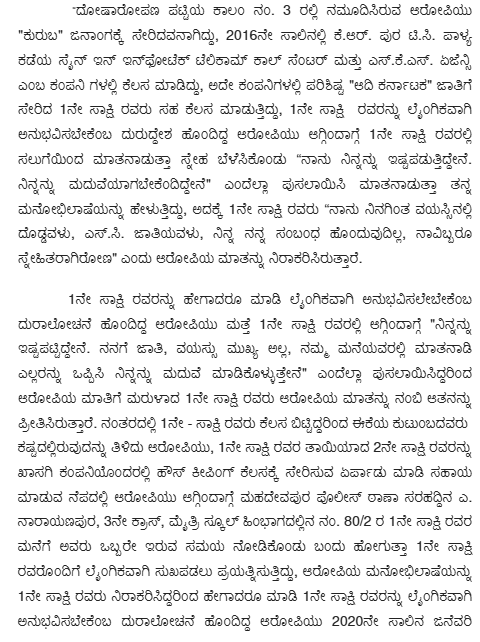
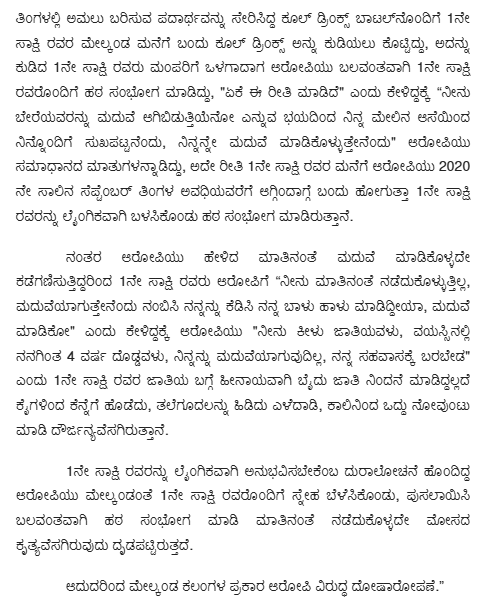
8. The issue now would be whether on the aforesaid complaint and the summary of the charge sheet, which would clearly depict that consensual acts between the two on the pretext of marriage or otherwise and the relationship leading to the talks of marriage which failed due to caste equations, could be termed to be as rape. The issue need not detain this Court for long or delve deep into the matter.
8.1. The Apex Court in the case of Prithivirajan v. State , 2025 SCC OnLine SC 696, holds that merely because physical relations were established based on a promise of marriage, it will not amount to rape. The judgment reads as follows:
"4. The entire case of the prosecution is that the appellant is being charged, inter-alia, under Section 376 of the IPC for the reason that the appellant had given false promise of marriage to the prosecutrix and thus obtained her consent for sexual relationship but later backed out of his promise, and for that reason it is a case of rape. The logic given here is that in case there is no c
AI
Consensual sexual relationships do not constitute rape even if they are based on a promise of marriage that was not fulfilled, unless there is evidence of fraudulent intent.
A breach of promise to marry does not constitute rape unless it can be proven that the promise was made with intent to deceive from the outset.
Consent obtained under a false promise of marriage does not constitute rape if the accused had no intention to deceive at the time of the promise.

Consent in consensual relationships invalidates allegations of rape; merely non-fulfilling marriage promises does not constitute a crime when prior consent for sexual interactions is established.
Section 375 of IPC states that a man is said to commit rape if he has had any form of sexual intercourse without consent of a woman.

Consensual relationships cannot be classified as rape simply due to a breach of promise to marry; criminal liability requires clear evidence of bad faith or deceit by the accused.



An indispensable Tool for Legal Professionals, Endorsed by Various High Court and Judicial Officers
Please visit our Training & Support
Center or Contact Us for assistance

Scan Me!
India’s Legal research and Law Firm App, Download now!


For Daily Legal Updates, Join us on :



 Back to top


