
 Back
Back





IN THE HIGH COURT OF KARNATAKA AT BENGALURU
M. NAGAPRASANNA, J.
Shashank C. S/o. Late D. Chandrashekar and Ors. – Petitioners
Versus
State Of Karnataka, By Basaveshwara Nagar Police Station, Represented By SPP., High Court, Bengaluru and Anr. – Respondents
Criminal Petition No. 2027 of 2025
Decided On : 03-07-2025
| Table of Content |
|---|
| 1. accused involved in a case of alleged rape (Para 1 , 3) |
| 2. arguments regarding the nature of the relationship (Para 4 , 6) |
| 3. court's examination of the relationship context. (Para 7) |
| 4. examination of consensual relationship vs. rape (Para 8 , 9) |
| 5. quashing of case based on evidentiary analysis (Para 10 , 11) |
ORDER :
(M. NAGAPRASANNA, J.)
The petitioners are accused Nos.1, 2 and 3 are at the doors of this Court calling in question proceedings in C.C.No.40547/2024 arising out of crime No.246/2024 registered for offences punishable under Section s 376 , 420, 323, 504 and 109 read with Section 34 of the INDIAN PENAL CODE , 1860 ('the IPC ' for short).
2. Heard Shri B. Ravindra, learned counsel appearing for the petitioners and Shri B.N. Jagadeesha, learned Additional Special Public Prosecutor appearing for respondent No.1.
3. The facts in brief germane are as follows:
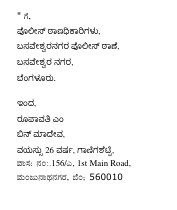
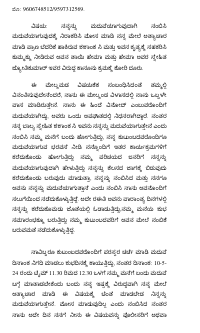
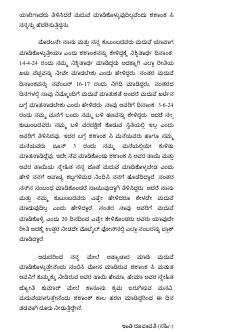
Respondent No.2 is the complainant. It is the case of the complainant so as the case of the prosecution that petitioner No.1 and the complainant were acquaintances for 8 years and have had relationship for over 8 years and the relationship being physical, as well. The talks of marriage take place between the families of both the petitioners and the complainant. The betrothal ceremony is also performed. The betrothal ceremony did not lead to the logical conclusion of marriage between the two, on the score of certain differences of opinion on manifold circumstances between the families of petitioner No.1 and the complainant. On the alleging breach of marriage, the complainant registers a crime on 29.06.2024 for the aforesaid offences of rape and criminal intimidation. Petitioner No.1 being in relationship with the complainant is not the sole person drawn into the web of proceedings, the mother of petitioner No.1 and the neighbour is also drawn into the web of crime. The police conduct investigation in the aforesaid crime and file a charge sheet against these accused. The filing of the charge sheet is what has driven the petitioners to this Court in the subject petition.
4. The learned counsel appearing for the petitioners would submit that the complainant and petitioner No.1 were childhood friends and therefore, the friendship had blossomed into relationship and the relationship into a physical relationship, as well. He would submit that on such score, breach of promise of marriage cannot result in an offence under Section 376 of the IPC for rape. He would further contend that the other offences laid against the petitioners are also frivolous based on no content.
5. The complainant though served long ago has remained unrepresented. Two or three opportunities were granted awaiting the appearance, but even today the complainant is not represented. Therefore, the learned Additional Special Public Prosecutor for the State is heard.
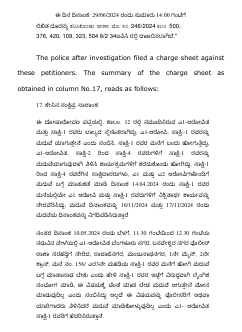
6. The learned Additional Special Public Prosecutor would take this Court through the summary of the charge sheet as obtaining in column No.17 to contend that the police after investigation have filed a charge sheet. The charge sheet would indicate that the offences are committed by petitioner No.1, at least the offences punishable under Sections 376 and 504 of the IPC or even under Sections 323 and 420 of the IPC and would therefore, submit that the proceedings must be permitted to be continued against these petitioners.
7. I have given my anxious consideration to the submissions made by the respective learned counsel and have pursued the material available on record.
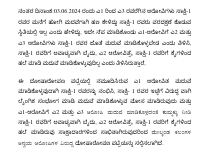
8. The afore-narrated factum of relationship between petitioner No.1 and the complainant is a matter of record. The complaint itself narrates that petitioner No.1 and the complainant were childhood friends and had a relationship between them since 2016 or 2017, as the case would be. The talks of marriage also trigger between the families of petitioners No.1 and the complainant, but did not end in marriage. Therefore, the physical relationship between petitioner No.1 and t
AI
Consensual relationships cannot be classified as rape simply due to a breach of promise to marry; criminal liability requires clear evidence of bad faith or deceit by the accused.

Consent in consensual relationships invalidates allegations of rape; merely non-fulfilling marriage promises does not constitute a crime when prior consent for sexual interactions is established.
A breach of promise to marry does not constitute rape unless it can be proven that the promise was made with intent to deceive from the outset.
Consent obtained under a false promise of marriage does not constitute rape if the accused had no intention to deceive at the time of the promise.
Consensual sexual relationships do not constitute rape even if they are based on a promise of marriage that was not fulfilled, unless there is evidence of fraudulent intent.

Section 375 of IPC states that a man is said to commit rape if he has had any form of sexual intercourse without consent of a woman.
The court established that consensual sexual relationships do not constitute rape under Section 376 of the IPC unless there is clear evidence of deceit or lack of consent, emphasizing the importance ....
Consent given under a misconception of fact does not constitute valid consent for rape; a distinction exists between a false promise of marriage and a breach of promise.



An indispensable Tool for Legal Professionals, Endorsed by Various High Court and Judicial Officers
Please visit our Training & Support
Center or Contact Us for assistance

Scan Me!
India’s Legal research and Law Firm App, Download now!


For Daily Legal Updates, Join us on :



 Back to top


