
 Back
Back





IN THE HIGH COURT OF KARNATAKA AT BENGALURU
V.SRISHANANDA, J.
Hanumantha Naik S/o Panduranga Naik - Appellant
Vs.
Smt Padmavathamma W/o Vamana Naik - Respondent
Regular First Appeal No.2544 of 2006 (PAR)
Decided On : 26-11-2025
| Table of Content |
|---|
| 1. background of the partition dispute. (Para 2 , 5 , 6) |
| 2. analysis of trial court's reliance on evidence. (Para 21 , 26) |
| 3. appellant's grievances against trial court. (Para 22 , 23) |
| 4. court's reasoning regarding ex.d-1. (Para 31 , 36 , 39) |
| 5. final order and decision on appeal. (Para 42) |
JUDGMENT :
V.SRISHANANDA, J.
Heard Sri Ravi G. Sabhahit, and Sri B.K. Chandrasekhar, learned counsel for the parties.
2. Unsuccessful plaintiff is the appellant challenging the dismissal of his suit in O.S No.82/1995 dated 29.09.2006 filed on the file of the Additional Civil Judge (Senior Division) and JMFC, Sagar.
3. Parties are referred to as plaintiff and defendant for the sake of convenience as per their original ranking before the Trial Court.
4. Facts in brief which are utmost necessary for disposal of the present appeal are as under:
Plaintiff filed a suit for partition and separate possession with the following prayer in respect of following properties hereinafter referred as ‘suit properties’.
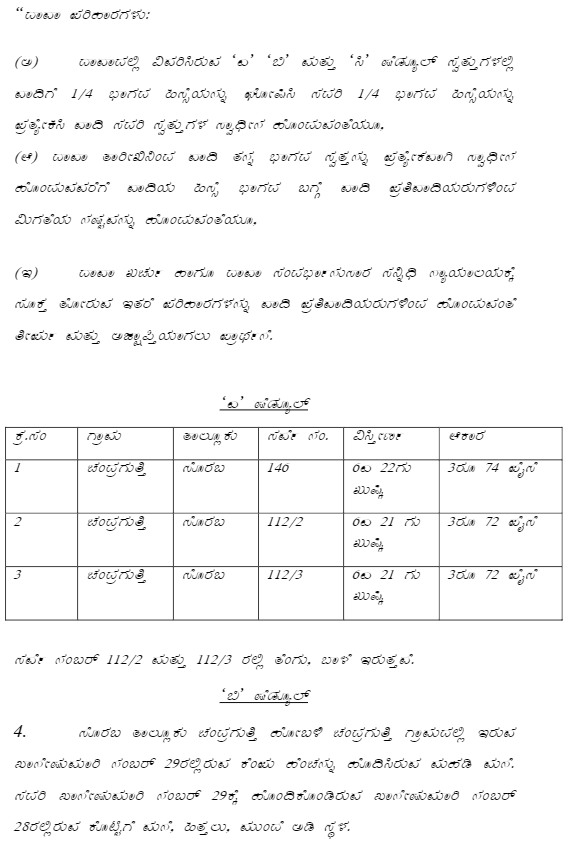
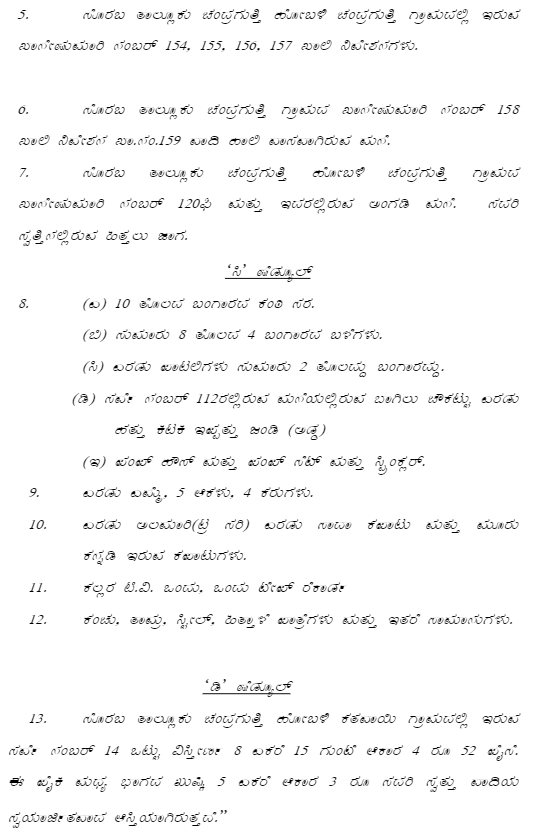
As per the plaint averments genealogical tree of the family reads as under:
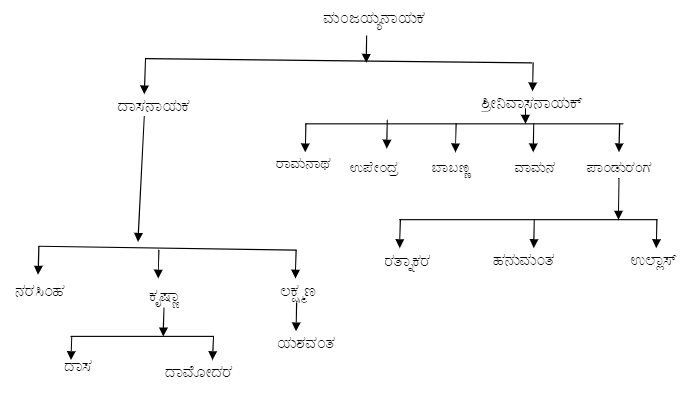
5. Plaintiff contended that children of Srinivas Naik, viz., Ramanath, Upendra, Babanna died and there were no issues for them. Senior uncle of plaintiff by name Vaman Naik died about 20 years earlier without any issues. But he left behind his wife Smt.Padmavathamma who has taken the elder brother of plaintiff by name Ratnakar Naik in adoption. Father of the plaintiff viz., Panduranga Naik passed away in the year 1972 leaving behind plaintiff, defendant Nos.2 and 3, and four daughters.
6. Plaintiff contended that marriage of the four daughters had taken place long ago. Vaman Naik and Pandurang Naik continued as joint family members and they were enjoying the properties left behind by Srinivas Naik.
7. It is further contented that to the share of plaintiff's family, lands situated in Chandraguthi, Honnavara and Kundali Village had fallen. Few of the properties are purchased by the defendants from out of the joint family income.
8. Plaintiff further contended that plaintiff and defendants resided in Chandraguthi Village and suit items mentioned in Schedule A and B are joint family properties of plaintiff and defendants and they are in joint possession of the same.
9. Plaintiff also contended that in the year 1989 there was misunderstanding between plaintiff and defendants and there was a tentative partition and parties started living as per the said partition enjoying the properties.
10. A year later, there was a panchayath convened and in such panchayath, land in Sy.Nos.112/2 and 112/3 totally measuring 2 acres 28 guntas had been given to the plaintiff and from the year 1994 plaintiff is enjoying the same.
11. As the differences in the joint family arose, defendants did not grant the share to the plaintiff in a proper manner resulting in filing of the suit.
12. Pursuant to the suit summons issued, defendants filed written statement admitting the relationship between plaintiff and defendant Nos.2 and 3, being the children of Panduranga Naik.
13. Relationship of the father of the plaintiff with Srinivas Naik is also admitted and other children of Srinivasa Naik, namely Ramanath, Upendra and Babanna, having died without issues, is also admitted.
14. However, in the written statement it is contented that there was a partition between Vaman Naik and Panduranga Naik on 26.04.1972, which was registered in the Sub-Registrar Office. As per the said partition, Panduranga Naik and Vaman Naik obtained their respective shares.
15. However, the share of the plaintiff as is contended in the plaint is denied by the defendants and contended that only items mentioned in the B schedule is correct.
16. Based on the rival contentions, learned Trial Judge raised the following issues and additional issues:
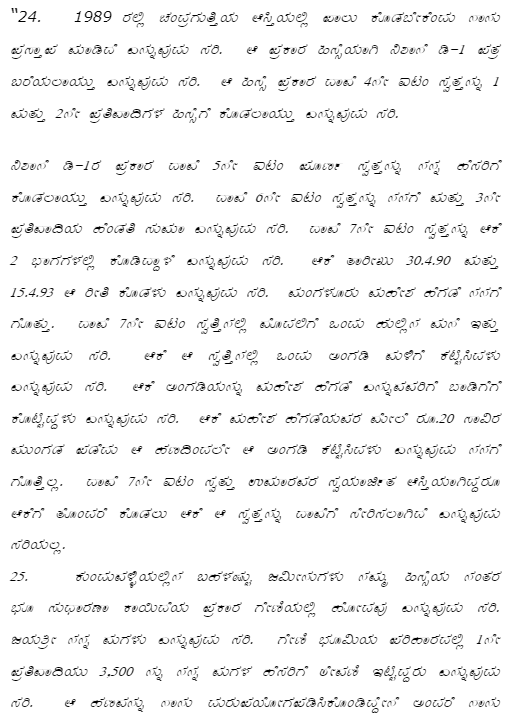
“(i) Whether the plaintiff proves that the suit schedule A, B and C are the joint family properties?
(ii) Whether the plaintiff proves that the suit D schedule property is his self acquired propert
AI
Misapplication of partition law: A court must consider probative evidence of family arrangements in partition suits; dismissal led to miscarriage of justice.


Plaintiffs must show joint entitlement to property; mere relationship is insufficient if contrary evidence exists such as prior settlements and alienations.
The main legal point established in the judgment is the entitlement of the Plaintiffs to a 1/4th share in the joint family ancestral properties and the invalidity of the registered Will Deed.
Properties inherited from a divided father are considered separate and not ancestral, affecting claims for partition under Hindu law.
The court established that unregistered documents affecting rights in immovable property are inadmissible in evidence, and that joint family properties are subject to partition among all rightful hei....
A joint family property partition agreement is binding, and claims of exclusive ownership must be substantiated to override such agreements.

A party may not amend a suit's claims regarding ownership of property in a manner contradicting original pleadings without introducing adequate supporting evidence, undermining the integrity of legal....

Properties claimed as self-acquired were determined to be ancestral; the appeal for partition was dismissed due to lack of joint possession evidence and non-joinder of necessary parties, also barred ....



An indispensable Tool for Legal Professionals, Endorsed by Various High Court and Judicial Officers
Please visit our Training & Support
Center or Contact Us for assistance

Scan Me!
India’s Legal research and Law Firm App, Download now!


For Daily Legal Updates, Join us on :



 Back to top


