
 Back
Back





IN THE HIGH COURT OF JUDICATURE AT PATNA
ALOK KUMAR PANDEY, J.
Rahul Kumar S/o Parmeshwar Chaudhary – Appellant
Versus
The State of Bihar – Respondent
Criminal Appeal (SJ) No. 3120 of 2025
Decided On : 31-10-2025
Bihar Excise Act, 1915 – Section 47(a) – Seizure of huge quantity of illegal country made liquor – Conviction and sentence – Independent witness who is also a witness of seizure list, has not supported case of prosecution – Statement of witnesses were not recorded at place of occurrence – There is no description regarding sampling of seized articles and even there is no description as to whether any sampling was done or not – There is no description as to how much quantity was sent for examination – Liquor test report also does not reveal as to how much quantity has been tested – Prosecution case suffers from several infirmities and it was not a fit case where conviction could have been recorded – Trial Court fell in error of law as well as appreciation of facts of the case in view of settled criminal jurisprudence – Impugned judgment of conviction and order of sentence set aside – Appeal allowed. (Paras 21 and 22)
| Table of Content |
|---|
| 1. conviction details and charges. (Para 1 , 2 , 3 , 4) |
| 2. arguments raised by appellants. (Para 8 , 9 , 10) |
| 3. analysis of evidentiary shortcomings. (Para 11 , 12 , 13) |
| 4. witness testimonies and inconsistencies. (Para 16 , 17 , 18 , 19 , 20 , 21) |
| 5. court's decision to overturn conviction. (Para 22) |
JUDGMENT :
ALOK KUMAR PANDEY, J.
1. This appeal is directed against the judgment of conviction and order of sentence dated 30.06.2025 passed by Exclusive Special Excise Court No. 01, Supaul in S.T. Excise Case No. 586 of 2017 arising out of Kishanpur P.S. Case No. 64 of 2016, whereby and whereunder appellants have been convicted for the offence under Section 47(a) of the BIHAR EXCISE ACT , 1915 and has been sentenced to undergo rigorous imprisonment for 3 years alongwith fine of Rs. 5,000/- for the said offence. In default of payment of fine, appellants have been further sentenced to undergo simple imprisonment for 3 months. The period undergone by the convicts in jail custody has been directed to be set off from the period of custody.
2. As per prosecution case, the informant, who is S.H.O. Kishnapur police station, recorded his self statement on 29.03.2016 that he proceeded on night patrolling at 10.30 P.M. alongwith other police officials. During patrolling, at around 02.00 A.M. he received secret information that huge quantity of illegal country made liquor was to cross through Singhiyawan Bazar. He alongwith police force reached at Singhiyawan Chowk at 02.15 A.M. It is alleged that at 2.30 A.M. a black coloured Bajaj Tempo bearing registration no. BR 50A 2705 was coming and when same was asked to stop, the driver of the vehicle attempted to escape but he was caught. On search, country made liquor was recovered and on interrogation the driver revealed his name as Kundan Kumar Paswan (appellant no. 2) and he disclosed that said liquor was of Manish Chaudhary and Hriday Chaudhary who are collecting country made liquor for the occasion of Panchayat election. It is alleged that 240 liters country made liquor was seized from the said vehicle. It is further alleged that at 3.00 A.M. a red coloured Tata Magic Paggio vehicle bearing registration no. BR 50C 3687 which was coming from southern direction was stopped by the police force. On search, 960 liter country made liquor was recovered and the driver of the vehicle was apprehended who disclosed his name as Rahul Kumar (appellant no. 1) and he also disclosed that said liquor was of Manish Chaudhary and Hriday Chaudhary.
3. On the basis of statement recorded by S.I. Chandan Kumar, S.H.O., Kishanpur P.S. Case No. 64 of 2016 was registered on 29.03.2016 under Section 47(a) of the BIHAR EXCISE ACT . Statement of witnesses came to be recorded and on completion of investigation, charge sheet has been submitted against the appellants under Section 47(a) of the BIHAR EXCISE ACT . Thereafter charges have been framed against the appellants under Section 47(a) of the BIHAR EXCISE ACT . Charges were read over and explained to the appellants to which they pleaded not guilty and claimed to be tried.
4. In order to bring home guilt of accused persons, prosecution has examined altogether five witnesses. PW-1 Md. Nehal Khan, PW-2 Shashikant Singh, PW-3 Sushil Paswan, PW-4 Injmamul Haque and PW-5 Vinod Kumar Sah.
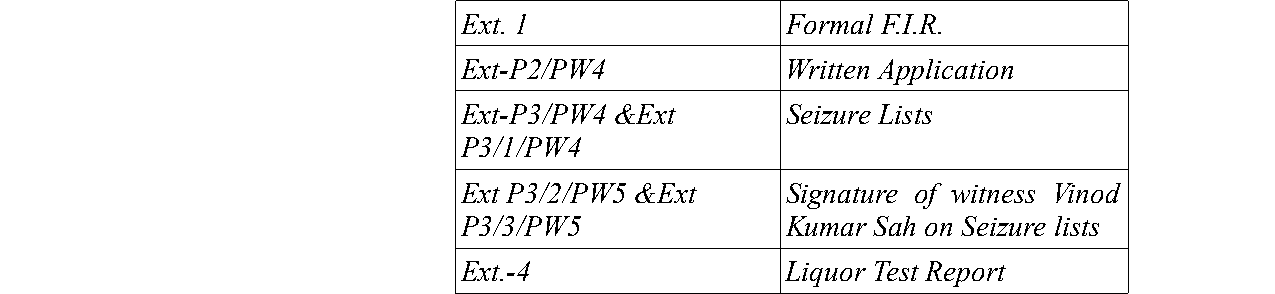
5. Apart from oral evidence, prosecution has produced the following documents :
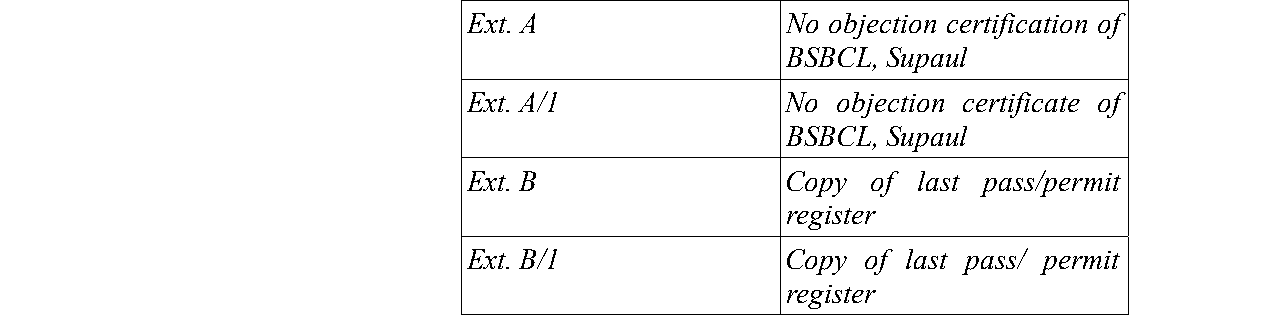
6. The defence has not produced any witness in its defence. It has, however, proved the following documents :
7. After hearing the parties, the learned trial court was pleased to convict the appellants and to sentence them as indicated in the opening paragraph of the judgment.
8. Heard Mr. Murari Narain Chaudhary, learned counsel for the appellants at sufficient length of time. Following submissions have been made by the learned counsel for the appellants :-
9. Learned counsel has submitted that the impugned judgment of conviction and order of sentence has been passed without considering the evidence available o
AI
The prosecution must establish guilt beyond reasonable doubt, and inconsistent witness testimony undermines the credibility of charges under the Bihar Excise Act.

The court ruled that the prosecution failed to prove the case beyond a reasonable doubt due to procedural irregularities and witness credibility issues.

The conviction under the Chhattisgarh Excise Act was set aside due to prosecution's failure to prove its case beyond reasonable doubt based on procedural violations.

The prosecution must prove its case beyond reasonable doubt, and failure to produce key evidence undermines the conviction.


Appeal against acquittal in illicit liquor possession upheld where search non-compliant with CrPC Section 165, independent witnesses hostile, case property integrity doubted, and trial court's reason....

Acquittal in excess liquor possession case set aside as perverse; no need for independent witnesses in patrolling chance recovery or independent seal custody; reliable police evidence suffices; convi....

Conviction for illicit liquor possession cannot be based solely on non-chemical tests; lack of adequate evidence warrants acquittal.
The appellate court must respect acquittals unless evidence shows the guilt of the accused beyond a reasonable doubt.



An indispensable Tool for Legal Professionals, Endorsed by Various High Court and Judicial Officers
Please visit our Training & Support
Center or Contact Us for assistance

Scan Me!
India’s Legal research and Law Firm App, Download now!


For Daily Legal Updates, Join us on :



 Back to top


