
 Back
Back





IN THE HIGH COURT AT CALCUTTA
ANANYA BANDYOPADHYAY, J.
Smt. Piyali Chowdhury – Petitioner
Versus
West Bengal State Election Commission And Ors. – Respondents
W.P.A. 22568 of 2016, WPA 23774 of 2016
Decided On : 05-05-2026
JUDGMENT :
Ananya Bandyopadhyay, J.:-
1. The writ petition being no. 22568 of 2016 is filed praying for quashing of charge-sheet being no. 263-SEC/1L-46/05 (Part-I) dated 28.03.2016 and supplementary charge-sheet being no. 289-SEC/1L-46/05 (Pt-I) dated 30.03.2016 issued by the State Election Commissioner, West Bengal State Election Commission under Rule 10 of the West Bengal Services (Classification, Control and Appeal) Rules, 1971 and quashing of Enquiry Report dated 1304.2016 in respect of disciplinary proceeding held against Smt. Piyali Chowdhury (petitioner in WPA 22568 of 2016) and setting aside the second show cause notice dated 15.04.2016 upon Piyali Chowdhury on departmental proceeding in respect of the above charge- sheets and quashing of order vide memo no. 408-SEC/1L-46/05 (Pt. I) dated 28.04.2016 passed by the Disciplinary Authority i.e., State Election Commissioner, West Bengal State Election Commission regarding punishment of removal from service of Piyali Chowdhury.
2. The writ petition being no. 23774 of 2016 is filed praying for quashing the order bearing no. 407-SEC/1L-45/05 (Pt. I) dated 28.04.2016 passed by the State Election Commissioner, West Bengal State Election Commission, inter alia, removing the petitioner/ Smt. Moujhuri De from service against the post of Data Processor of State Election Commissioner, West Bengal.
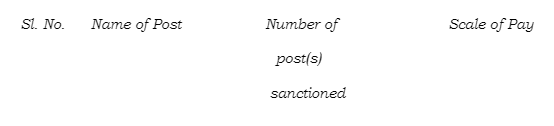
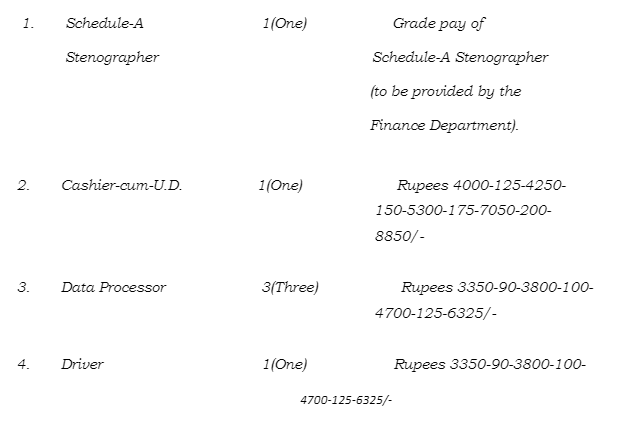
3. The narrative of the instant case begins on the 20th day of December, 2004, when the State Apparatus, vide Government Order No.634 Home (Cons.), formally sanctioned a post for a Data Processor, complete with a designated scale of pay. Recognizing the immediate operational exigencies of the administration, the Special Secretary to the Government of West Bengal, on February 16, 2005, granted a 'No Objection' clearance to fill this newly minted post strictly on a contractual basis for a transient tenure of six months. This administrative intention was translated into a public invitation on April 1, 2005, through an advertisement detailing the explicit eligibility criteria required of aspiring candidates. The petitioner, asserting compliance with these stipulations, stepped forward and was subsequently summoned on April 28, 2005, to undergo a rigorous selection process comprising both a formal interview and a hands-on practical test. Standing evaluation alongside her peers, she participated in the interview and presented her testimonials on May 5, 2005. Her merit found favor with the selectors, culminating in the issuance of an appointment letter on June 20, 2005, by virtue of which she entered into her duties as a Data Processor within the West Bengal State Election Commission on June 30, 2005.
4. What followed was a protracted chapter of administrative extensions and systemic recognition that gradually altered the nature of her employment. Upon the expiry of her initial contractual term, the state chose to continuously prolong her service, first through an order dated November 11, 2005, which granted an extension of six months, and subsequently via an order dated May 10, 2006, which stretched her tenure by a full year until June 30, 2007. A significant shift occurred on September 6, 2006, when Respondent No. 1 transitioned her from a strictly contractual role to a temporary appointment within the regular scale of pay. The state’s reliance on her services was further underscored by periodic executive interventions; on August 13, 2007, and later on April 26, 2013, the Assistant Secretary to the Government of West Bengal issued formal orders for the retention of her post. This administrative embrace deepened when the Joint Secretary, on February 5, 2008, and the Secretary of the Commission, on September 2, 2014, issued explicit memoranda calling for the permanent retention and regularisation of her services. During this period of upward mobility, her pay scale was appropriately revised, and on February 5, 2010, the Commission formally confirmed her temporary service, retrospectively effective fro



The court ruled that employees employed for lengthy periods cannot be denied regularization of service, emphasizing principles of fairness and equality under the Constitution.


Appointments not being sponsored by the employment exchange, as prescribed under Rule 149(2) of the Rules, would only make the appointments irregular and not illegal.


Long-serving employees in essential roles are entitled to consideration for regularization despite initial irregular appointments, ensuring fairness and adherence to constitutional principles.

Long-term employment based on transparent recruitment cannot be invalidated solely due to procedural irregularities, reinforcing principles of natural justice and legitimate expectations.



An indispensable Tool for Legal Professionals, Endorsed by Various High Court and Judicial Officers
Please visit our Training & Support
Center or Contact Us for assistance

Scan Me!
India’s Legal research and Law Firm App, Download now!


For Daily Legal Updates, Join us on :



 Back to top


