
 Back
Back





IN THE HIGH COURT OF KERALA AT ERNAKULAM
P.B. SURESH KUMAR, C. PRATHEEP KUMAR, JJ.
RAGESH @ VINOD S/O SUNDARESAN – Appellant
Versus
STATE OF KERALA – Respondent
Crl. Appeal No. 1556 of 2023
Decided On : 30-08-2024
Murder - Conviction - IPC Sections 294(b), 324, 302 - The court interpreted the definitions of culpable homicide and murder, emphasizing the intent behind the act and the use of a lethal weapon, leading to the conclusion that the accused's actions constituted murder.
Fact of the Case:
The accused, after a domestic dispute, fatally stabbed his father-in-law with scissors, following an altercation where he had already assaulted his wife. The incident occurred in the presence of family members, leading to the victim's death shortly after.
Finding of the Court:
The court found the testimonies of the prosecution witnesses credible and established that the accused intentionally inflicted a fatal injury on a vital part of the victim's body, thus constituting murder.
Issues: Whether the prosecution proved the murder charge, whether the accused could be punished under multiple sections, and whether the act fell under any exceptions to murder.
Ratio Decidendi: The court held that the accused's actions demonstrated intent to cause death, as he used a lethal weapon on a vital part of the body, and the absence of provocation negated claims of acting in the heat of passion.
Result: The appeal was partly allowed; conviction under Sections 294(b) and 302 IPC upheld, but conviction under Section 324 IPC set aside.
JUDGMENT :
C. PRATHEEP KUMAR, J.
1. The appellant is the sole accused in Sessions Case No. 373/2018 on the file of the Additional District & Sessions Court-VI, Thiruvananthapuram. He stands convicted for murdering his father-in-law. The accused was residing along with his wife, minor child, parents-in-law and brother-in-law. On 18.11.2017, at about 1.45 p.m., the accused came home for having lunch. When he demanded lunch, his wife who was holding the child and told the accused to wait till the child sleeps. Infuriated by the same, the accused demanded to return back the money he had given to her on the previous day. At that time also she told him that she could return the money only after the child sleeps. The accused at that time, abused his wife and assaulted her. On seeing the same, the deceased, who is his father-in-law, intervened and questioned the conduct of the accused. Infuriated by the same, the accused has taken a seat-board 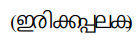 which was present there and threw the same towards the deceased. It hit on the head of the deceased, causing injury on his head. The deceased questioned the accused as to why he had thrown the seat board on his head. At that time, his wife and daughter tried to pacify him and took him to the kitchen. In the mean time, the accused went inside the bed room, came out with a pair of scissors and stabbed on the chest of the deceased and then he ran away. Though immediately he was taken to the Taluk hospital, Vithura at about 2.30 p.m. he succumbed to the injury.
2. The accused was charged under Sections 294(b), 324 and 302 of the Indian Penal Code. The evidence in this case consists of the oral testimonies of PW1 to 17 and documentary evidence Exts.P1 to P25 on the side of the prosecution. MOs1 to 10 were also identified. On the side of the accused, portions of 161 Cr.P.C statement of PWs1 and 2 were marked as Exts.D1 and D2. After appreciating the available evidence, the trial court found the accused guilty of all the charges against him, convicted and sentenced him to undergo imprisonment for life and also to pay a fine of Rs.3,00,000/- under Section 302 of IPC. He was also punished under Section 324 IPC and under Section 294(b) IPC. Aggrieved by the above judgment of conviction and sentence, he preferred this appeal raising various contentions.
3. Now the points that arise for consideration are the following:
(i) Whether the prosecution has succeeded in proving that the accused committed murder of deceased Sundaran?
(ii) Whether the prosecution has succeeded in proving the offence under Section 294(b) IPC against the accused?
(iii) Whether an accused who is punished under S.302 IPC is liable to be further punished under Section 324 IPC, for voluntarily causing hurt to the deceased?
(iv) Whether the impugned judgment of conviction and sentence calls for any interference by this Court?
4. Heard both sides.
5. Point No. (i) - The prosecution has mainly relied upon the oral testimonies of PWs 1 to 3 to substantiate the prosecution case. PW1 is the wife of the accused as well as the daughter of the deceased. PW2 is the widow of the deceased. PW3 is a neighbour of PWs1 and 2. PW1 would swear that on 18.11.2017 at about 1.45 p.m., her husband namely the accused came home for having lunch. At that time, she was holding her 1½ year old child, who was about to sleep. When the accused demanded to have lunch, she requested him to wait till the child sleeps. Dissatisfied with the reply, the accused demanded to return the money paid by him on the previous day. Again she told him that she will return the money after the child sleeps. At that time, the accused abused and assaulted her. When her father intervened and tried to save her, the accused, who was infuriated by the intervention of the deceased, threw a seat-board on the head of the deceased. When the deceased questioned the accused for throwing the seat board on his head, she tried to pacify the deceased and her mother took the deceased towards the kitchen. At tha
AI
The court established that intent to cause death can be inferred from the use of a lethal weapon on a vital part of the body, leading to a conviction for murder.
If intention of accused was limited to infliction of a bodily injury sufficient to cause death in ordinary course of nature and did not extend to intention of causing death, offence would be murder.


The court ruled that a stabbing occurring during a quarrel, influenced by mutual provocation and intoxication, merited a conviction under Section 304-I of the IPC instead of Section 302.

The court established that the presence of intention to kill, the nature of the weapon used, and the circumstances of the quarrel are critical in determining whether an act constitutes murder or a le....
In cases of sudden quarrel and single injury, the nature of the injury and circumstances must be considered to determine the offense under Section 300 IPC.

The central legal point established in the judgment is the application of the provisions of Section 302 and Section 300 of the IPC, and the interpretation of Exception 4 under Section 300. The court'....
The court established that a homicide committed in a sudden fight without premeditation and without taking undue advantage can be classified as culpable homicide not amounting to murder under Excepti....

Unintentional homicide is not murder under Section 302 of IPC.



An indispensable Tool for Legal Professionals, Endorsed by Various High Court and Judicial Officers
Please visit our Training & Support
Center or Contact Us for assistance

Scan Me!
India’s Legal research and Law Firm App, Download now!


For Daily Legal Updates, Join us on :



 Back to top


