
 Back
Back





IN THE HIGH COURT OF KERALA AT ERNAKULAM
Soumen Sen, C.J., Syam Kumar V.M., J.
M/S. Grids Engineers And Contractors – Petitioner
Versus
Union Bank Of India – Respondent
ICR (WP(C)) NO. 31 OF 2025, WA NO. 2362 OF 2025
Decided On : 04-03-2026
| Table of Content |
|---|
| 1. overview of case initiation and representations. (Para 1 , 3 , 4) |
| 2. analysis of the settlement and implications on proceedings. (Para 5 , 13 , 18 , 22) |
| 3. challenging jurisdiction and legal basis for writ petitions. (Para 7 , 9 , 10 , 11) |
| 4. principles regarding alternative remedies and writ jurisdiction. (Para 14 , 15 , 51 , 56) |
| 5. final decision and dismissal of the writ appeal. (Para 72 , 74 , 75) |
JUDGMENT
Soumen Sen, C.J .
The order of reference is arising out of a writ petition filed by M/s. GRIDS Engineering and Contractors and another, inter alia, challenging the notice issued by the Bank under Section 14 of the Securitisation and Reconstruction of Financial Assets and Enforcement of Security Interest Act , 2002. The writ appeal has been preferred against the order of reference.
2. The writ appeal, the reference and the writ petition were initially heard on 16 February 2026 when Mr. Joseph Jose, learned counsel representing Mr. E.B. Thajuddeen, learned counsel for the Petitioners in ICR [W.P(C)] No.31 of 2025, Mr. Raja Kannan, learned Amicus Curiae and Mr. Siva Suresh, learned Standing Counsel for the Bank, made their respective submissions.
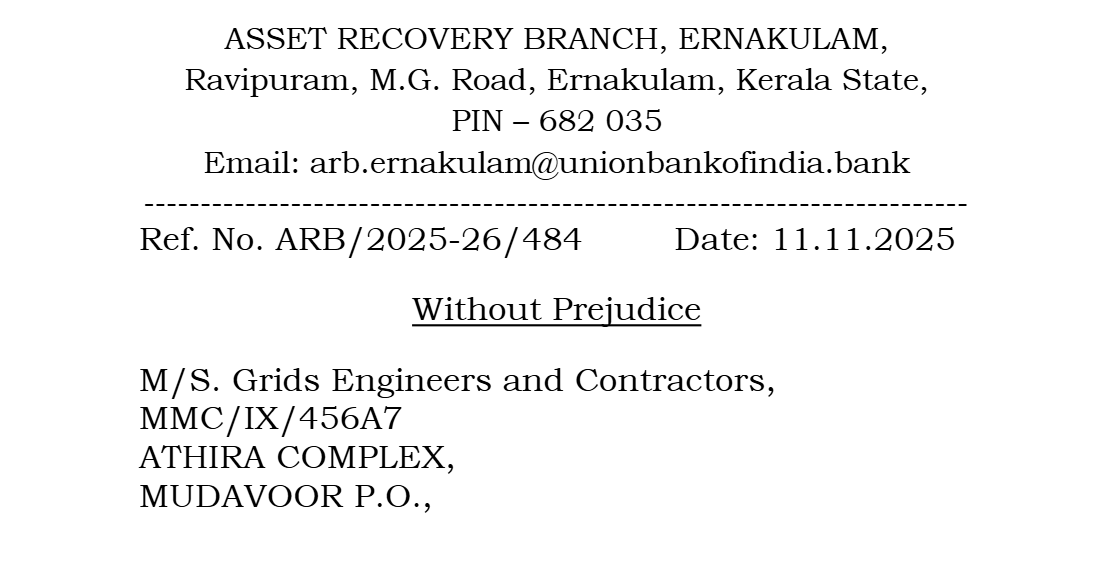
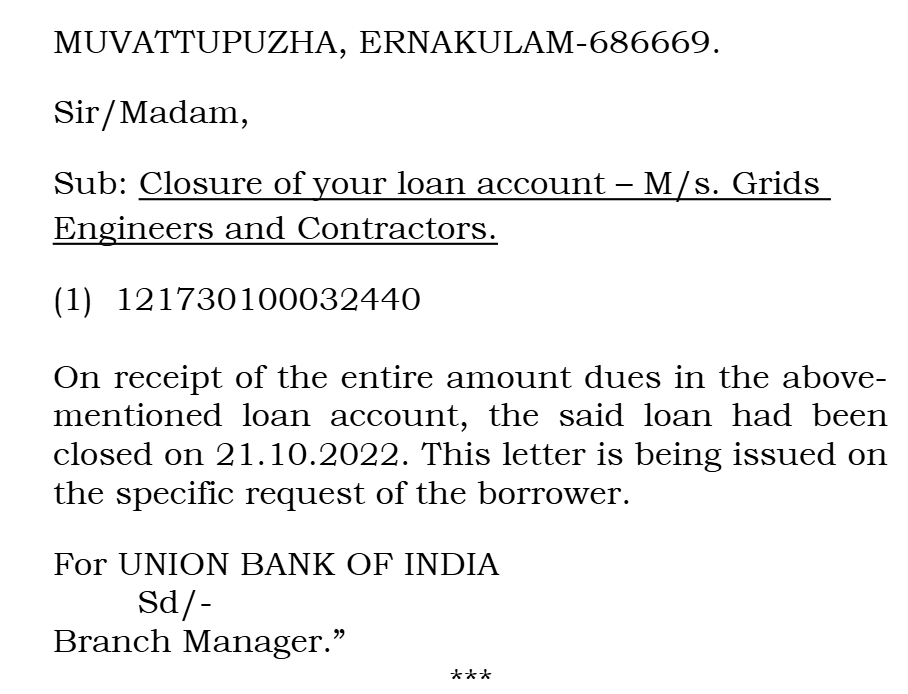
3. Before we commenced hearing of the matters on 16 February 2026, the learned counsel for the petitioners and the Bank have jointly submitted that during the pendency of the proceedings, the parties have arrived at a settlement. The learned counsel for the Bank has submitted that the loan account has already been closed.
4. On the basis of the said submission made on that date, we could have dropped the reference and the writ appeal by recording the said submission. However, we felt it necessary to give our views with regard to the merits of the order of reference, as the appeal arising from the order of reference has now become infructuous, in view of the settlement arrived at between the parties. However, after the hearing was concluded and the draft judgment was prepared, it appeared that the Amicus Curiae appointed by the order dated 10 November 2025 did not file his law notes and it was felt necessary to consider his views. In view thereof, a fresh order was passed on 19 February 2026 which reads as follows:
“ORDER
These matters were listed on 16.02.2026.However, it appears that Mr. Raja Kannan, learned Amicus Curiae has not filed any law notes on the issue involved in the reference. Although we dictated an order on that day, upon finalising the draft, we felt that the views of the Amicus Curiae are required. 2. Hence, the matters shall not be shown as disposed of on 16.02.2026 and shall instead be listed on 26.02.2026 for further hearing. All the parties are directed to file their law notes in the meanwhile.”
***
5. When all the matters came up on 26 February 2026, a different set of advocates appeared and it was submitted that the settlement was obtained by coercion and an application has been filed today for amendment of the writ petition, but, due to defect, the said application was not listed. Although we expressed our displeasure, we passed the following order:
“ORDER
Mr. P. Sanjay, the learned counsel appears and submits that he has been instructed to represent the writ petitioner in these proceedings and that he has been newly engaged after the matter was last heard by this Bench. It is submitted that one interlocutory application has been filed along with the Vakalatnama seeking amendment of the writ petition.
2. However, we definitely recollect that the hearing of the writ petition was also concluded on the earlier occasion on the basis of the submissions made by the learned counsel for the writ petitioner as well as the Bank that a settlement had been arrived at between the parties and the writ petitioner had paid the entire amount. Upon receipt of the said amount, the Bank closed the loan account. The learned counsel for the Bank has, in fact, filed documents showing the closure of the loan account and as such, this writ petition has become infructuous.
3. The le
The High Court should not entertain writ petitions under Article 226 when effective alternative remedies under the SARFAESI Act are available; exceptions apply in cases of jurisdictional errors, frau....
A writ petition under Article 226 cannot be entertained if effective statutory remedies exist, requiring proper reasoning in interim orders issued by the court.
When alternative statutory remedies are available, a writ petition under Article 226 is not maintainable, particularly in financial recovery matters under the SARFAESI Act, unless exceptional circums....

The requirement for mandatory pre-deposit under the SARFAESI Act cannot be waived; failure to comply invalidates any appeals against recovery actions.


The main legal point established in this judgment is that the High Court should not entertain writ petitions under Article 226 of the Constitution of India in matters involving recovery of dues under....
A writ petition cannot be entertained against SARFAESI Act proceedings when an adequate statutory remedy before the Debts Recovery Tribunal is available.
The court emphasized the necessity of exhausting statutory remedies before invoking constitutional provisions, reaffirming that interim orders affecting financial institutions must stem from substant....
The High Court ruled that parties must reveal all material facts in writ petitions and that statutory remedies available under the SARFAESI Act must be pursued before invoking writ jurisdiction.

(1) Writ petitions filed against proposed action under Section 13(4) of SARFAESI Act is not maintainable and/or entertainable at all.(2) Recovery of debt – High Court should have been extremely caref....



An indispensable Tool for Legal Professionals, Endorsed by Various High Court and Judicial Officers
Please visit our Training & Support
Center or Contact Us for assistance

Scan Me!
India’s Legal research and Law Firm App, Download now!


For Daily Legal Updates, Join us on :



 Back to top


