
 Back
Back





IN THE HIGH COURT OF ORISSA AT CUTTACK
K.R. MOHAPATRA, SAVITRI RATHO, JJ.
The Management of The Vice President (Operations), M/s. Indian Metals and Ferro Alloys Ltd. - Appellant
Versus
The Government of Odisha - Respondent
W.P.(C) No.27772 of 2013
Decided On : 10-12-2025
JUDGMENT :
K.R.Mohapatra, J
1. This matter is taken up through hybrid mode.
2. The Vice-President (Operations), Indian Metal and Ferro Alloys (for brevity, ‘IMFA’), Theruballi in the district of Rayagada being the Petitioner seeks to assail the award dated 10th October, 2013 (Annexure-14) passed by learned Presiding Officer, Industrial Tribunal, Bhubaneswar (for brevity, ‘learned Tribunal’) in Industrial Dispute Case No.6 of 2006 answering the reference in favour of Opposite Party No.3, namely, the General Secretary, IMFA Shramik Sangha, Theruballi in the district of Rayagada.
3. For the sake of convenience in discussion, parties are described as per their status before the learned Tribunal.
4. The Labour Union-Opposite Party No.3 representing the Workmen raised 21-Point Charter of Demand before the Petitioner- Management on 17th December, 2004. A tripartite discussion although held, was not successful and ultimately failed on 22nd September, 2005. Thus, the Conciliation Officer submitted failure report under Section 12 (4) of the Industrial Disputes Act, 1947 (for brevity, ‘the Act’) to the appropriate Government. Accordingly, reference was made to the learned Tribunal for adjudication.
4.1 The three point terms of reference were as under:-
“i) Whether the demands of the union of onward revision of basic wages/salary, Dearness Allowance, increments and like L.T.A, Conveyance Allowance, Attendance, Bonus, Washing allowances, Night shift allowances and HRA are justified and need any upward revision? If so, what should be the details?
ii) Whether the demand of the union for payment of Addl. Dearness Allowance on the basis of All India Price Index 1960, Base-100 is legal and or justified? If so, what should be the details?
iii) Whether the demand of the union for time bound promotion and rationalization of existing grades are legal and/or justified? If so, what should be the details?”
Receiving the reference, as aforesaid, learned Tribunal registered Industrial Dispute Case No.6 of 2006 and notices were issued to the Petitioner-Management and Labour Union/Opposite Party No.3 to participate in the adjudication process.
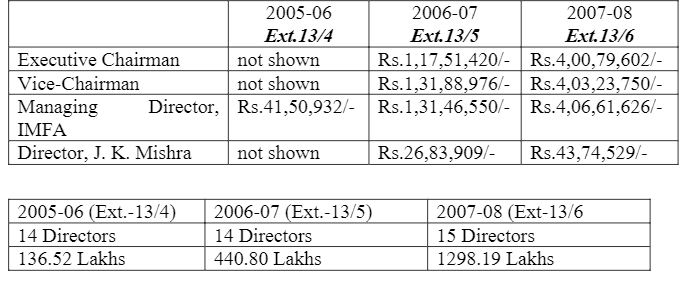
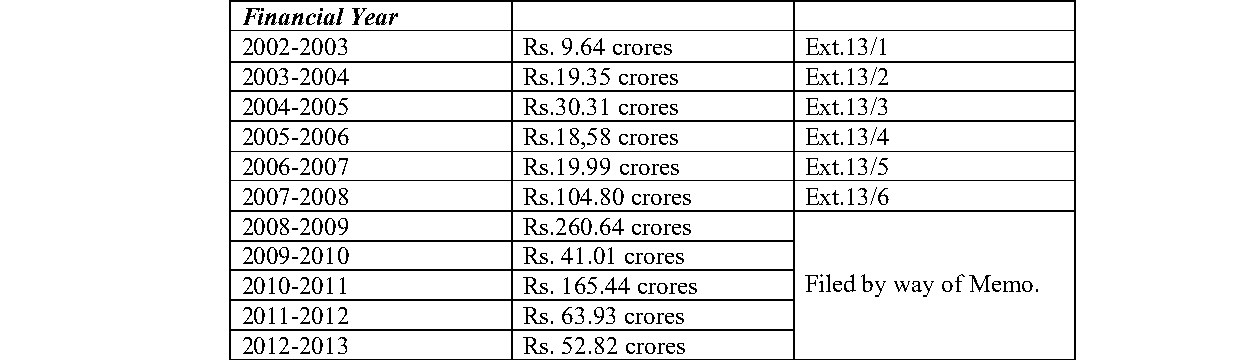
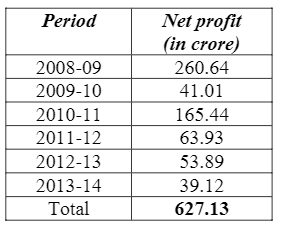
5. The 2nd Party-Labour Union representing Workmen filed its statement of claim stating, inter alia, that the Management of IMFA laid foundation stone at Theruballi in the year 1963 and started its commercial production in the year 1967. With passage of time, the Management introduced improved technology and there was modernization of the plant and machinery. The capacity and assets of the unit at Theruballi was more than Rs.10,000/- crore then. Right from the beginning, the Management was earning huge profits. The Management announced Rs.700/- crores trading result for the first half of the year 2006. Despite continuous profit, the Management kept the wage structure of the workforce at the minimum wage level. The Management also set up new units such as Indian Charge-Chrome Limited, Captive Power Plant, Ferro Alloys Factories at Choudwar and Theruballi, Utkal Manufacturing and Services Limited at Choudwar and Theruballi. The total number of permanent employees in the Management were 432 and there were 600 contract labourers and 126 officers/executives at Theruballi Unit. The salary and wages paid to permanent workers at Theruballi was much less than the salary and wages of other industries existing within the region and similar industries in Odisha. Due to sharp rise of prices of all commodities, value of money decreased. Therefore, the Workmen through their Union submitted 21 Points charter of Demand to the Management on 17th December, 2004, which has given rise to the present reference. The 2nd Party Workmen in their statement of claim gave details of minimum basic wage of Workmen in different grades which was effective from 1st February, 2024 by virtue of tripartite settlement dated 28th November, 2002 in order to justify their claim on different heads as detailed in the reference. The Workmen also stated details of claim
AI
The Tribunal must conduct a thorough evidentiary analysis to justify decisions concerning wage revisions and additional allowances under the Industrial Disputes Act, ensuring all material evidence is....

The court affirmed existing employee benefits under the Industrial Disputes Act, maintaining retirement age at 60 and rejecting unjustified pension scheme modifications by management.


The principle of 'equal work for equal pay' was upheld, with the court modifying the effective date of wage benefits to 01.01.2012.

Workmen are not entitled to wages during an illegal strike; minimum wage must reflect parity with similar undertakings while considering existing agreements.

Wage adjudication must balance the employer's financial capacity and fair compensation for workmen, ensuring accurate evidence of financial claims is presented.

Wage fixation must adhere strictly to statutory definitions and principles, especially concerning minimum wage and workman status, or risk being deemed invalid.

The court upheld the Industrial Tribunal's award for wage revision, emphasizing the need for fair compensation while considering the financial capacity of the management.

Pay revision – To determine comparability of units applying industry-cum-region test, financial capacity of employer would be a strong factor.
The mandatory provision of Section 33(2) requires employers to pay full wages to a dismissed employee for one month, and failure to do so renders approval of dismissal invalid.



An indispensable Tool for Legal Professionals, Endorsed by Various High Court and Judicial Officers
Please visit our Training & Support
Center or Contact Us for assistance

Scan Me!
India’s Legal research and Law Firm App, Download now!


For Daily Legal Updates, Join us on :



 Back to top


