


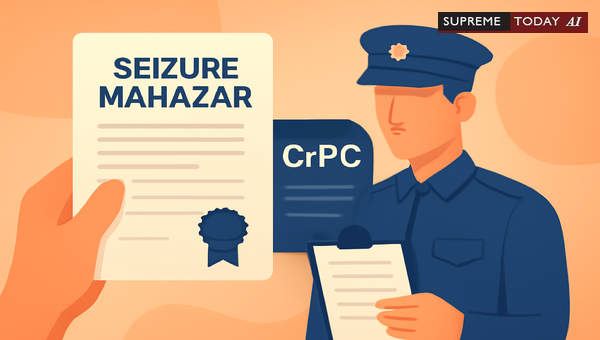
Accused's Right to Police Copy: What the Law Says
In criminal investigations, transparency is key to ensuring a fair trial. A common question arises: Fr Agar Police Lagaye Gi to Badi Ko Copy Recived Karaye Ga – translated, If the police seize property, will they provide a copy to the accused? This typically refers to the right of the accused (often called badi in local parlance) to obtain copies of critical documents like the (seizure memo) prepared during police action.
This blog post breaks down the legal position under Indian law, drawing from statutory provisions, judicial precedents, and procedural rules. While this provides general insights, it is not legal advice – consult a qualified lawyer for your specific case.
Main Legal Finding
The legal documents establish that if the police conduct a seizure or investigation, the accused is generally entitled to receive a copy of the relevant documents, including the , at the earliest possible stage, subject to certain procedural and legal provisions. This right is grounded in principles of transparency, fairness, and the right to a proper defense, reinforced by the , judicial interpretations, and police rules.
Courts have emphasized that denying such access, especially when essential for defense or bail, is typically illegal.
2023 0 Supreme(Ker) 747
Key Points on Accused's Rights
- as : This signed official document prepared during police investigation is considered a and can be issued to the accused on request.
- Timing of access: The accused may obtain copies at an appropriate stage of the investigation or trial, not just after completion.
- Court stance on denial: Refusal without justification violates , particularly for bail or defense preparation.
2023 0 Supreme(Ker) 747
- Statutory backing: Cr.P.C. and rules like mandate access on payment of fees, barring confidentiality.
- Public record status: FIRs and seizure mahazars are public under . 1956 0 Supreme(SC) 82 2022 0 Supreme(Cal) 644
Detailed Analysis: Right to Obtain Copies
Under Indian law, documents like seizure mahazars prepared by police are public records under . They are vital for the accused to verify seizure details, challenge procedural lapses, or build a defense. Courts have ruled that denying copies contravenes principles.
For instance, in a key judgment, the Court observed: the , being a signed document, is a public record and can be issued to the accused on payment of fees. The police may issue copies after a proper application, unless confidential.
High Courts like , , and have affirmed that FIRs and related documents must be accessible, especially for defense. 1956 0 Supreme(SC) 82 2022 0 Supreme(Cal) 644
Timing and Procedure for Copies
Access isn't deferred until trial's end. The accused can request copies early, particularly for bail applications. The has stressed prompt facilitation: the right is fundamental for a fair trial. 2023 0 Supreme(Ker) 747
Steps to request copies:1. File a formal written application with the or police station.2. Pay prescribed fees (as per police rules).3. If denied, approach the court via bail petition or application.
Delays or refusals without valid reasons may lead to judicial intervention, including orders for document production.
Legal and Procedural Rules
exemplifies procedural support: copies of official documents are issuable on request with fees, absent confidentiality. Similar rules apply nationwide. Courts view non-compliance as a rights violation.
In broader contexts, like RTI applications, authorities have been directed to provide document copies, reinforcing transparency. For example, under the , a furnished a circular copy as ordered, highlighting compliance duties. 2024 Supreme(Online)(CIC) 3692
Judicial Precedents Reinforcing Access
- view: Accused entitled to FIR and related copies early; denial unlawful without reasons. 2023 0 Supreme(Ker) 747
- High Court rulings: Seizure mahazars vital for defense unless confidential. 2022 0 Supreme(Cal) 644
Related cases involving police stations, such as those in Badi (Dholpur), underscore procedural fairness in investigations.
In one instance, courts directed communication of orders to police for compliance, ensuring accused awareness.
Scientific evidence and witness testimonies in murder cases also highlight document importance, like recovery memos linking to FSL reports. 2019 0 Supreme(Del) 214
Exceptions and Limitations
While the right is robust, limitations apply:- Confidential/sensitive documents: National security, minors, or ongoing probes may restrict access temporarily.- Justified refusals: Courts require reasons; grievances can be raised judicially.
2023 0 Supreme(Ker) 747
Even here, redacted copies may be provided, balancing investigation needs with defense rights.
Integrating Broader Contexts from Case Law
Other judgments illustrate practical applications. In a Panchayat notice case, courts mandated consideration of representations with interim relief, akin to urging prompt document responses. 2025 Supreme(Online)(KER) 10671
RTI precedents affirm public access to policy documents, paralleling criminal document rights. 2024 Supreme(Online)(CIC) 3692 In eviction or contempt matters, copy provisions to parties ensure fairness.
Criminal appeals stress evidence like seizure recoveries for convictions, underscoring why accused need early access. 2019 0 Supreme(Del) 214 2017 0 Supreme(Del) 3573
Recommendations for Accused and Police
- For accused/legal reps: Apply formally early; escalate to court if needed.
- For police: Provide copies promptly on request to uphold transparency.
- Court role: Enforce safeguards; violations may quash proceedings or order disclosure.
Conclusion and Key Takeaways
Generally, yes – if police seize property, the accused is entitled to a copy upon request, promoting fair defense under Cr.P.C. and precedents. Denial without cause is typically unlawful.
2023 0 Supreme(Ker) 747
Key takeaways:- Seizure mahazars are public documents. 1956 0 Supreme(SC) 82- Request early for bail/defense.- Pay fees; cite rules like Kerala Police Rule 222.- Seek court aid if refused.
Stay informed on your rights for a just process. For personalized guidance, contact a legal expert.
References:1.
: as .2. 2023 0 Supreme(Ker) 747: Early access rights.3. 1956 0 Supreme(SC) 82: Section 74 Evidence Act.4. 2022 0 Supreme(Cal) 644: Defense document entitlement. #AccusedRights, #SeizureMahazar, #CriminalLawIndia












