


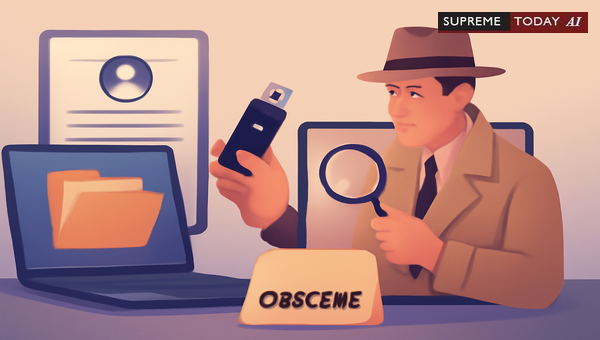
Can Accused Obtain a Copy of Seized Obscene Pendrive or Material? Legal Position Explained
In high-stakes investigations involving obscene materials, such as pendrives or digital files seized under the , a common query arises: Accused Want Copy of Obscene Pendrive or Material Seized during Course of Investigation Whether such Material can be Given to Accused and what is Legal Position in that Point? This question touches on critical aspects of evidence handling, accused rights, and prosecution strategies in cases of child sexual offenses.
While courts prioritize protecting victims and preventing further dissemination of obscene content, the legal framework under the , , and provides nuanced guidelines. This post examines the position generally, drawing from judicial precedents. Note: This is general information, not specific legal advice. Consult a qualified lawyer for your case.
Main Legal Finding: Physical Seizure Not Always Essential
The absence of seized or recorded obscene photographs by the Investigating Officer (IO) does not necessarily undermine the prosecution case under the . Cases can be supported by other evidence, and the fact that photographs were not seized or on record does not automatically negate the prosecution’s allegations or the victim’s testimony. 2025 0 Supreme(SC) 727
This principle extends to questions about providing copies to the accused. Courts typically restrict access to such sensitive materials to prevent misuse, especially in POCSO matters where child protection is paramount. Instead, prosecutions rely on alternative evidence, reducing the need for the accused to access originals or copies.
Key Points on Evidence Sufficiency
- The prosecution can rely on testimonial evidence even if physical evidence like seized photographs is not available. 2025 0 Supreme(SC) 727
- Evidence of circulation or publication of obscene photographs can be established through victim testimony, electronic evidence, or forensic reports, even without physical seizure. 2000 3 Supreme 588
- Credible victim deposition and supporting witnesses can sustain a conviction under POCSO without seized photographs. 2025 0 Supreme(SC) 727
Relevance of Seized Material in POCSO and Cases
Under and , obscene materials involving children are strictly regulated. Physical seizure, such as a pendrive, is ideal but not mandatory. In one case, the court observed that the prosecution relied on electronic evidence like mobile data, forensic reports, and witness testimony rather than direct seizure. The evidence of the victim PW10, her father PW1 and her fiancé PW2 is sufficient to prove either the photographs or their publication or transmission, even in the absence of the photographs being exhibited or seized. 2000 3 Supreme 588
Providing copies to the accused is discretionary and rare. Courts may deny it to avoid re-victimization or illegal distribution. For instance, in
, a cellphone was seized, but photos were deleted, highlighting how digital evidence is handled cautiously without routine accused access.
Evidence Beyond Physical Seizure
Law permits convictions based on testimonial and electronic evidence when victim deposition is credible, supported by forensics. The scientific evidence, namely, the CA report of analysis of samples would have been the best evidence to prove this aspect, but its absence does not automatically lead to acquittal, provided other evidence convincingly establishes the offence. 2000 3 Supreme 588
Other sources reinforce this:- In 2022 Supreme(Online)(Kar) 50741, obscene photographs on a mobile were noted, but the case proceeded on prosecution claims without emphasizing accused access.- 2021 0 Supreme(Bom) 978 upheld conviction despite unproven obscene photographs, relying on other evidence: Though 15 obscene photographs have not been specifically proved as those of the victim girl or other minor girl, considering the other evidence the conviction was upheld.
Credibility of Victim’s Testimony as Cornerstone
Courts hold that trustworthy victim testimony can suffice for conviction. In 2025 0 Supreme(SC) 727, detailed victim deposition, cross-examination, and forensics upheld conviction sans seized photos. Even if scientific evidence of circulation is absent, overall evidence may prevail.
Supporting precedents:- 2024 7 Supreme 129 emphasizes POCSO's child dignity protection, allowing other evidence without physical seizure.- 2019 2 Supreme 604 shows injuries, testimonies, and forensics suffice even if photos unrecovered.
In bail contexts, like 2020 0 Supreme(UK) 108, absence of produced obscene photos weighed against prosecution: The case of the respondent is that the applicant was torturing the victim since 2014 by showing the obscene photographs, however, no said photographs have been produced.
When Can Accused Access Seized Material?
Under , accused get copies of police reports and statements, but obscene materials are exceptions due to sensitivity. Courts may allow supervised viewing or redacted copies, but outright pendrive copies are unlikely.
Exceptions and limitations:- If prosecution hinges solely on physical seizure, absence creates gaps—but corroborative evidence compensates.- Unreliable testimony weakens cases; defense should challenge credibility. 2022 0 Supreme(Jhk) 21- In quashing FIRs, courts probe cases without physical evidence if allegations persist.
Related: Bail granted sans conclusive evidence, prioritizing innocence presumption. 2019 0 Supreme(All) 997 notes missing reports don't derail eyewitness credibility.
Recommendations for Stakeholders
- Prosecution: Gather electronic data, forensics, credible testimonies for robust cases. 2000 3 Supreme 588
- Courts: Evaluate full evidence corpus, not just seizures.
- Defense: Scrutinize alternatives when physical evidence lacks; argue access if essential for fair trial.
- Investigators: Secure ; avoid unnecessary dissemination.
Integrating Broader Precedents
Cases like 2022 0 Supreme(Jhk) 21 dismiss charges without seized incriminating articles if testimonies fail. Conversely, 2021 0 Supreme(Bom) 978 sustains convictions on cumulative proof. News clippings or blurred photos in diaries corroborate without originals.
In sexual abuse appeals, statements, medicals, and mobiles/forensics form basis, even partially. Evidentiary value persists sans physical items.
Conclusion and Key Takeaways
Generally, accused may not receive direct copies of seized obscene pendrives due to POCSO protections, but legal position favors flexible evidence rules. Non-seizure or non-provision doesn't doom prosecutions—testimonial, electronic, and forensic proofs often suffice. Courts stress holistic evaluation.
Key Takeaways:- Victim credibility trumps missing physicals. 2025 0 Supreme(SC) 727- Electronic/forensic alternatives strong. 2000 3 Supreme 588- Access restricted to safeguard children.
Stay informed on evolving laws. For case-specific guidance, seek professional counsel.
#POCSOAct, #ObsceneMaterial, #LegalRightsIndia















