Searching Case Laws & Precedent on Legal Query!
Scanned Judgements…!



Searching Case Laws & Precedent on Legal Query!
Scanned Judgements…!
Negligence in Personal Injury Cases - The tribunal found negligence on the part of the driver of the offending vehicle, leading to a claim of compensation for the victim. The court awarded ₹5,54,730 with 8% interest, affirming the driver’s negligence was proven based on evidence (2025 0 Supreme(Ker) 2756).
Negligence in Medical Profession - Multiple sources emphasize that mere errors of judgment, accidents, or lack of care do not automatically constitute medical negligence. To establish negligence, it must be shown that the medical professional lacked requisite skill or failed to exercise reasonable competence. A simple mistake or error, without gross negligence or breach of standard care, is generally not sufficient (2024 0 Supreme(Guj) 584, 2024 0 Supreme(Guj) 395, 2024 0 Supreme(Cal) 771).
Legal Standards for Negligence - Negligence in civil law involves a breach of duty that causes harm, whereas criminal negligence requires mens rea, i.e., intent or recklessness. Mere deviation from standard practice or errors of judgment are not automatically negligent unless gross or reckless (2025 Supreme(Online)(Raj) 13812, 2024 0 Supreme(Bom) 878).
Expert and Medical Evidence - Courts rely heavily on expert testimony to determine whether a professional's conduct constitutes negligence. Absence of evidence showing failure to exercise reasonable skill or gross errors typically results in the dismissal of negligence claims (2024 0 Supreme(Guj) 395, 2025 0 Supreme(Ker) 2346).
Conclusion - Clients should not suffer due to advocate negligence unless it can be proven that the advocate failed to exercise reasonable skill or breached a duty of care that directly caused harm. In medical cases, negligence requires clear evidence of gross deviation from accepted standards, not mere errors or accidents. Proper legal and expert evaluation is essential to establish negligence and ensure justice for clients (all sources).
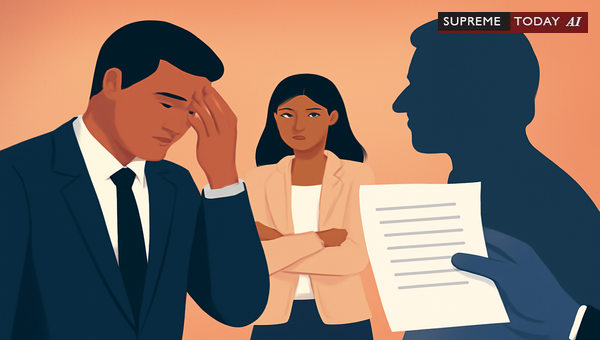
Imagine entrusting your legal battle to a professional advocate, only to lose because they missed a deadline or failed to appear in court. The question arises: Client Should Not Suffer because of Negligence by Advocate. In the Indian legal system, this principle is firmly established to protect innocent litigants from injustice caused by their lawyer's shortcomings. Courts prioritize justice for clients who act in good faith, ensuring advocate negligence doesn't derail their cases.
This blog delves into the legal implications, key precedents, and practical advice, drawing from rulings and other judicial insights. Whether you're a litigant facing this issue or simply curious about your rights, understanding this can empower you. Note: This is general information, not specific legal advice. Consult a qualified lawyer for your situation.
The cornerstone of this doctrine is that an innocent client should not bear the consequences of their advocate's failure to perform duties adequately. The has repeatedly affirmed this, emphasizing the client's reliance on the advocate's expertise to navigate complex legal proceedings. As held in , an innocent party should not suffer injustice due to their advocate's default 1983 0 Supreme(Gau) 131.
This protection extends to scenarios like dismissed appeals due to non-appearance or procedural lapses by the lawyer. Courts exercise discretion to restore such cases, provided the client shows good faith and no 2000 0 Supreme(Pat) 403 2014 0 Supreme(Bom) 2094.
Advocates are bound by professional ethics and duty of care. Courts hold that negligence by an advocate should not penalize the client, who often lacks legal acumen. In restoration applications, judges have restored appeals , stating the client should not be made to suffer for negligence of the Advocate 2009 0 Supreme(Del) 1040.
The has reiterated this in multiple cases:- Appeals restored despite advocate's failure to appear or act 2000 0 Supreme(Pat) 403.- Discretion favored for good-faith clients affected by advocate lapses 2014 0 Supreme(Bom) 2094.
For instance, in one matter, the applicant suffered due to the earlier advocate's failure to discharge duties, and courts intervened to prevent injustice 2009 0 Supreme(Del) 1040. Similarly, procedural delays attributed to advocate negligence were condoned as sufficient cause 2013 0 Supreme(Raj) 969.
Not all errors qualify as misconduct. Mere negligence or an error of judgment doesn't constitute unless it involves , , or disregard for client interests 1963 0 Supreme(SC) 13
.
It is well settled that mere negligence or want of greater professional care on the part of an Advocate would not make him liable for negligence in absence of any evidence 2022 0 Supreme(Bom) 962. However, gross lapses, like not informing or guiding the client properly, can lead to claims for and compensation
.
Courts routinely restore appeals dismissed due to advocate inaction. In , the principle was cemented: clients deserve a second chance 1983 0 Supreme(Gau) 131. This is echoed in cases where advocates' negligence led to default dismissals 2000 0 Supreme(Pat) 403.
If clients rely on advocate assurances and act diligently, they aren't accountable for failures. One petitioner learned of missed proceedings only via a new lawyer, arguing they suffered only due to negligence of his earlier Advocate 2009 0 Supreme(Del) 1040.
To understand advocate negligence, compare with medical cases. Mere errors or deviations from practice aren't negligence unless gross. A mere deviation from normal professional practice is not necessarily evidence of negligence. Let it also be noted that a mere accident is not evidence of negligence 2024 0 Supreme(Cal) 771. Similarly, in personal injury claims, negligence must be proven with evidence, not assumed 2025 0 Supreme(Ker) 2756.
This parallel reinforces that for advocates, simple lapses (without evidence of breach) don't penalize clients, but proven invites remedies 2022 0 Supreme(Bom) 962.
Protect yourself proactively:- Maintain Communication: Regularly check case status with your advocate to avoid surprises.- Document Everything: Keep records of instructions, filings, and hearings. This aids in proving good faith if issues arise
.- Seek Recourse: File for restoration under relevant rules (e.g., for suits, for inherent powers). For , complain to the or claim compensation for losses, like refunded fees plus damages
.
In one consumer case, a client claimed Rs.60,000 loss and Rs.7,500 fees back due to advocate negligence in
.
While clients are protected from case dismissal, advocates face accountability:- Disciplinary Action: may lead to or misconduct probes, but only after opportunity to defend 2022 0 Supreme(Bom) 962.- Civil Claims: under if negligence causes quantifiable loss.
Courts distinguish: strong>It is well settled that mere negligence... would not make him liable for negligence in absence of any evidence 2022 0 Supreme(Bom) 962.
India's judiciary upholds that clients should not suffer due to advocate negligence, rooted in equity and justice. Precedents like 1983 0 Supreme(Gau) 131 ensure remedies like appeal restoration, protecting good-faith litigants 2000 0 Supreme(Pat) 403 2014 0 Supreme(Bom) 2094.
Key Takeaways:- Act in good faith and document interactions.- Seek restoration promptly for advocate defaults.- Distinguish simple errors from for complaints.- Stay vigilant—proactivity prevents pitfalls.
References: 1983 0 Supreme(Gau) 131 2000 0 Supreme(Pat) 403 1963 0 Supreme(SC) 13
2014 0 Supreme(Bom) 2094 2022 0 Supreme(Bom) 962 2013 0 Supreme(Raj) 969
2009 0 Supreme(Del) 1040 2024 0 Supreme(Cal) 771 2025 0 Supreme(Ker) 2756
This post provides general insights based on judicial trends. For personalized advice, contact a legal expert.
#AdvocateNegligence #ClientRightsIndia #LawyerLiability


As per treatment reports (discharge card and wound certificate), the clinet was involved in an alleged history of RTA. Treated at Jubilee Mission Medical College and research institute, DOA: 15/01/2013, DOD: 11/02/2013,H.P No: S044798. ... The third respondent/insurer filed written statement admitting the policy but denying negligence on the part of the second respondent/driver of the offending car. It was also contended that the amount claimed was excessive....

Our clinet states that the averments in paragraphs 6,7 and 8 are denied as false and your client is put to strict proof of the same. ... our clinet further statest that the averments in paragraphs 9 and 10 are false and your client is put to strict proof of the same." 4. ... The petitioners are not entitled has to file additional written statement under Order 8 Rule 9 of C.P.C. The attempt of the petitioner appears to b....

Heard learned advocate Ms. Devanshi K. Patel for learned advocate Mr. Jigar P. Raval for appellant and learned advocate Mr. Rituraj M. Meena for the respondent No.2. Though served, none appeared for respondent No.1. 3. ... Bavishi was not examined by the plaintiff, whom plaintiff consulted and was diagnosed with corneal ulcer in right eye. The submission canvassed by the learned advocate for the appellant....
Apurva Narhari Vora, learned advocate for the respondent could not point out any glaring aspect which can attribute negligence and lead to a conclusion that doctors have failed in performing their duties. From the cross-examination of the Dr. ... If, on the other hand, it is an error that (such) a man, acting with ordinary care, might have made, then it is not negligence." 6.2. Learned advocate....

Gupta, Senior Advocate assisted by Mr. Rinesh Gupta Advocate, Mr. Saurabh Pratap Singh Chouhan Advocate, Mr. Pulkit Advocate, Mr. Gaurav Sharma Advocate, Mr. Samat Alam Advocate & Mr. Ashutosh Singh Naruka Advocate. For Respondent No. 1 : Mr. ... Anshuman Saxena Advocate with Mr. Divyansh Saini Advocate. HON'BLE MR. ... (5) The juris....

Learned Advocate Mr. ... A mere deviation from normal professional practice is not necessarily evidence of negligence. Let it also be noted that a mere accident is not evidence of negligence. So also an error of judgment on the part of a professional is not negligence per se. ... Learned Advocate Mr. Ayan Bhattacharya also distinguished the ration of j....

Therefore, the impugned order needs to be set aside and the matter should be heard afresh by the Appellate Court who shoud -Versus - Advocate for Opposite Party No.1 therefore, the fact of settlement of the case in the Lok Adalat, not impugned judgment by the Trial Court, should not

(iii) It is impossible to define culpable or criminal negligence, and it is not possible to make the distinction between actionable negligence and criminal negligence intelligible, except by means of illustrations drawn from actual judicial opinion.” ... Apparently, mere negligence would not constitute any offence, unless such negligent act on the part of the accused is found to be prox....

Learned counsel for the opposite party Nos. 1 to 5 submitted that the DSE test was conducted specifically as per medical protocol under expert supervision and Cardiac Arrest was known risk, not due to negligence. ... The consent obtained for DSE test was merely formal and not truly informed. ... The opposite party Nos. 2, 3 & 4 were merely a referring and consulting doctors, who did not participate in conducting DSE test. ....

test as to whether there has been negligence or not is not the test of the man on the top of a Clapham omnibus, because he has not got this special skill. ... Advocate Vishnu Jayapalan, appearing for the petitioner contended that, even if the prosecution allegations are accepted in their entirety the offence under Section 304A will not be attracted. ... A simple lack of care, an error of....

It is well settled that mere negligence or want of greater professional care on the part of an Advocate would not make him liable for negligence in absence of any evidence. In the present case, before de-empanellment of the petitioner, the Bank ought to have give an opportunity to the petitioner to justify his search report. It appears that the Bank did not take the precaution of obtaining any such affidavit from the Directors of the M/s. Krishidhan Seeds Limited. Admittedly,....
But, unfortunately that was not to be and there was some negligence, may be gross negligence on the part of the concerned attorney of the Advocate. Of course, the respondents ought to have contacted their Advocate, but, if they did not do so, that appear to be a mere mistake on their part, as considered by the learned Principal District Judge. The learned Principal District Judge has found that there have been no mala fides nor any deliberate attempt on the part of the respon....
Learned counsel also relied upon the judgment in case of State of Haryana v. Chandra Mani And Others, (1996) 3 SCC 132 , in support of his submissions that the procedural delay in filing the application should be considered as sufficient cause. Learned counsel Mr. Prateek Sharma for the respondent No. 1 has supported the impugned order passed by the trial court and submitted that the appeal be dismissed. He also submitted that because of the negligence on the part of the Advocate, t....

She is also guilty of deficiency in service and for deficient service and negligence of the Advocate she suffered loss of Rs.60,000 and hence she claimed refund of fees paid of Rs.7,500 with interest @18% p.a. reimbursement of Rs.60,000 loss suffered by her and she claimed interest @18% p.a. on total amount of Rs.1,21,500. According to her the Advocate was guilty of negligence in not informing her and guiding her properly. As such her application for condonation of delay was ....

The applicant then came to Delhi and engaged a new set of Advocates and learnt about the past proceedings on inspection of file by his new Advocate. About the applications no.13815/06 and 13816/06 being dismissed in default on 24.9.07 nothing is stated. It is stated that the applicant suffered only due to negligence of his earlier Advocate who did not discharge his professional duty as expected and the applicant should not be made to suffer for negligence of the Advocate.


An indispensable Tool for Legal Professionals, Endorsed by Various High Court and Judicial Officers
Please visit our Training & Support
Center or Contact Us for assistance

Scan Me!
India’s Legal research and Law Firm App, Download now!


For Daily Legal Updates, Join us on :



 Back to top


