


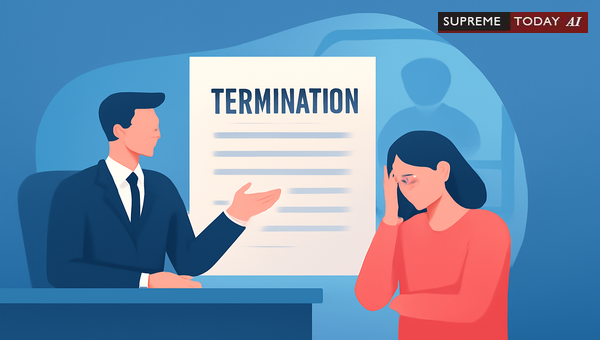
Can Appellate Authority Confirm Termination Without Hearing?
In the realm of employment law, few issues strike as deeply at the heart of fairness as the . Employees facing job loss often appeal to higher authorities, hoping for justice. But what happens when the appellate authority simply confirms the termination without granting a personal hearing? This raises a critical question: Can Appellate Authority Confirm the Without Giving ?
Generally, no. , a cornerstone of Indian jurisprudence, demand that affected parties receive a fair opportunity to be heard before adverse decisions like termination are upheld. This blog delves into the legal precedents, exceptions, and practical implications, drawing from key judgments to provide clarity for employees, employers, and HR professionals. Note: This is general information, not specific legal advice—consult a qualified lawyer for your situation.
Main Legal Finding
An appellate authority typically cannot confirm the without providing an to the employee. Established precedents mandate adherence to natural justice principles, ensuring individuals can present their case before final adverse actions. 2022 0 Supreme(Ker) 261 emphasizes that when a service is terminated without an , the order is liable to be set aside, and the appellate authority must consider the case afresh after providing such opportunity.
Key in Termination Cases
Natural justice comprises two fundamental rules: (hear the other side) and (no one should be a judge in their own cause). In employment disputes:
is Mandatory: Before termination or its confirmation, employees must generally be allowed to respond to allegations. Failure to do so vitiates the order. 2022 0 Supreme(Raj) 1530 holds that the appellate authority’s failure to afford a personal hearing and to record reasons based on a proper would violate the .
Appellate Authority's Duty: Appellate bodies must review the original order's legality, record reasons, and apply independent mind. Simply rubber-stamping without hearing, especially if requested, is impermissible. 1996 0 Supreme(All) 1348 declares termination without hearing illegal, underscoring that appellate confirmation cannot bypass this.
: Termination often carries stigma, triggering natural justice requirements even in appellate stages. Courts have consistently quashed orders lacking hearings. 2023 0 Supreme(Kar) 552 notes: The order having been passed on the basis of a preliminary inquiry and not on the basis of a regular departmental enquiry without issuing a charge-sheet or giving an to the appellant, cannot b....
Detailed Analysis: Appellate Authority's Role
Reviewing Legality and Propriety
Appellate authorities aren't required to conduct fresh inquiries but must ensure natural justice compliance in the original process. If deficient, they should remand or hear afresh. In 2022 0 Supreme(Ker) 261, the court stressed reading natural justice into proceedings, preventing confirmation without hearing.
Recording Reasons and
Authorities must document why they uphold termination, addressing employee grounds. Absent this, decisions falter. 2022 0 Supreme(Raj) 1530 exemplifies how non-recording of reasons alongside no hearing renders orders illegal.
Judicial Stance on Stigmatizing Terminations
When termination implies misconduct, hearings are non-negotiable. 2017 0 Supreme(MP) 406 states: The termination order clearly shows that it is based on alleged misconduct of the petitioner and such order, in my view, casts stigma on the petitioner. Courts set aside such orders, directing fresh hearings per natural justice. 2004 0 Supreme(All) 1637 affirms: It is settled law that if the order of termination is based on certain charges the services could not be dispensed with without giving a notice and without giving an .
Insights from Additional Case Law
Several rulings reinforce this position:
Temporary and Employees: Even temporary staff gain protections if . One case under directed reinstatement with 50% backwages for termination sans inquiry, reserving liberty for proper inquiry—highlighting natural justice violations. 2025 Supreme(Online)(Kar) 36594 clarifies: this judgment shall not preclude the competent authority from taking fresh decision... after giving them effective .
Public Distribution and Essential Commodities: In regulatory contexts, orders without hearings are quashed. 2018 0 Supreme(MP) 54 mandates: appellate authority shall not pass any order without giving an to the aggrieved person/society.
: compliance requires notice; non-adherence voids termination. 2017 0 Supreme(MP) 379 involved challenge for lack of hearing and enquiry, upholding reinstatement.
Government Servants: Temporary government employees facing charge-based termination need notice and hearing. 2004 0 Supreme(All) 1637 relied on precedent: acquittal deems no involvement, mandating reinstatement.
Review and Limitation Contexts: Appeals dismissed without hearing prompt fresh considerations. 2013 0 Supreme(Raj) 954 saw appeal dismissal sans hearing, with limitation starting post-review.
These cases illustrate a consistent theme: hearings safeguard fairness across sectors.
Exceptions and Limitations
While the rule is strict, exceptions exist:
Voluntary Admissions: If employees admit guilt or waive hearing explicitly/implicitly, courts may uphold confirmation. 2021 0 Supreme(Pat) 599 notes such fact-specific allowances.
Statutory Exclusions: Clear legislative mandates contrary to natural justice may override, though rare.
No Stigma: Purely administrative terminations (e.g., contract expiry) might not require hearings, but charge-based ones do.
Generally, the default is hearing mandatory unless proven otherwise.
Practical Implications for Employers and Employees
For Employers:- Always document hearings or show waiver.- Appellate reviews should include personal hearings if stakes high.- Train HR on natural justice to avoid costly quashals.
For Employees:- Request hearings explicitly in appeals.- Challenge via writs if denied—courts often reinstate with backwages.- Preserve records of requests/denials.
Conclusion and Key Takeaways
In summary, appellate authorities generally cannot confirm termination without an , as this breaches natural justice enshrined in Indian law. Judgments like 2022 0 Supreme(Ker) 261, 2022 0 Supreme(Raj) 1530, and 1996 0 Supreme(All) 1348 reinforce: employees deserve a fair shot before job loss finality.
Key Takeaways:- Natural justice mandates hearings for stigmatizing terminations.- Appellate bodies must reason and hear, not affirm blindly.- Exceptions are narrow (admissions, waivers).- Violations lead to quashal, reinstatement, backwages.
Stay informed, protect rights responsibly. For tailored advice, engage legal experts.
References:1. 2022 0 Supreme(Ker) 2612. 2022 0 Supreme(Raj) 15303. 1996 0 Supreme(All) 13484. 2021 0 Supreme(Pat) 599And others cited inline.
#EmploymentLaw, #NaturalJustice, #TerminationHearing















