


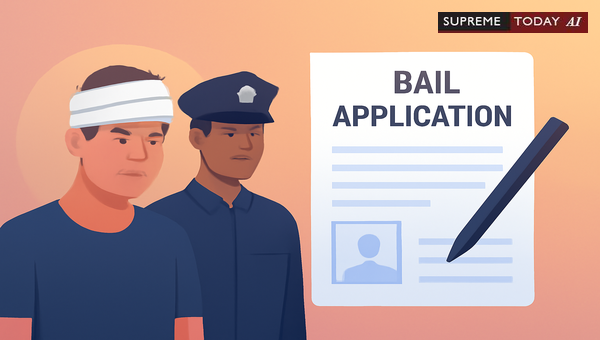
Bail Rights When Register Grievous Head Injury Under Sections
Imagine this: a heated altercation leads to a head injury, and the file a case under sections like 323 or 341. Despite the grievous nature of the injury, you're entitled to bail as a matter of right. But what exactly can you do next? If you're asking, What can I do if the Registered a Case under Section in a on Head? this guide breaks it down.
This post explores legal remedies, key factors courts consider, and real case examples. Note: This is general information, not specific legal advice. Consult a qualified lawyer for your situation.
Understanding vs. Offenses in Injury Cases
Under the (), offenses are classified as or . sections, such as (voluntarily causing hurt), 341 (wrongful restraint), and 34 (common intention), grant the accused a right to bail upon fulfilling conditions. Even if the injury is grievous—like a skull fracture or deep head wound—these sections presume bail.
Grievous injuries on vital areas like the head might typically invoke (attempt to murder), a offense. However, if registered under sections, your path to release is clearer. Courts assess the nature of injuries, medical evidence, and intent. For instance, in cases where injuries are deemed grievous but not life-threatening, bail is often granted
.
Key Factors Courts Evaluate
- Severity and Location: Head injuries raise concerns due to vulnerability, but simple hurts or mutual injuries in cross-cases favor bail.
- Medical Reports: Essential to classify injuries as simple or grievous.
- Cross-Cases: Mutual allegations and injuries on both sides tilt towards bail 2006 0 Supreme(Raj) 1328.
Step-by-Step Legal Remedies Available
1. File a Application
The primary step is approaching the or with a bail application under . Highlight:- nature of charges.- Medical evidence showing no intent to murder.- Time in custody and conduct.
In 2006 0 Supreme(Raj) 1328, despite grievous head injuries, bail was considered due to sections and cross-injuries. Courts may impose conditions like passport surrender or no witness contact.
2. Seek
If arrest looms, file under . This pre-arrest relief is viable even in cases with apprehension. For example,
involved a Section 307 case but showed considerations in injury matters: This application under Section 438... for the offence punishable under Section 307 of the .
3. Challenge Bail Denial
If refused, appeal to higher courts via revision or CrPC Section 439. Emphasize charges and . In
, despite arguments, was granted: Against this, learned HCGP argued that there is grevious injury to one of the injured... shall be released on .
4. (Rare Option)
Under , if FIR is , approach . Not ideal for injury severity alone, but useful in false claims with 2024 Supreme(Online)(RAJ) 29281.
Judicial Precedents: Bail Granted Despite Head Injuries
Courts balance severity against rights. Key principles:- : Injuries on head don't bar bail if and no flight risk 2006 0 Supreme(Raj) 1328.- Non-Life-Threatening Injuries: Bail allowed when hurts aren't dangerous
, noting got five injuries, out of which injuries No. 1 & 4 are grevious.
In SB Criminal Misc. Bail Application No. 1750/2006, bail was granted in cross-case with head injuries under charges 2006 0 Supreme(Raj) 1328. Similarly, 2011 0 Supreme(P&H) 2036 clarified: doesn't imply Section 307 if intent lacks.
Another precedent:
described head blow under Section 307 but stressed context for bail. And in 2024 Supreme(Online)(RAJ) 29281, Bail may be granted when the nature of injuries is not life-threatening, and no risk of influencing witnesses or fleeing justice is established.
| Remedy | Description | When Applicable in Head Injury Cases ||--------|-------------|-------------------------------------|| | CrPC 436/437 application | sections; , simple injuries 2006 0 Supreme(Raj) 1328 || | CrPC 438 pre-arrest | Apprehension despite nature
|| Appeal/Revision | Higher court challenge | Bail denial; emphasize medical evidence 2011 0 Supreme(P&H) 2036 || FIR Quashing | CrPC 482 | claims, mutual injuries 2024 Supreme(Online)(RAJ) 29281 |
Special Considerations for Grievous Head Injuries
Head injuries demand caution:- Medical Evidence Crucial: Differentiate grievous (bone-deep, fracture) from simple. Courts probe intent—was it to kill?
: on his head and fell down... three injuries which all are grevious.- Help: Injuries on both sides show mutual fight, favoring bail
.- Custody Duration: Prolonged detention weighs for release.
Even in Section 307 fears, if downgraded to , remedies apply. No automatic denial for grievous hurts if factors align.
Conclusion and Key Takeaways
In sections for grievous head injuries, bail is your right—act swiftly with a bail application, backed by medical proof and case facts. Courts prioritize balance: severity vs. liberty, intent vs. accident.
Key Takeaways:- Leverage presumption.- Use proactively.- Cite precedents like 2006 0 Supreme(Raj) 1328 2011 0 Supreme(P&H) 2036.- Gather medical/cross-FIR evidence.
Disclaimer: Laws evolve; outcomes vary. Seek professional legal counsel immediately. Stay informed, stay free.
References: 2006 0 Supreme(Raj) 1328 2011 0 Supreme(P&H) 2036
2024 Supreme(Online)(RAJ) 29281 #BailLaw, #GrievousHurt, #IPCSections












