


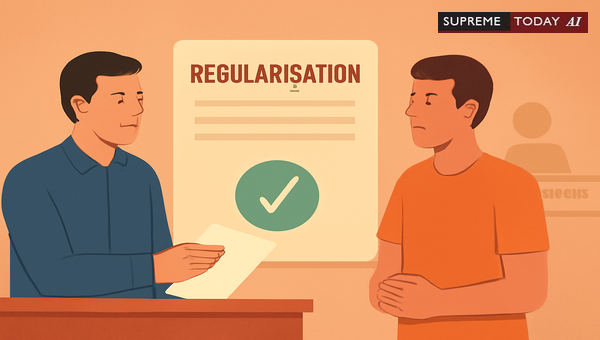
Is a 28-Year Casual Worker Entitled to in India?
In the realm of Indian labour law, one common yet complex question arises: A Person is Working in a Post Since Last as Casual Worker Whether he is Entitled for . This issue touches on the rights of long-serving casual or daily wage workers, who often toil for decades without the benefits of permanent employment. While long service creates a compelling case, is not automatic and hinges on several legal factors.
This blog post delves into the nuances of this entitlement, drawing from judicial precedents, constitutional principles, and government schemes. We'll explore whether of tips the scales toward , while emphasizing that this is general information—not personalized legal advice. Consult a qualified lawyer for your specific situation.
Overview of Casual Worker
Casual workers, daily wagers, or temporary employees in government or public sector roles frequently seek after years of service. Courts have recognized that prolonged engagement, especially against sanctioned posts, may entitle workers to permanence, safeguarding against exploitation.
However, is typically a policy-driven process, not a . Key considerations include:- Duration and continuity of service.- Whether the work was against a vacant, .- Performance of duties akin to regular employees.- Absence of discrimination compared to similarly placed workers.
For someone with of service, the case strengthens significantly, as courts view denial as potentially violative of equality under of the Constitution. 2023 0 Supreme(SC) 748
Key Legal Principles Governing
and Constitutional Rights
Long-term service is a cornerstone. Courts have held that employees working for considerable periods, like , cannot be perpetually denied , as it infringes fundamental rights. This principle stems from cases where long-serving workers were treated unequally compared to regularised peers. 2023 0 Supreme(SC) 748
Typically, completion of of qualifies workers for consideration under various schemes. For instance, regular casual workers (RCWs) gain entitlements like leave and advances post-, paving the way for potential . 2020 0 Supreme(Tri) 49 2015 0 Supreme(J&K) 110
In one case, a petitioner working on a since (over 26 years at the time) was deemed entitled to confirmation and full salary, highlighting how extended service bolsters claims. As the petitioner is working on since last 26 years, he is entitled for confirmation in class III post and also entitled for getting the entire salary of the said post.2017 0 Supreme(Jhk) 1050
Role of Sanctioned Posts and Policy
A critical caveat: service must be against a . Mere long service without this does not confer rights. The respondent claims to be a casual labour and any person working as a casual labour in Government department... despite the fact that he completes 240 days of work he cannot claim any right of . An appointment can be made only to a existing post or ...2005 0 Supreme(Bom) 1829
remains discretionary, influenced by employer policies, post availability, and qualifications. Consultation with Employment Exchanges may apply for skilled roles but is often waived for unskilled ones. 1992 0 Supreme(All) 668 2014 0 Supreme(SC) 112 2021 0 Supreme(Mad) 1958
Schemes like the offer relaxations, such as upper age limits, for eligible casual workers. While considering such , a casual worker may be given relaxation in the upper age limit only if at the time of initial recruitment as a casual ....2016 0 Supreme(Del) 4130
Judicial Precedents Supporting
The and High Courts have shaped this landscape:- Long service against sanctioned posts: Workers with over , performing regular duties, are often directed for after verification. 1988 0 Supreme(SC) 635 2016 0 Supreme(J&K) 39 2024 0 Supreme(Gau) 874- Prohibition on discrimination: Non- of long-servers when peers are absorbed is arbitrary. 2023 0 Supreme(SC) 748 2024 6 Supreme 310
For example, in Jawahar Navodaya Vidyalaya cases, workers starting as daily wage casuals since were certified for long service, supporting claims. 2025 Supreme(Online)(CAT) 2640
Conversely, courts caution against '': Even temporary, adhoc or daily wage service for a long number of years... will not entitle such employee to claim since he is not working in the sanc....2016 0 Supreme(Mad) 3455
Precedents affirm: Employees who have served continuously for more than ... are often considered for regularization.2025 Supreme(Online)(CAT) 1765 2022 0 Supreme(Tri) 399
Counterarguments and Limitations
Not all long-service claims succeed:- No : or unsanctioned roles bar . 2024 0 Supreme(Guj) 1443 2023 0 Supreme(Del) 1845- Part-time/ad-hoc nature: Purely temporary service, even decades-long, lacks without policy backing. 2023 0 Supreme(Mad) 1912- Procedural lapses: Initial irregular appointments undermine claims. 2023 0 Supreme(Megh) 60
Long service alone is insufficient; verification of sanctioned vacancies is essential. Courts prioritize proper recruitment processes.
Steps to Claim
If you've served as a casual worker:1. Gather proof: Service certificates, pay slips, and duty rosters.2. Make a representation: Approach the employer citing schemes and precedents.3. File a writ petition: In High Court under , referencing Articles 14/16 and key judgments.4. Seek verification: Insist on checking against sanctioned posts.
Success often depends on policy and vacancies, but creates a strong basis, especially if duties mirror regulars'.
Conclusion and Key Takeaways
A casual worker with of service may be entitled to , particularly if against a , continuous, and non-discriminatory. Judicial trends favor such workers, balancing equity with policy. However, outcomes vary—long service builds a but isn't guaranteed.
Key Takeaways:- 10+ years often triggers eligibility. 2015 0 Supreme(J&K) 110- Sanctioned posts are mandatory. 2005 0 Supreme(Bom) 1829- Challenge discrimination via courts. 2023 0 Supreme(SC) 748- Act promptly with legal counsel.
This post is for informational purposes only. Laws evolve, and cases are fact-specific. Seek professional advice.
References:- 2023 0 Supreme(SC) 748 2020 0 Supreme(Tri) 49 2015 0 Supreme(J&K) 110 1992 0 Supreme(All) 668 2014 0 Supreme(SC) 112 2021 0 Supreme(Mad) 1958 1988 0 Supreme(SC) 635 2016 0 Supreme(J&K) 39 2017 0 Supreme(Jhk) 1050 2005 0 Supreme(Bom) 1829 2016 0 Supreme(Del) 4130 2016 0 Supreme(Mad) 3455 2025 Supreme(Online)(CAT) 2640
#CasualWorkerRights, #LabourLawIndia, #Regularisation












