Searching Case Laws & Precedent on Legal Query.....!
Analysing the retrieved Case Laws
Scanned Judgements…!



Searching Case Laws & Precedent on Legal Query.....!
Analysing the retrieved Case Laws
Scanned Judgements…!
Authenticity of CCTV Footage - Multiple reports highlight concerns about the unverified status of CCTV footage used as evidence. For instance, ["SHUBHAM YADAV vs STATE OF U.P.THRU.PRIN.SECY. HOME LKO. - Allahabad"] states that the CCTV footage submitted for forensic examination was not authenticated by the Forensic Lab, raising questions about its reliability, especially since it formed the basis for identifying the accused and rejecting bail applications. Similarly, ["SHUBHAM YADAV vs STATE OF U.P.THRU.PRIN.SECY. HOME LKO. - Allahabad"] reports that the CCTV footage contained ghost images and vertical lines, indicating it was not an original, verified video, further undermining its evidentiary value.
Forensic Examination and Manipulation Risks - Several sources emphasize that CCTV footage can be manipulated. ["2022 Supreme(Online)(MP) 8893"] notes that the footage seized from the applicant's house was sent for cyber forensic analysis, but the report was not received, and the footage could have been re-recorded or tampered with, especially since the police did not record statements from the persons who provided the footage or draw panchanamas. ["2023 0 Supreme(Bom) 1640"] admits that CCTV footage on CDs can be edited or tampered with, and the investigators did not verify the authenticity of the footage before relying on it.
Identification and Reliability Issues - The reliability of CCTV footage for identification is questioned. ["SHUBHAM YADAV vs STATE OF U.P.THRU.PRIN.SECY. HOME LKO. - Allahabad"] mentions ghost images and unclear visuals, and witnesses or informants often rely on CCTV footage rather than eye-witness testimony, which is problematic if the footage is unverified. ["2023 0 Supreme(Bom) 1640"] highlights that witnesses admitted the person in CCTV footage was not clearly identifiable, weakening the evidence's conclusiveness.
Procedural Shortcomings in Handling CCTV Evidence - Several instances reveal procedural lapses, such as failure to seize or properly document CCTV footage. ["2023 0 Supreme(Bom) 1640"] and ["2023 0 Supreme(MP) 821"] describe that police did not prepare proper panchanamas or record statements from those who obtained the footage, making the evidence less credible. Moreover, the absence of original footage or proper chain of custody casts doubt on its integrity.
Court Perspectives on CCTV Evidence - Courts recognize CCTV footage as important but caution against over-reliance without authentication. ["2025 Supreme(Online)(Tel) 66909"] notes that non-production of CCTV footage can undermine the prosecution, and courts have emphasized that the footage should be examined carefully, considering potential manipulation and procedural lapses.
Preservation and Forensic Analysis - Several sources, such as ["2021 Supreme(Online)(CIC) 1702"] and ["2025 Supreme(Online)(Tel) 35483"], stress the importance of preserving CCTV footage, especially when it can be crucial for establishing facts. They recommend that authorities maintain the footage securely and ensure proper forensic analysis to prevent tampering.
Analysis and Conclusion:CCTV footage is a valuable tool in criminal investigations but faces significant challenges regarding authenticity, integrity, and procedural handling. The evidence suggests that without proper forensic verification, documentation, and chain of custody, CCTV footage alone may be unreliable for establishing identity or facts. Courts advise caution and emphasize the need for forensic authentication before relying heavily on such electronic evidence. Preservation of footage and adherence to procedural safeguards are essential to uphold its evidentiary value ["SHUBHAM YADAV vs STATE OF U.P.THRU.PRIN.SECY. HOME LKO. - Allahabad"] ["SHUBHAM YADAV vs STATE OF U.P.THRU.PRIN.SECY. HOME LKO. - Allahabad"] ["2022 Supreme(Online)(MP) 8893"] ["2023 0 Supreme(Bom) 1640"] ["2025 Supreme(Online)(Tel) 66909"].
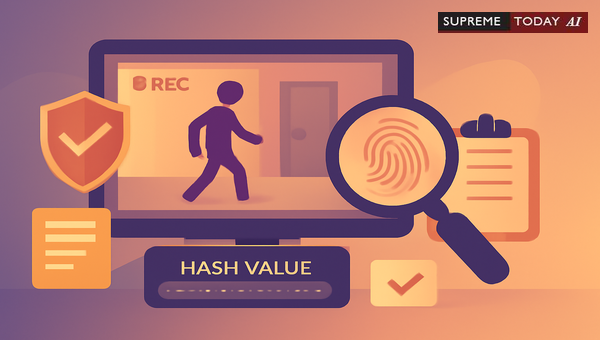
In today's digital age, CCTV footage often plays a pivotal role in criminal investigations and court proceedings. But what happens when questions like CCTV footage and forensic lab examination arise? Can this crucial evidence stand up in court, or does it risk being dismissed due to procedural lapses? This blog explores the legal framework under Indian law, focusing on requirements, preservation protocols, and forensic scrutiny. While this provides general insights, consult a legal professional for case-specific advice.
The of CCTV footage and forensic laboratory examinations hinges on strict compliance with legal principles, particularly . Courts emphasize proper collection, preservation, and certification of to ensure its authenticity and reliability. Without these, even compelling footage may be rejected. 2023 0 Supreme(Mad) 1800
Key to this is the Section 65-B certificate, which must be issued by the custodian of the electronic system, confirming the footage's genuineness. Forensic protocols further demand standardized procedures, including hash value maintenance to detect tampering. 2023 0 Supreme(Mad) 1800
CCTV footage can establish critical facts like presence at a crime scene, but only if procedures are followed meticulously. Section 65-B mandates a certificate authenticating the record's production and integrity. Courts have outlined checklists: identify cameras, obtain passwords, verify system time, and preserve footage in . 2023 0 Supreme(Mad) 1800
Failure here leads to inadmissibility. For instance, in one case, CCTV footage was rejected because it lacked proper authentication by the , which reported it contains Footage which has not been authenticated.
Similarly, another ruling noted footage with ghost images of another video with some vertical lines/bands and it appears to be not an original video, undermining its .
MUSTAFA @ GULAM MUSTAFA vs STATE OF U.P. THRU. PRIN.. SECY. HOME LKO
Preservation involves labeling, sealing, and certifying footage promptly. The Section 65-B certificate must affirm it's a true and unaltered reproduction. Forensic processes require at stages like receipt, copying, examination, and storage—any mismatch raises tampering doubts. 2023 0 Supreme(Mad) 1800
In a jail brawl case, convictions were overturned because the under was issued by technicians, not a person occupying a responsible official position, and lacked company letterhead or seal. The court ruled: CCTV FOOTAGE - - REQUIREMENTS - INTERPRETATION - - CERTIFICATE TO BE ISSUED BY A PERSON OCCUPYING A RESPONSIBLE OFFICIAL POSITION - TECHNICIANS OF CCTV COMPANY NOT QUALIFIED. 2023 0 Supreme(Jhk) 732
Forensic labs must document system details, wiring photos, time synchronization, and extract data in native formats. Reports from authorized labs like gain traction, but only if protocols are followed. Courts may direct to verify tampering claims. 2022 0 Supreme(Cal) 778
Challenges abound: In a dacoity case, no CCTV footage clearly identified faces, and lacked Section 65-B compliance, leading to . The court noted: Compliance with requirements for not met - CCTV footage not authenticated, no original data produced. 2025 Supreme(Online)(MP) 3470 Another murder trial saw failure to seize hard disks properly, contributing to due to mishandling. 2020 0 Supreme(Bom) 773
Maintaining —from collection to court—is vital. Non-compliance, like police not cooperating or ignoring court orders, erodes credibility. 2025 0 Supreme(SC) 1112 In POCSO cases, confessional statements tied to unauthenticated CCTV were inadmissible, with courts extending benefit of doubt. 2023 0 Supreme(Pat) 584
Courts consistently stress SOPs for . In a sexual assault conviction reversal, medical evidence contradicted timelines, and CCTV lacked certification. 2023 0 Supreme(Pat) 584 Bail denials often cite pending forensic CCTV analysis. 2019 0 Supreme(Del) 1794
Positive examples exist: A showroom manager identified footage showing a crime, aiding investigation when properly collected. 2025 Supreme(Online)(Tel) 56781 Yet, in child exploitation probes, even collected footage didn't quash proceedings without full compliance. 2021 0 Supreme(Bom) 250
by labs like , are scrutinized; unauthenticated data fails. 2025 Supreme(Online)(MP) 3470
To bolster :- Follow checklists for CCTV collection: passwords, time verification, native preservation. 2023 0 Supreme(Mad) 1800- Secure Section 65-B certificates from custodians.- Track throughout handling.- Seal, label, and document evidence chains.- Use certified labs like for exams.- Courts: Scrutinize compliance pre-admission.
Investigators ignoring these risk evidence exclusion, as seen in rape probes needing exhumation and CCTV review due to lapses. 2020 0 Supreme(Gau) 430
CCTV footage and forensic exams are powerful but fragile tools in Indian courts. Adherence to Section 65-B, preservation protocols, and hash integrity is non-negotiable. Cases like unauthenticated ghost images or technician certificates highlight pitfalls leading to acquittals.
MUSTAFA @ GULAM MUSTAFA vs STATE OF U.P. THRU. PRIN.. SECY. HOME LKO
2023 0 Supreme(Jhk) 732By prioritizing procedures, stakeholders enhance evidence reliability. This overview draws from legal precedents; outcomes vary by facts. Always seek expert legal counsel for tailored guidance.
References:1. 2023 0 Supreme(Mad) 1800: Procedures and checklists for CCTV/forensics.2. 2025 0 Supreme(SC) 1112: Non-compliance issues.3. 2022 0 Supreme(Cal) 778: .4. Additional cases:
,
MUSTAFA @ GULAM MUSTAFA vs STATE OF U.P. THRU. PRIN.. SECY. HOME LKO
, 2023 0 Supreme(Jhk) 732, 2025 Supreme(Online)(MP) 3470, 2023 0 Supreme(Pat) 584. #CCTVEvidence, #Section65B, #ForensicLawIndia


the trial court from the Forensic Laboratory, Mahanagar, Lucknow and a report was accordingly submitted by the Forensic Lab, Mahanagar Lucknow stating therein that the CCTV Footage sent for Forensic examination contains Footage which has not been authenticated by the Forensic Lab, Mahanagar, Lucknow. ... The CCTV Footage which has been made the basis of rejection of First bail application and on the basis of which identity....
The CCTV Footage on the basis of which identity of the applicant has been established has not been authenticated by the Forensic Lab, Mahanagar, Lucknow. Mahanagar Lucknow stating therein that the CCTV Footage sent for Forensic examination contains ghost images of another video with some vertical lines/bands and it appears to be not an original video. ... It is further submitted that in the additional statement of the informant also the identity of the applicant was establish....

Krishna further submitted that the petitioners intend to move an appropriate application before the Trial Court for taking the CCTV footage on record. Mr. ... Prasad, however, submitted that the Sessions Court may, if it so deems fit, examine the CCTV footage on its own, and that no further directions are warranted at this stage. 7. ... The petitioners apprehend that the said conduct was with a view to facilitating prior identification by the proposed witness, whose examination was fixed for 22.01.2026....

According to the closure report, the CCTV footage seized from the house of Mukesh (applicant) and the CCTV footage collected from the ATM were sent to Cyber Forensic Lab, Bhopal and since the report of Cyber Forensic Lab, Bhopal was not received, therefore, the investigation against the applicant was ... Furthermore, it is clear from the report of the Cyber Forensic Lab that the comparison could not be made with the CCTV footage col....

He admitted that he did not record statement of the person from whom he obtained CCTV footage and no distinct panchanama was drawn regarding procedure of obtaining CD of the CCTV footage. ... PW20-first Investigating Officer claims that he got hand sketch drawn on the basis of CCTV footage. ... PW19 Sandip, who retrieved CCTV footage which was made the basis of drawing hand sketch, has candidly admitted that, person seen in the footage#HL_E....

PW.9 is the Manager of Charitha Automobiles Showroom, where the CCTV footage cameras were installed. He identified the CCTV footage in which a person is seen hitting a sleeping person with a stone. After confirming the death of the sleeping person, the person left the scene. ... During the course of the investigation, it was found that a CCTV camera was installed near the Charitha Automobiles showroom. The Inspector of Police collected the footage from the said CCTV c....

During his cross-examination, he deposed that the control unit of the CCTV camera was installed in his house and the footage of the CCTV camera was of 7:00 pm. So many persons were seen coming and going in the said footage. ... She had seen the CCTV footage, captured in the camera of one Jai Shankar @ Lal Yadav whose shop was adjacent to the shop of the appellant. She could not mention, however, the time of the CCTV footage. She had....

in the CCTV footage. ... Another interesting feature is the authenticity of the CCTV footage transferred to pen drive. ... He has stated that an inquiry into the incident was conducted and the CCTV footage was recovered. ... The tenor of his evidence seems to revolved around what has been seen from the CCTV footage. The evidence of P.W.9 who is the informant and the Superintendent of Central Jail, Ghaghidih has also based his evidence on the #HL_STAR....

Memo and Digital Forensic Analysis Report of Cyber Forensic Lab, M.P. ... Police, Bhopal, Lab Case No. 200/2017.” 34. ... No CCTV footage was recovered which would show that appellants and their companions had arrived to the place of incident using this car nor there is any CCTV footage, which would go on to show that the faces of appellants were identifiable and were so identified in the CCTV footage of Control Room, Police ... The prosecution has p....

In paragraph 6 of cross-examination, the witness admitted that he did not prepare panchnama of checking, CCTV footage and did not seize CCTV recording. In paragraph 10 of cross-examination, ASI P.S. ... On 13.01.2018, SI Kamal Kishore (PW-11) seized CCTV footage from Hero Vinayak Motors, clerk colony vide seizure memo (Ex.P/19). On the same day, he also saw CCTV footage of electronics shop of Deepak Vijayavargiya (PW-6) and seized #....
The concerned investigating officer has also collected CCTV footage and incriminating material and the statements of CCTV operator has been recorded. In addition to this there are statements of more than 10 witnesses in tune with prosecution case. Therefore, merely because parents of victim and complainant have filed the affidavits thereby joining the prayer of petitioners for quashing the impugned FIR on the basis of amicable settlement, the FIR and charge-sheet cannot be quashed. In the copy of letter annexed to the charge-sheet it is stated that some of the witnesses who....

He collected the hard-disk of CCTV footage during investigation. He did not feel it necessary to collect the CCTV footage since the accused was arrested from house.

The facts that emerge are that driver of Shri Techi Kaso, Shri Sanu Biswakarma admitted to having an affair with the victim A . Progress in investigation has been indicated by way of examination of CCTV footage; exhumation of the body; taking photographs of the place of incidents and recording statements of various witnesses.

During investigation, the owner of the courier company Sh. Mahaveer Singh provided the legitimate source i.e. bills/invoices of the alleged stolen money. During investigation, one witness Bansi Lal Sharma @ Lal Chand stated that he was there in the room on 20.06.2019 around 5.45 am where 5-6 persons had come along with Laxmi Narayan @ Leeladhar and Leeladhar had introduced them as his relatives but soon thereafter when he had come from the washroom, all those people had disappeared and Vimal, the cashier informed him that the cash has been stolen. It is further the case of the prosecution th....
That the FSL result with regard to the suicide note and the words found written on the body of deceased is still pending from the FSL Rohini. The result of CCTV footage analysis is also awaited. That accused Ritika had applied for anticipatory bail before Ld. Court of Sessions and the same was dismissed on merits on 25.03.2019.


An indispensable Tool for Legal Professionals, Endorsed by Various High Court and Judicial Officers
Please visit our Training & Support
Center or Contact Us for assistance

Scan Me!
India’s Legal research and Law Firm App, Download now!


For Daily Legal Updates, Join us on :



 Back to top


