




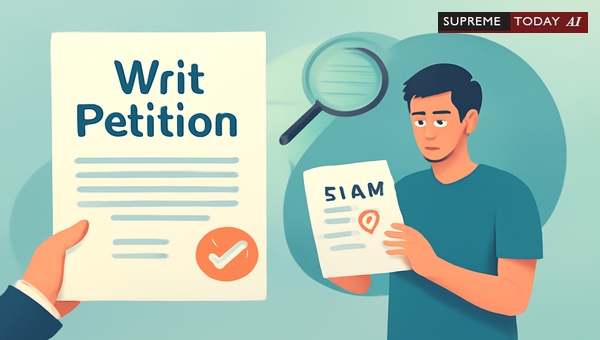
After Zero Marks : What Courts Say
In the high-stakes world of competitive exams and university assessments, receiving zero marks after a can feel like a devastating blow. Students often wonder: After Zero Marks – can you challenge this outcome through a under ? This post delves into the legal landscape, drawing from key judgments to provide clarity. While this analysis offers general insights, it is not personalized legal advice; consult a qualified lawyer for your specific situation.
The Core Issue:
is typically a one-time remedy for students dissatisfied with their initial scores. However, courts have consistently emphasized the . Once accepted, these marks bind both the student and the institution. As upheld in relevant rulings, the original marks cannot be retained after 2012 0 Supreme(Mad) 3296. This principle prevents endless challenges, ensuring administrative efficiency.
In cases where results in zero marks, petitioners often argue for further scrutiny. Yet, success is rare unless exceptional circumstances like or are proven. For instance, courts have ruled that is not permitted under university regulations unless zero marks are awarded in specific contexts, rejecting broader requests 2025 Supreme(Online)(Tel) 17518. Here, the court clarified: Court upheld that examination regulations allow only when zero marks are awarded, rejecting the petition for .
Key Factors Influencing Writ Outcomes
- : Universities follow strict rules. If adheres to these, courts defer to institutional expertise.
- No Automatic Right to Re-: Multiple revaluations are limited. One case noted no provision for a third by an independent authority after first (31 marks) and second (30 marks) rounds 2009 0 Supreme(Kar) 271.
- Evidence Threshold: Petitioners must demonstrate gross negligence or injustice, not mere dissatisfaction.
University Delays: A Ground for Relief?
Delays in processing requests can disrupt academic careers, such as missing subsequent exams. Courts view unjustifiable delays critically. In one instance, compensation was awarded due to the university's failure to promptly conduct and publish results, impacting the petitioner's progression 2000 0 Supreme(MP) 1126.
Similarly, (unreasonable delay in filing) can doom a petition. A writ was dismissed as substantially delayed and hit by , especially when answers were already valued, including zeros for specific questions 2022 Supreme(Online)(MAD) 2098.
Tip for Petitioners: Document all communications and timelines to build a delay-based claim. This may lead to compensatory relief, even if marks stand.
Proper Evaluation and Discrepancies
Courts stress . Where evaluations fall short, directives for independent follow. Discrepancies prompted re-exams by external examiners in several matters 1999 0 Supreme(AP) 807 1996 0 Supreme(AP) 575.
A notable exception involves technical errors, like OMR sheet omissions. Zero marks for not mentioning gender were condoned as a minor error, with directions to evaluate merits: Minor errors committed by candidates in filling online application forms deserve condonation to ensure a fair selection process 2013 0 Supreme(Raj) 521. This underscores procedural fairness over rigid technicalities.
Regulations Under Scrutiny
Regulations must be reasonable, not . One court struck down a clause requiring second only if marks increase by ≥15%, deeming it unreasonable: The main legal point established in the judgment is that regulations must be reasonable and not , and must be backed by reasonability and basis 2020 0 Supreme(Ker) 982. The possibility of varying examiner opinions was highlighted, citing absolute power corrupts absolutely.
Grounds for Challenging
Not all low scores warrant . High-achieving students face reluctance unless or tampering is shown 2005 0 Supreme(MP) 30 2005 0 Supreme(MP) 31. Pre- steps are crucial:- RTI Access: Candidates are entitled to inspect answer sheets under the : candidate is entitled to see his answer-sheet -- thereafter, he can make out a case for 2014 0 Supreme(MP) 65.- No Mass Irregularities Post-Session: Requests to annul entire exams fail if sessions have commenced 2010 0 Supreme(All) 4335.
| Common Grounds for Writ | Success Likelihood | Example Citation ||--------------------------|--------------------|------------------|| Finality of marks | Low | 2012 0 Supreme(Mad) 3296 || University delay | Moderate | 2000 0 Supreme(MP) 1126 || Evaluation discrepancies| High if proven | 1999 0 Supreme(AP) 807 || Regulatory arbitrariness| Variable | 2020 0 Supreme(Ker) 982 || Technical errors | High | 2013 0 Supreme(Raj) 521 |
Strategic Recommendations
If facing zero post-:1. Gather Evidence: Collect answer sheets via RTI, compare with model answers.2. Assess Regulations: Review university statutes for limits.3. File Promptly: Avoid by acting swiftly.4. Seek Compensation: For delays causing harm.5. Consider Alternatives: Supplementary exams or academic appeals.
Petitioners' success remains slim if revalued marks are final and procedures followed. However, proven irregularities open doors.
Conclusion and Key Takeaways
Navigating a after zero marks post- demands a strong evidential foundation. Courts prioritize finality and fairness, intervening only for glaring injustices. Key Takeaways:- Revalued marks are typically final 2012 0 Supreme(Mad) 3296.- Delays may yield compensation 2000 0 Supreme(MP) 1126.- RTI is your first step 2014 0 Supreme(MP) 65.- Regulations must be non- 2020 0 Supreme(Ker) 982.
This overview synthesizes precedents for educational stakeholders. For tailored advice, engage legal experts. Stay informed, and approach challenges methodically.
References:- 2012 0 Supreme(Mad) 3296 2000 0 Supreme(MP) 1126 1999 0 Supreme(AP) 807 1996 0 Supreme(AP) 575 2005 0 Supreme(MP) 30 2005 0 Supreme(MP) 31- Additional: 2025 Supreme(Online)(Tel) 17518 2022 Supreme(Online)(MAD) 2098 2020 0 Supreme(Ker) 982 2014 0 Supreme(MP) 65 2013 0 Supreme(Raj) 521 2010 0 Supreme(All) 4335 2009 0 Supreme(Kar) 271
Word count: ~950. General information only; not legal advice.
#WritPetition #RevaluationLaw #EducationLaw












