


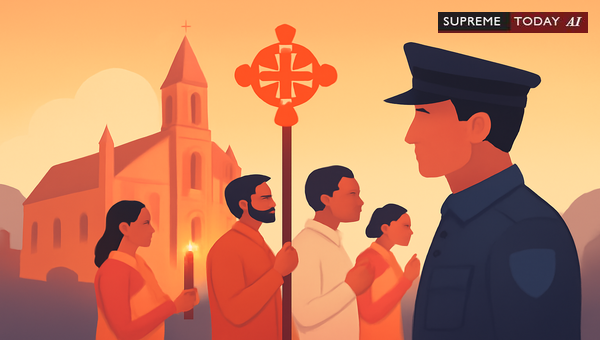
Church's Power to Regulate Religious Processions in India
Religious processions are a vibrant expression of faith, weaving through public streets and fostering community spirit. But what happens when the Power of the Church to Regulate Conducting of a Religious Procession comes into play? Churches and religious groups often seek to organize these events, yet they navigate a complex web of constitutional rights and state regulations. This blog post delves into the legal framework governing such processions, highlighting the balance between religious freedom and in India.
Whether you're a church organizer planning an event or a local authority managing permissions, understanding these laws is crucial. We'll explore key constitutional articles, police powers, court rulings, and practical recommendations—drawing from established precedents—while noting that this is general information and not specific legal advice. Consult a qualified lawyer for your situation.
Legal Framework Governing Religious Processions
India's Constitution forms the bedrock for religious freedoms. guarantees the right to freely profess, practice, and propagate religion, while protects the right to manage religious affairs. These include the right to conduct religious processions. However, these rights are not absolute; they are subject to in the interest of , morality, and health 1989 0 Supreme(Pat) 81 2017 0 Supreme(Mad) 1831.
State authorities, particularly the , wield significant regulatory powers under . This provision allows them to prescribe routes, times, and conditions for public assemblies and processions to prevent disruptions 1968 0 Supreme(Ori) 12 1986 0 Supreme(Pat) 119. Importantly, regulation does not equate to prohibition. Courts have clarified that outright bans are impermissible unless there's a clear threat to 1979 0 Supreme(Kar) 197 2022 0 Supreme(Mad) 2595.
Additional statutes like (1) of the Chennai City Police Act, 1888, empower regulation of assemblies, meetings, and processions in public places. As noted, - Power to regulate assemblies, meetings and processions in public places, etc. underscores this authority, especially for religious gatherings 2025 0 Supreme(Mad) 4550. Meanwhile, exempts purely religious assemblies within recognized places of worship, offering some leeway for church-led events 2022 Supreme(Online)(MAD) 32682 2023 0 Supreme(Mad) 1786.
Under , the state can regulate but not unjustly deny processions 2022 Supreme(Online)(MAD) 15663 2022 Supreme(Online)(MAD) 15645 2022 0 Supreme(Mad) 2595.
Key Legal Principles: Right to Conduct vs. Regulation
Religious groups, including churches, hold an inherent right to conduct processions on public streets, provided they do not obstruct ordinary traffic or violate lawful orders 2002 0 Supreme(Mad) 957 1997 0 Supreme(Ker) 226. The distinction between is pivotal. Authorities may dictate routes or timings but cannot ban processions merely due to objections from other communities. Courts stress , demanding that restrictions be 2017 0 Supreme(Mad) 1831 2022 0 Supreme(Mad) 2595.
remains a valid ground for curbs, particularly in communally sensitive areas. For instance, in Kanyakumari District, described as a religious sensitive area with a nearby CSI Church, permissions were considered but tied to avoiding conflicts 2023 Supreme(Online)(MAD) 17208. Yet, The presence of religious structures/places of worship cannot take away the right of other religious groups who have been enjoying all the rights including the conduct of religious procession for the past many years 2021 0 Supreme(Mad) 3210. Roads are secular under laws like , open to all faiths.
Processions must respect others' sentiments—no insulting slogans or provocations. Processions should be conducted without insulting other religious sentiments or raising slogans against other groups 2022 Supreme(Online)(MAD) 16678 2022 Supreme(Online)(MAD) 15645. Organizers often nominate responsible persons: The organisers shall nominate 5 persons from amongst themselves who shall be held responsible for conducting the procession 2024 0 Supreme(Cal) 364.
The state lacks absolute and/or inchoate power to prohibit a performance of ceremony in absence of any materials sufficient enough for formation of such opinion/decision 2017 0 Supreme(Cal) 431. Traditional practices are protected but regulable for peace
.
Court Findings and Precedents
Indian courts consistently uphold procession rights while permitting measured regulations. In obstruction cases, such interference is unlawful absent proven risks 2022 0 Supreme(Mad) 2595 1903 0 Supreme(Mad) 21. The mere proximity of other worship sites doesn't justify bans; focus on respectful conduct 2022 0 Supreme(Mad) 2595 2002 0 Supreme(Mad) 957.
For example, Ram Navami processions were allowed despite objections, as members of the other community regularly have their religious meetings on the said road 2024 0 Supreme(Cal) 364. Courts affirm that permissions should issue unless cogent evidence shows unrest, emphasizing balance in sensitive zones 1986 0 Supreme(Pat) 119 1996 0 Supreme(Mad) 1017.
Practical Recommendations for Churches and Authorities
For Churches Planning Processions
- Apply for permits early, detailing routes and timings.
- Dialogue with police on concerns, especially in sensitive areas like those with nearby churches 2023 Supreme(Online)(MAD) 17208.
- Nominate responsible organizers and commit to peaceful conduct 2024 0 Supreme(Cal) 364.
- Flexibly adjust to authority directives for harmony.
For Local Authorities
- Impose only necessary, justified restrictions.
- Promote interfaith dialogue to build tolerance.
- Grant permissions routinely, denying only with material evidence of threats 2022 Supreme(Online)(MAD) 16678 2022 Supreme(Online)(MAD) 15645.
Conclusion and Key Takeaways
The church enjoys a fundamental right to conduct religious processions, tempered by state powers to regulate for . While authorities like the police can set conditions under the Police Act and constitutional limits, prohibitions based solely on opposition are typically invalid. This framework promotes religious harmony, ensuring streets remain accessible for peaceful expressions of faith.
Key Takeaways:- Rights Protected: Articles 25-26 safeguard processions, subject to reasonable curbs 1989 0 Supreme(Pat) 81 2017 0 Supreme(Mad) 1831.- No Arbitrary Bans: Material justification required 2017 0 Supreme(Cal) 431.- Secular Roads for All: Presence of other faiths doesn't bar access 2021 0 Supreme(Mad) 3210.- Peace Paramount: Respect sentiments to avoid issues 2022 Supreme(Online)(MAD) 16678.
By adhering to these principles, churches can celebrate traditions lawfully. For tailored guidance, seek professional legal counsel.
References:1989 0 Supreme(Pat) 81 2017 0 Supreme(Mad) 1831 2002 0 Supreme(Mad) 957 2022 0 Supreme(Mad) 2595 1903 0 Supreme(Mad) 21
1979 0 Supreme(Kar) 197 1968 0 Supreme(Ori) 12 1986 0 Supreme(Pat) 119 2023 Supreme(Online)(MAD) 17208 2025 0 Supreme(Mad) 4550 2024 0 Supreme(Cal) 364 2021 0 Supreme(Mad) 3210 2017 0 Supreme(Cal) 431 2022 Supreme(Online)(MAD) 15663 2022 Supreme(Online)(MAD) 16678 2022 Supreme(Online)(MAD) 15645 2022 Supreme(Online)(MAD) 32682 2023 0 Supreme(Mad) 1786
(Word count: 1028. This post provides general insights based on precedents; laws evolve, so verify current status.)
#ReligiousProcession #ChurchLawIndia #FreedomOfReligion












