


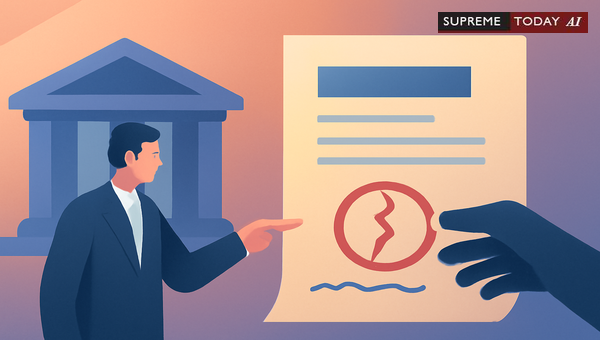
Civil Suits vs Revenue Authorities: Duty Failure & Damages
In the complex landscape of Indian land and revenue disputes, property owners and litigants often face a critical question: When Revenue Authorities have Failed to Discharge their Duty, is a Civil Suit Maintainable against them Claiming Damages? This issue arises frequently when revenue officials neglect their , leading to unlawful proceedings, negligence, or delays that harm individuals. Understanding the between and is essential for effective redress.
This blog post explores the legal principles, relevant case laws, limitations, and practical recommendations. While this provides general insights based on , it is not specific legal advice—consult a qualified lawyer for your situation.
Key Legal Principles on Jurisdiction
generally hold jurisdiction over civil matters unless expressly barred by statute. However, revenue-specific laws often assign exclusive powers to revenue authorities for land and revenue record disputes. For instance, specific statutes confer to revenue authorities for certain disputes, particularly those involving land and revenue records 2010 0 Supreme(MP) 216 2015 0 Supreme(UK) 416.
A prime example is under , where civil suits concerning are not maintainable in 2014 0 Supreme(MP) 1107.
When Revenue Authorities Fail in Their Duties
The tide turns when revenue authorities fail to exercise jurisdiction or follow procedures. In such cases, a civil suit may be maintainable to challenge unlawful actions or claim damages for negligence 2012 0 Supreme(HP) 344. Plaintiffs can seek declarations that proceedings are invalid or compensation for losses incurred due to this failure.
This principle ensures accountability. As one source notes, Even assuming that the revenue authorities failed to discharge their duty in accordance with law, it could not stop the limitation 2016 0 Supreme(All) 1818 2016 0 Supreme(All) 822. Here, courts emphasized that while failure doesn't halt , it doesn't preclude civil remedies if filed timely.
Relevant Case Law Highlights
provide clarity on maintainability:
Claims: If do not decide a plea of , may entertain the matter 2012 0 Supreme(HP) 344.
Non-Compliance with Revenue Orders: Parties failing to follow revenue court orders cannot later seek civil court relief, avoiding jurisdictional conflicts 1937 0 Supreme(Nagpur) 156.
Cancellation of Sale Deeds: Civil suits for canceling (not merely void ones) are typically maintainable 1980 0 Supreme(All) 191 1998 0 Supreme(All) 616.
Additional cases reinforce damages claims:
In scenarios, Only thing which a complaining party may get if a contract is wrongfully terminated or there is a , damages for such breach in a civil suit 2024 0 Supreme(Cal) 218. Though not directly revenue-related, this underscores ' role in awarding damages for official lapses akin to breaches.
A suit claiming Rs.8,80,000/- damages against government doctors for negligence was dismissed, highlighting scrutiny in public authority claims
. Similarly, in post-poll violence cases, state authorities' failure to act prompted court intervention, noting the State authorities have failed to discharge their duty despite intimation 2021 0 Supreme(Cal) 268. Courts directed independent probes, showing remedies beyond civil suits.
In , limitation bars apply strictly: Where limitation apply and period has exhausted, remedy shall stand barred but right will not stand barred 2016 0 Supreme(All) 1818. Revenue authorities' delays don't extend timelines.
against noise pollution violations succeeded because authorities, have failed to take action against the violations and thereby failed to discharge their statutory duty 2014 0 Supreme(Bom) 878. Courts mandated strict enforcement.
Under the , failure to strike off defunct companies led to : the respondent had not taken any action despite the petitioner's requests 2009 0 Supreme(Ker) 885.
These cases illustrate that while civil suits may lie for duty failures, courts weigh exclusivity, timeliness, and alternatives.
Limitations on Filing Civil Suits
Not all claims succeed:
: Suits on matters exclusively for , like partition or title claims, are dismissed 2023 0 Supreme(HP) 127 1979 0 Supreme(All) 524.
: Filing post-limitation invites dismissal. Even official failures don't toll time 2016 0 Supreme(All) 1818.
Alternative Remedies: Exhaust revenue appeals first. Courts discourage bypassing hierarchies.
Public Authority Immunity: may bar suits, but negligence in statutory duties often doesn't.
Misrepresentation vitiating contracts denies damages, as the Defendant had rightly rescinded the contract as it was vitiated by misrepresentation 2024 0 Supreme(Cal) 218. Analogously, plaintiffs must prove clean hands.
Practical Recommendations
To navigate these waters:
Assess Claim Nature: Check if it falls under revenue exclusivity 2010 0 Supreme(MP) 216.
Mind Timelines: File within limits; delays are fatal 2016 0 Supreme(All) 1818.
Explore Alternatives: Use writs under for if authorities dawdle 2021 0 Supreme(Cal) 268 2009 0 Supreme(Ker) 885.
Gather Evidence: Document negligence meticulously for damages.
Seek Expert Counsel: Jurisdiction nuances vary by state land revenue codes.
Key Takeaways and Conclusion
A civil suit may be maintainable against revenue authorities for failing duties, especially for declaring actions unlawful or claiming damages, but subject to bars like exclusivity and limitation 2012 0 Supreme(HP) 344.
- step in where revenue fails, but not for core revenue matters.
- Timeliness and exhaustion of remedies are crucial.
- Cases like or negligence bolster claims, while delays doom them.
This analysis highlights jurisdictional interplay in India's dual court system for land disputes. Property rights demand vigilance—proactive steps within forums prevent escalation. For tailored advice, engage a legal professional familiar with your state's revenue laws.
This post draws from established precedents and is for informational purposes only.
#CivilSuit #RevenueLaw #LegalDamages












