


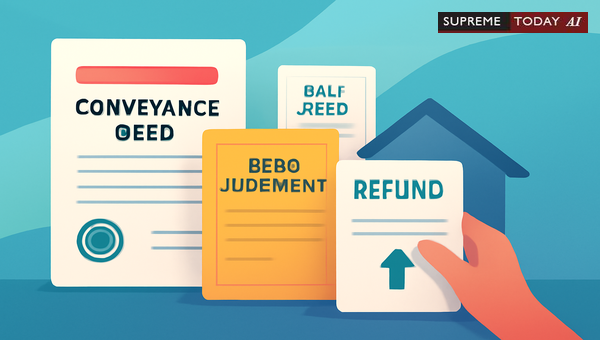
Executed: Can Claim Refund Before Judgment?
In the complex world of real estate, often face uncertainty when projects delay or disputes arise. A common question arises: Once a is executed, can still ask for a refund for the same before the judgment? This issue hinges on fundamental principles of property law, , and . While () has transformed buyer protections, pre- scenarios and judicial precedents provide critical insights.
This post delves into the legal consequences of executing a sale or , analyzing when refunds are viable and when they are barred. Note: This is general information based on judicial observations and not specific legal advice. Consult a qualified lawyer for your situation.
Understanding Conveyance Deeds and Allottee Rights
A , also known as a , is the definitive document transferring ownership of from seller (promoter/developer) to buyer (allottee). Upon proper execution and registration, it confers legal title to the purchaser, marking the transaction's culmination. 2014 0 Supreme(SC) 774
Key Legal Framework
- Transfer of Title: Execution solidifies ownership transfer, extinguishing the seller's rights. 2014 0 Supreme(SC) 774
- : Courts, including and the , may direct execution, making it binding. Non-compliance invites or . 2014 0 Supreme(SC) 774
In real estate allotments, book units via agreements, paying installments. However, once the is executed, prior agreements are typically superseded.
Legal Consequences Post- Execution
Once the deed is executed, generally cannot claim refunds for the property, as title has passed. Here's why:
1.
The deed cancels previous agreements, rendering subsequent claims invalid if derived from . For instance, if a court decree mandates execution in favor of one party, others' rights (e.g., subsequent ) are affected. 2014 0 Supreme(SC) 774
In a notable case, after taking the benefit of the , the respondent cannot seek refund. The court emphasized: after having taken the benefit of the , the respondent cannot seek refund. 2020 0 Supreme(Kar) 2047
2. Impact on Third Parties and Subsequent Purchasers
Subsequent or purchasers lose refund rights if their contracts are voided by the deed. Courts prioritize the executed deed's sanctity. 2014 0 Supreme(SC) 774
Similarly, under mortgage laws, the is extinguished only upon the execution of a and registration. Post-auction sale deeds bind mortgagors, barring redemption claims. 2006 0 Supreme(Mad) 2695
When Can Claim Refunds?
Refunds are typically obligatory only if fails:
Refund Triggers
- Non-Transfer After Payment: If consideration is received but property isn't transferred, sellers must refund to restore parties' original positions. 2014 0 Supreme(SC) 774
- : Judicial orders frustrating contracts (e.g., inability to convey due to decrees) entitle buyers to refunds. In one case, the owner was directed to refund Rs. 4 lakhs to a subsequent purchaser, with 9% interest on delay. 2014 0 Supreme(SC) 774
Pre-Execution Scenarios
Before execution, retain stronger claims. For example, in allotment disputes, boards fix final costs, and must comply for deed execution—no refund if they default.
: There is a right inhering the complainant to ask for execution of only after the fixation of the final cost... but the complainant has failed to comply.
Post-permission delays don't automatically bar claims if sellers fail to execute, but oral evidence contradicting written agreements is inadmissible under . 2013 0 Supreme(All) 1012
's Role and Pre- Distinctions
empowers with refund rights for delays or defaults before conveyance. However, the question specifies before the judgment, likely referring to pre- cases or judgments interpreting similar principles.
Post-execution under , who accept conveyance generally waive refund claims, akin to traditional law. Courts uphold: execution binds parties, preventing (taking benefits then challenging). 2020 0 Supreme(Kar) 2047
In , full payment shifts focus to deed execution, not refunds. 2018 0 Supreme(Raj) 267: The plaintiff having paid entire sale consideration can only ask for execution of .
Non-Compliance and
Seller Obligations
Failure to refund (when due) triggers:- Execution Proceedings: Recover principal plus interest (e.g., 9%). 2014 0 Supreme(SC) 774- Powers: enables complete justice, including refunds. 2014 0 Supreme(SC) 774
Buyer Risks
should secure rights via registration and clauses. Post-execution claims risk dismissal as favors equity. 2020 0 Supreme(Kar) 2047
Broader Implications for
- Protection Strategies: Verify project registration, demand timelines, and escalate to authorities pre-execution.
- Judicial Trends: Courts restore original positions in failures but enforce deeds strictly post-execution. 2014 0 Supreme(SC) 774
In relinquishment cases, even state agencies are bound by deeds they benefit from. 2020 0 Supreme(Kar) 2047: When the first appellant... argues that subsequent is binding upon the respondent, it forgets that earlier relinquishment deed... equally binds first appellant.
Key Takeaways
- Post-Execution: typically cannot claim refunds after execution, as title transfers irrevocably. 2014 0 Supreme(SC) 774 2020 0 Supreme(Kar) 2047
- Pre-Execution Failures: Refunds apply if transfer fails or contracts frustrate. 2014 0 Supreme(SC) 774
- Context: Strengthens pre-conveyance rights but aligns with deed finality.
- Advice: Act promptly; delays weaken claims. Always seek professional counsel.
Understanding these nuances protects your investment. Stay informed on evolving real estate laws.
References:- 2014 0 Supreme(SC) 774- 2020 0 Supreme(Kar) 2047- 2018 0 Supreme(Raj) 267- 2013 0 Supreme(All) 1012- 2006 0 Supreme(Mad) 2695-
This article is for informational purposes only and does not constitute legal advice.
#RERA #ConveyanceDeed #RealEstateLaw














