


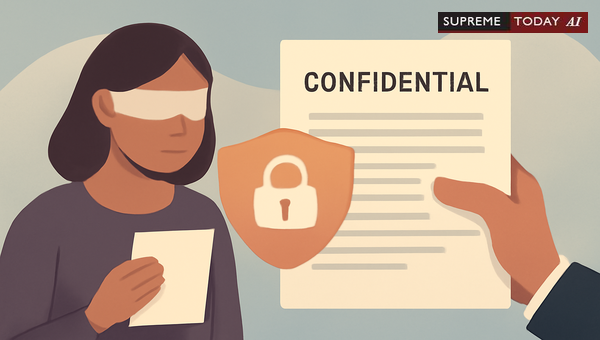
Can Courts Share Rape Victim Statements with Third Parties?
In sensitive cases like rape or sexual assault, the victim's statement often forms the cornerstone of the . But what happens when a third party—someone not directly involved in the case—seeks a copy of that statement from the court? This question raises critical issues of privacy, dignity, and judicial confidentiality. Can the copy of a statement of a victim in a rape case be given to a third party from the court on his application?
Generally, no. prioritize protecting victims from further trauma, stigma, and misuse of their sensitive information. This blog post delves into the legal framework, key judgments, and safeguards that typically prohibit such disclosures without proper authorization. Note: This is general information based on legal precedents and not specific legal advice. Consult a qualified lawyer for your situation.
Why Victim Statements in Rape Cases Are Highly Protected
Victim testimonies in cases hold immense . Courts have repeatedly held that a conviction can be based solely on the victim's reliable testimony, even without . 2006 2 Supreme 363 2016 8 Supreme 709 For instance, no self-respecting woman would come forward in a court just to make a humiliating statement against her honour such as is involved in the commission of rape on her. 2025 Supreme(Online)(Pat) 1812
This sensitivity underscores the need for confidentiality. Laws emphasize shielding victims from social stigma and additional trauma. In traditional societies, victims face ostracization, making disclosure risky. 2006 2 Supreme 363 Courts use measures like screens, written questions, and breaks during trials to protect dignity. 2004 5 Supreme 68
Key Legal Principles on Confidentiality
- Privacy and Dignity: The law is conscious of the need to protect the victim’s privacy and dignity, especially during court proceedings. 2004 5 Supreme 68
- No Routine Disclosure: There is no explicit provision allowing courts to share victim statements with third parties upon mere request. 2006 2 Supreme 363
- Risk of Harm: Unauthorized sharing could lead to misuse, further victimization, or compromise judicial integrity.
Legal Analysis: Disclosure to Third Parties
Absence of Authorization for Outsiders
Based on reviewed judgments, courts do not permit sharing victim statements—such as those recorded under —with unrelated third parties. The emphasis is on confidentiality within the judicial process. 2006 2 Supreme 363 2016 8 Supreme 709
For example, in cases under the or Section 376, like (prohibiting disclosure of victim identity), Section 23 and 33(7) , and directives in Sakshi v. Union of India and provide robust safeguards. 2024 0 Supreme(Ker) 471
Distinction: Access for Parties vs. Third Parties
While third-party access is restricted, parties to the case (e.g., accused or their lawyers) may obtain under certain conditions. In one case, a petitioner sought a copy of the victim's statement. The trial court required an promising no misuse, but a higher court quashed this, directing issuance of copies. It held that and directions issued by the provide adequate safeguards to protect the interests of victims of sexual offences, making the an unwarranted interference. 2024 0 Supreme(Ker) 471
This illustrates that even for involved parties, access is governed by law—not blanket permission—and third parties lack even this entitlement.
Insights from Related Judgments
Several precedents reinforce victim protection while evaluating testimony reliability:
- Reliability Without : A conviction for rape can be based solely on the victim's testimony if it is reliable; absence of raises doubts about its credibility. 2025 Supreme(Online)(Pat) 1812 Yet, this evidentiary weight demands strict confidentiality. 2017 0 Supreme(Bom) 1639
- POCSO and Sentencing Errors: In a POCSO rape appeal, inconsistencies and lack of evidence led to , but victim statements remain pivotal and protected. 2025 0 Supreme(All) 3585
- Summoning Orders Upheld: Courts stress the importance of statement of the victim recorded u/s 164 Cr.P.C. but within trial confines. 2024 0 Supreme(All) 1504
- False Implications Caution: While false cases occur, courts scrutinize without compromising privacy. 2023 0 Supreme(Jhk) 656 2014 0 Supreme(Tri) 77
- Sole Testimony Sufficient: If the testimony of victim is found to be truthful and reliable, conviction can be based only on the basis of sole testimony of victim. 2017 0 Supreme(Bom) 1639 This heightens protection needs. 2013 0 Supreme(P&H) 1363
These cases highlight that while victim statements are crucial (e.g., no need for if credible), 2018 0 Supreme(UK) 471 their handling must prevent external exposure. 2026 Supreme(Online)(HP) 51
Potential Exceptions and Procedures
Rare exceptions may exist with a court order, balancing justice interests against victim rights. For instance:- Court-Discretionary Disclosure: Only if aligned with laws like or evidence rules, and typically not for third parties.- Refer to Court: Any third-party request should go through judicial scrutiny, prioritizing victim privacy.
Without authorization, disclosure violates principles outlined in judgments. 2004 5 Supreme 68
Ethical and Practical Recommendations
- For Authorities: Maintain confidentiality; use existing safeguards like those in POCSO or .
- For Third Parties: File formal applications, but expect denial absent compelling legal grounds.
- Victim Support: Ensure statements are handled sensitively to encourage reporting.
Conclusion and Key Takeaways
In , courts generally do not permit sharing copies of rape victim statements with third parties on application, as it contravenes victim protection laws and judicial directives. The legal framework—from Section 164 to POCSO and guidelines—prioritizes privacy, dignity, and preventing stigma. 2006 2 Supreme 363 2004 5 Supreme 68 2024 0 Supreme(Ker) 471
Key Takeaways:- Victim statements are confidential and not for public or third-party access.- Parties to the case may access with safeguards; outsiders typically cannot.- Always seek court permission and respect statutory protections.- Reliable victim testimony can sustain convictions alone, underscoring protection needs.
This analysis draws from established precedents. For case-specific guidance, consult a legal professional. Stay informed on victim rights to foster a just system.
References: Key documents include 2004 5 Supreme 68, 2006 2 Supreme 363, 2016 8 Supreme 709, 2024 0 Supreme(Ker) 471, 2025 Supreme(Online)(Pat) 1812, and others cited inline.
#RapeVictimPrivacy #CourtDisclosure #VictimRightsIndia















