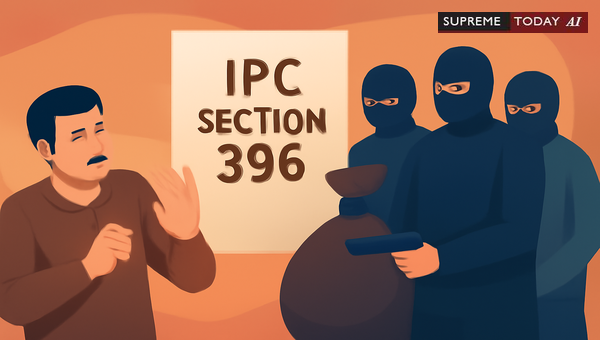
Material Contradictions & Evidence Weaknesses - Several sources highlight contradictions and inconsistencies in prosecution witnesses' testimonies, particularly regarding seizure of weapons and the accused's involvement in preparation for dacoity. For example, ["VELU S/O BYATAPPA vs STATE OF KARNATAKA - Karnataka"] notes contradictions between PW1 and PW3 about weapon seizure, which undermines the credibility of the evidence. Similarly, ["Ram Chandra Das vs State Of West Bengal - Calcutta"] emphasizes that mere assembly of armed persons does not suffice to prove preparation for dacoity, especially when witnesses fail to give satisfactory explanations regarding possession of weapons or presence at the scene.
Absence of Red-Handed Evidence & Lack of Material Proof - Multiple sources assert that accused were not caught in the act (red-handed) and that there is insufficient material to establish their active participation or preparation for dacoity. ["Ram Chandra Das vs State Of West Bengal - Calcutta"] and ["Bhim Mian, son of Late Nepal Mian VS State of Jharkhand - Jharkhand"] state that the prosecution's case largely relies on identification and circumstantial evidence, which is often weak or unreliable. For instance, ["State of Rajasthan VS Devendra @ Baba, S/o. Ram Singh - Rajasthan"] mentions that involvement was not proved beyond reasonable doubt due to lack of direct evidence.
Legal Standards & Court's Appraisal - Courts have emphasized that assembly of armed persons alone does not prove intent or preparation for dacoity unless supported by cogent evidence (State of Bihar case referenced in ["Ram Chandra Das vs State Of West Bengal - Calcutta"]). Several judgments criticize trial courts for failing to critically analyze evidence or for convicting based on suspicion rather than proof (["Sreenesh, S/o. Lohidakshan, Palackaparambil Veedu Vs State Of Kerala - Kerala"], ["State of Karnataka VS Shivan - Karnataka"]). The importance of following legal principles for proving preparation—such as establishing specific overt acts—is underscored.
Impact of Compromises & Witness Support - In some cases, parties have compromised or expressed disinterest in pursuing the case, which influences legal proceedings (["Praveer Kumar Pradhan @ Prabir Kr. Pradhan VS State of Jharkhand - Jharkhand"]). Witnesses' support varies, and lack of corroboration weakens the case (["Daya Ram Pasi VS State of U. P. - Allahabad"], ["Chaneshwar Paswan VS State of Jharkhand - Crimes"]). Courts have also noted that identification evidence alone, especially when not supported by other proof, is insufficient for conviction.
Sentencing & Legal Provisions - Several references discuss the statutory punishment for dacoity under IPC Section 395, emphasizing that conviction requires clear evidence of participation and preparation (["Anzar S/o Saved vs State of Kerala - Kerala"]). The legal framework mandates proof beyond reasonable doubt, which many sources argue was not met in the cases cited.
Analysis and Conclusion:The collective insights from these sources suggest that dacoity cases often suffer from lack of direct evidence, material contradictions, and reliance on circumstantial proof. Courts have rightly emphasized the need for cogent, consistent evidence to establish preparation or participation, rather than mere suspicion or assembly. Many convictions appear to be based on weak or circumstantial grounds, which courts have scrutinized and sometimes overturned. Therefore, in argument, one can contend that the prosecution failed to prove the essential elements of dacoity beyond reasonable doubt, and that courts should carefully evaluate evidence to prevent wrongful convictions based on suspicion or incomplete proof ["VELU S/O BYATAPPA vs STATE OF KARNATAKA - Karnataka"] ["Ram Chandra Das vs State Of West Bengal - Calcutta"].