


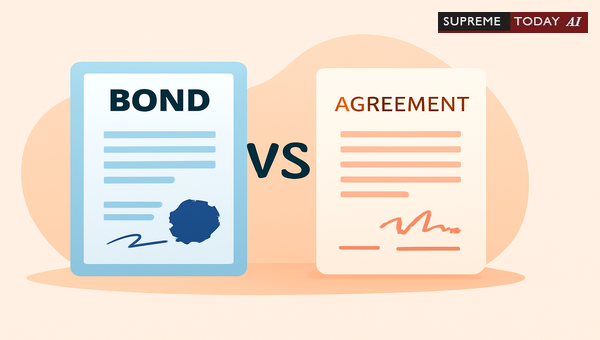
vs : Key Differences & Case Laws
In the realm of contract law, distinguishing between a and an is essential for proper legal classification, enforceability, and even tax implications like . Many individuals and businesses draft documents without fully grasping these nuances, leading to disputes, higher costs, or evidentiary issues in court. So, what exactly is the difference between a and an , especially with relevant case laws?
This blog post breaks down the fundamental distinctions, drawing from judicial precedents and statutory interpretations. Whether you're a business owner finalizing a loan document or a lawyer advising on instrument drafting, understanding these concepts can save time and money. Note: This is general information and not specific legal advice; consult a qualified attorney for your situation.
Defining a : A Formal Creator
A is typically a written instrument under which a legal to pay a specific sum or perform a particular act is explicitly created within the document itself. It carries a formal, solemn character, often requiring by at least one witness to validate its nature. Courts emphasize that the must originate from the instrument, not merely acknowledge a pre-existing debt.
As clarified in key judgments, the essential feature of a is that the must have been created in the instrument itself 2021 0 Supreme(Ker) 1210. Without this direct creation and , a document cannot qualify as a , regardless of its formal language.
Defining an : Broader Mutual Understanding
In contrast, an represents a mutual understanding or arrangement between parties, which may or may not be in writing. It does not necessarily create a new within the document; instead, it might acknowledge a pre-existing liability or outline terms for future performance. Agreements generally attract and lack the stringent formality of bonds.
For instance, a document which evidences acknowledgment of an antecedent or a pre-existing liability would not normally become a 2021 0 Supreme(Ker) 1210. This flexibility makes agreements suitable for everyday contracts but limits their enforceability compared to bonds in certain contexts.
Key Differences Between and
The core distinctions boil down to several pivotal factors:
- Creation of : A expressly creates the within itself 2021 0 Supreme(Ker) 1210, while an may acknowledge a pre-existing one 2021 0 Supreme(Ker) 807.
- Formalities and : Bonds typically require by a witness, imparting a formal, solemn promise 2021 0 Supreme(Ker) 1210. Agreements do not.
- Liability on Breach: In a , breach triggers payment of the stipulated sum directly. For agreements, damages are assessed by the court2009 0 Supreme(MP) 589.
- Implications: Bonds often incur due to their -creating nature, whereas agreements usually face fixed duty1979 0 Supreme(Ker) 140.
- Enforceability: Bonds are more readily admissible as evidence of debt; agreements may need additional proof.
These differences are not merely semantic; they influence how courts interpret and enforce documents. The positive test that an reduced to writing should satisfy, namely, that it should be attested by a witness, to make it a 2021 0 Supreme(Ker) 1210.
Landmark Case Laws Illuminating the Distinction
Indian courts, particularly under stamp acts like the , have repeatedly delineated these boundaries through precedents.
Sreedharan vs. Gopi 2021 0 Supreme(Ker) 1210
This case is pivotal: The court held that if a document merely acknowledges a prior debt without creating a new , it remains an , not a . was underscored as a hallmark of bonds, emphasizing, If the document lacks such , it remains an , even if it appears formal or solemn.
Interpretations 2021 0 Supreme(Ker) 807 1979 0 Supreme(Ker) 140
In these rulings, courts distinguished based on whether the was created in the instrument or pre-existed. The distinguishing feature is that a involves a formal, solemn promise with an created directly in the instrument, whereas an may simply record or acknowledge an that already exists 1979 0 Supreme(Ker) 140. This affects and admissibility.
Additional Judicial Insights 2009 0 Supreme(MP) 589
Further, For determining the true character of an instrument, the instrument is required to be read as a whole and its dominant purpose is to be ascertained. The basic difference between the and the is that in the case of , in the event of breach, the party to the instrument, who is obliged to pay, is liable to pay the sum stipulated in the instrument whereas in the case of the quantum of damages is to be fixed by the Court.
Other cases, like those referencing Re. Garner's Motors Ltd., reinforce that court-sanctioned schemes do not alter an instrument's inherent nature unless explicitly stated 1979 0 Supreme(Ker) 140.
Practical Implications for Businesses and Individuals
Misclassifying a document can lead to:
- Higher : Bonds demand ad valorem rates based on the amount 1979 0 Supreme(Ker) 140.
- Evidentiary Challenges: Unattested bonds may be treated as agreements, complicating enforcement.
- Execution Proceedings: can be oral or written without formalities, remaining enforceable 1926 0 Supreme(Cal) 260.
In loan or security contexts, related concepts like (non-possessory charge on movables) differ from pledges, but the - divide remains key for debt instruments 2021 0 Supreme(Guj) 353.
Exceptions and Limitations
- : Valid even if oral, without formalities 1926 0 Supreme(Cal) 260.
- Formal Language Alone Insufficient: Solemn wording does not convert an into a ; creation and are mandatory 2021 0 Supreme(Ker) 1210.
- : Courts examine the entire document 2009 0 Supreme(MP) 589.
Recommendations for Drafting Instruments
To avoid pitfalls:
- For Bonds: Explicitly create the in the document and ensure witness .
- For Agreements: Use for pre-existing debts to minimize duty and formalities.
- Seek Expert Review: Analyze language holistically before execution.
- Stamp Appropriately: Classify correctly to prevent penalties.
Courts urge careful scrutiny over mere labels.
Conclusion: Key Takeaways
In summary, a creates a new with formality and , while an often acknowledges existing ones without such rigor. Backed by cases like Sreedharan vs. Gopi2021 0 Supreme(Ker) 1210 and rulings 1979 0 Supreme(Ker) 140, this distinction impacts duty, proof, and remedies 2009 0 Supreme(MP) 589.
Key Takeaways:- Prioritize origin and .- Understand stamp implications.- Consult professionals for tailored advice.
By grasping these differences, you can draft stronger documents and navigate legal challenges effectively. Stay informed, and share your thoughts below!
References:1. 2021 0 Supreme(Ker) 1210 - Sreedharan vs. Gopi.2. 2021 0 Supreme(Ker) 807, 1979 0 Supreme(Ker) 140 - cases.3. 2009 0 Supreme(MP) 589 - definition under .4. 1926 0 Supreme(Cal) 260 - Suretyship exceptions.
(Word count: ~1050. This post is for informational purposes only.)
#BondVsAgreement, #LegalDifferences, #CaseLawsExplained














