


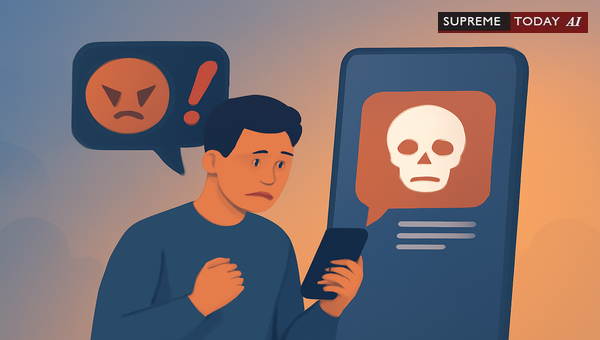
Does Breaking a Mobile Amount to ?
In today's digital age, disputes often spill over into mobile communications, raising questions about where heated exchanges cross into criminal territory. Imagine a scenario where someone smashes a phone in anger or sends menacing texts—does this qualify as under Indian law? This blog dives deep into the legal nuances, drawing from the and key judicial precedents to clarify.
We'll address the core question: Does breaking a mobile amount to ? Spoiler: It's not black-and-white. While the physical act of breaking a phone alone typically doesn't meet the threshold, accompanying threats via mobile can tip the scales. This analysis is for informational purposes only and does not constitute legal advice—consult a qualified lawyer for your specific situation.
Understanding Under IPC
defines as threatening another person with injury to their person, reputation, or property, with the or to compel that person to do or omit to do any act they are legally entitled to do. 2023 0 Supreme(Cal) 964 1997 0 Supreme(AP) 1119
The offense, punishable under , requires three key elements:- A threat of injury to person, reputation, or property.- Intent to cause alarm or force an illegal act/omission.- The threat must be capable of causing alarm in a reasonable person.
Mere angry words or actions without these elements fall short. As one source notes, Threatening a person with any injury: (a) to cause alarm to that person, or (b) to cause the person to do any act which he is not legally bound to do... 2019 0 Supreme(Pat) 411
Breaking a Mobile Phone: or Not?
Breaking a mobile phone itself does not inherently amount to . Property damage might attract charges under (mischief), but intimidation hinges on threats, not destruction alone.
However, if the act accompanies threatening communications via mobile—like texts vowing harm to induce fear—it could qualify. For instance:- The message must contain a clear threat of harm.- There must be .- The recipient must feel alarmed, as a reasonable person would. 1960 0 Supreme(MP) 389 2015 0 Supreme(Ker) 1578
Phone calls or messages from mobile numbers, such as vague threats or impersonations, may not automatically amount to unless they meet the intent and alarm criteria. 2023 0 Supreme(Bom) 493 2024 0 Supreme(Bom) 348
Key Case Law Insights
Judicial decisions emphasize context over isolated acts:
Trial Magistrate's Approach: In a case of offensive messages via mobile, the court opted for prosecution under the , avoiding IPC overlap to prevent .
Threats Without Alarm: A court acquitted the accused, ruling that mere words without a clear indication of intent and without causing alarm do not amount to . 1960 0 Supreme(MP) 389
Intent is Crucial: The essence lies in intending to cause alarm. If threats don't convey clear intent or fail to alarm the complainant, no offense occurs. 2021 0 Supreme(Ker) 467
Other precedents reinforce this:- This would also not amount to . when warnings lacked threat quality. 2007 0 Supreme(Ori) 205- No charge framed for without material. 2018 0 Supreme(Bom) 87- Vague threats or those made in jest typically don't qualify, unlike explicit ones promising death or grievous hurt. 2023 0 Supreme(Kar) 1237 2025 0 Supreme(Kar) 765
In one instance, allegations failed as there is no case for the prosecution that any of the officers had been directly threatened or intimidated. 2022 0 Supreme(Ker) 96
Threats Via Mobile: When Do They Cross the Line?
Mobile phones amplify threats due to their ubiquity. Sending intimidating messages can invoke both IPC and IT Act provisions, but success depends on proof:
Explicit vs. Vague: Phone calls or messages... claiming to be someone else or making vague threats, may not automatically amount to unless they are intended to cause alarm. 2023 0 Supreme(Bom) 493
Context Matters: Factors like prior disputes, tone, and recipient's reaction are pivotal. For example, permission for a mobile tower amid a land deal led to intimidation claims, but compliance issues dominated. 2024 0 Supreme(Jhk) 542
Related Offenses: Extortion via fear of grievous hurt (now under ) carries up to 10 years, distinct from basic intimidation. 2024 0 Supreme(Kar) 593
Under , punishment is up to 2 years imprisonment, fine, or both—but only if is proven. 2024 0 Supreme(All) 988
Elements Required:- Threat capable of causing alarm in a reasonable person. 2023 0 Supreme(Telangana) 678 2023 0 Supreme(Kar) 891- Intent to provoke or illegal action. 2024 0 Supreme(All) 989 2025 0 Supreme(Kar) 160
Practical Recommendations
If facing or alleging such issues:- Document Everything: Save messages, call logs, and note reactions.- Assess Content: Does it clearly threaten harm with intent to alarm?- Contextual Evaluation: Consider if a reasonable person would feel threatened.- Seek Alternatives: IT Act for cyber threats; mischief for property damage.
Courts stress case-specific facts: The context, intent, and nature of the threats or actions are crucial. 2023 0 Supreme(Kar) 1237
Conclusion and Key Takeaways
Breaking a mobile phone alone generally does not constitute under IPC Section 503/506. It requires accompanying threats via mobile with proven and capability to do so. Vague messages or acts without fear induction typically fail.
Key Takeaways:- Focus on intent, clarity of threat, and reasonable alarm.- Mobile threats may invoke IT Act alongside IPC.- Each case turns on facts—judicial precedents acquit without these elements.- Disclaimer: This is general information based on legal sources. Laws evolve, and outcomes vary. Always consult a legal professional for advice tailored to your circumstances.
References:-
1960 0 Supreme(MP) 389 2015 0 Supreme(Ker) 1578 2023 0 Supreme(Cal) 964 1997 0 Supreme(AP) 1119 2021 0 Supreme(Ker) 467
2024 0 Supreme(Jhk) 542 2024 0 Supreme(Kar) 593 2022 0 Supreme(Ker) 96 2019 0 Supreme(Pat) 411 2018 0 Supreme(Bom) 87 2007 0 Supreme(Ori) 205 2024 0 Supreme(All) 989 2025 0 Supreme(Kar) 160 2023 0 Supreme(Telangana) 678 2023 0 Supreme(Kar) 891 2023 0 Supreme(Bom) 493 2024 0 Supreme(Bom) 348 2023 0 Supreme(Kar) 1237 2025 0 Supreme(Kar) 765 2024 0 Supreme(All) 988 #CriminalIntimidation, #IPC506, #MobileThreatsIndia












