


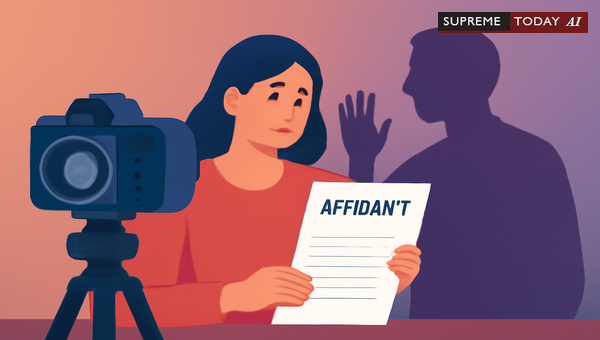
Is Proof of in India?
In the realm of family law, cases often hinge on compelling evidence. A common question arises: whether filed by the Petitioner can be considered as a proof for . This query is particularly relevant under the (), where petitioners frequently rely on affidavits to initiate proceedings. However, Indian courts have consistently ruled that an affidavit alone does not constitute . This blog post delves into the judicial stance, key precedents, and practical recommendations, drawing from established case law.
Note: This article provides general information based on and is not a substitute for professional legal advice. Consult a qualified lawyer for your specific situation.
Understanding the Role of a
A , often filed by the petitioner in proceedings, serves as an initial sworn statement outlining the alleged incidents. It acts as a preliminary assertion to seek reliefs like protection orders, maintenance, or residence rights under . Yet, courts treat it as just that—an assertion, not definitive evidence.
In one case, the court observed that allegations must be specific, credible, and substantiated with evidence 2025 0 Supreme(Gau) 1696. Here, general and unsubstantiated claims led to the dismissal of the petition, underscoring that affidavits require scrutiny and corroboration. Similarly, affidavits are not a substitute for or documents, as clarified in precedents where courts emphasized examining credibility alongside concrete proof 2025 0 Supreme(MP) 194.
Evidence Standards in Cases
Indian judiciary demands substantive evidence beyond affidavits to establish , which includes physical, emotional, economic, or sexual abuse. Claims in affidavits must be backed by witnesses, medical reports, photographs, or communication records.
For instance, in a ruling on , the court held that such claims need to be proved with supporting evidence, and an affidavit alone does not suffice 2013 8 Supreme 416. Vague allegations were deemed insufficient, reinforcing the need for specificity 2025 0 Supreme(Mad) 2909. Another decision dismissed claims due to lack of specific allegations and credible evidence, despite the affidavit being filed 2013 8 Supreme 122.
This standard aligns with broader evidentiary principles. In a under the , the court stressed that the complainant must substantiate claims of with evidence, not merely rely on denials
. The claimant failed to lead evidence, resulting in dismissal, highlighting that the case must stand on positive proof.
: Affidavits Fall Short Without Corroboration
Several judgments illustrate courts' reluctance to treat affidavits as standalone proof:
- Vague Allegations Quashed: In 2025 0 Supreme(Gau) 1696, the absence of specific incidents led to quashing the case, as affidavits alone couldn't prove violence.
- Requires More: 2013 8 Supreme 416 clarified that pre- abuse is covered only if evidenced beyond affidavits.
- Specificity Essential: 2013 8 Supreme 122 dismissed proceedings for lacking detail and support.
- Appellate Upholding: 2025 0 Supreme(Mad) 2909 affirmed that credible evidence is mandatory.
From additional sources, and were recognized as , but only after evaluating entire evidence, not just affidavits 2025 Supreme(Online)(KER) 7357 2025 Supreme(KER) 911. The granted reliefs based on comprehensive proof, later reinstated on appeal due to perverse dismissal by the lower court.
In contexts, affidavits aren't even always mandatory. One case noted that under the Protection of Women from Act does not require an affidavit in 2025 0 Supreme(Raj) 2101, prioritizing protection without procedural hurdles, yet still requiring merits-based evidence for final relief.
Exceptions and Contextual Considerations
While affidavits aren't conclusive, they can be pivotal when corroborated:- Courts may grant interim relief based on affidavit satisfaction under , but final orders demand full proof.- In scenarios, proof affidavits might carry weight initially, but respondents' replies trigger deeper scrutiny 2019 Supreme(Online)(KER) 3416.- denials don't prove claims; positive evidence is key
.
Limitations persist: Proof affidavits in lieu of chief examination must comply strictly, or they're rejected 2019 Supreme(Online)(KER) 3416. In unrelated but analogous contexts, like divorce suits, affidavits reiterating averments without discussion of led to reversals for non-application of mind 2018 0 Supreme(Ker) 579.
Practical Recommendations for Petitioners
To strengthen claims:- Gather : Collect medical certificates, witness statements, bank records for , or police complaints.- Make Allegations Specific: Detail dates, places, and nature of incidents in the affidavit to avoid dismissal for vagueness.- Anticipate Scrutiny: Prepare for and respondent's .- Seek Interim Relief Wisely: Use affidavits for urgent protection, but build a robust case for hearings 2025 0 Supreme(Raj) 2101.
Courts urge critical scrutiny, ensuring justice balances protection with fairness.
Conclusion and Key Takeaways
In summary, a filed by the petitioner cannot, by itself, be considered of under Indian law. It initiates proceedings but requires credible, specific corroboration to succeed. Precedents like 2013 8 Supreme 416, 2025 0 Supreme(Gau) 1696, 2013 8 Supreme 122, and 2025 0 Supreme(Mad) 2909 emphasize this, preventing misuse while safeguarding genuine victims.
Key Takeaways:- Affidavits are preliminary, not proof.- Substantiate with documents, witnesses, and specifics.- Courts prioritize evidence over assertions.- Exceptions exist for interim relief, but not finals.
For those navigating proceedings, understanding these nuances can make all the difference. Stay informed, gather evidence diligently, and seek expert guidance promptly.
References:1. 2013 8 Supreme 416 – Evidence for .2. 2025 0 Supreme(Gau) 1696 – Vague allegations quashed.3. 2013 8 Supreme 122 – Specific evidence needed.4. 2025 0 Supreme(Mad) 2909 – Credible proof required.5. 2025 0 Supreme(MP) 194 – Affidavits not substitute for evidence.6. Additional insights from 2025 0 Supreme(Raj) 2101,
, 2025 Supreme(Online)(KER) 7357, 2025 Supreme(KER) 911. #DomesticViolenceLaw, #PWDVAct, #LegalIndia












