


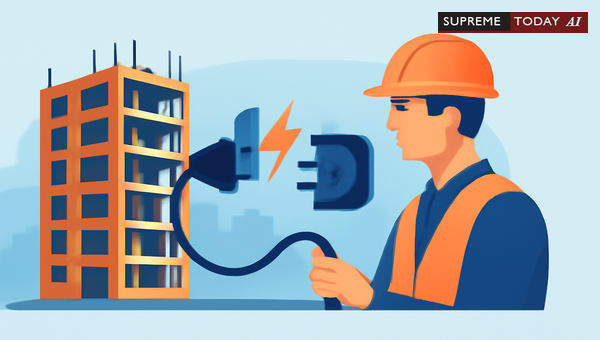
Illegal Construction & Electricity Disconnection Laws in India
Introduction
In India's rapidly urbanizing landscape, property owners often face challenges balancing development needs with regulatory compliance. One critical issue arises when constructions without proper approvals lead to electricity supply disruptions. The question of Judgement for Illegal Construction for Electricity Supply Reference is particularly relevant, as it touches on the interplay between building laws, electricity regulations, and rights.
Electricity distribution companies (discoms) frequently disconnect power to premises with unauthorized structures, citing violations of land use laws and the . But is this always lawful? Courts have provided clarity through numerous judgments, upholding disconnections in clear cases of illegality while protecting consumers from arbitrary actions. This post breaks down the legal principles, key precedents, and practical insights—remember, this is general information, not specific legal advice. Consult a qualified lawyer for your situation.
Legal Principles: Illegal Construction and Electricity Supply
Under Indian law, electricity supply is not an absolute right but conditional on lawful premises use. Construction without proper authorization or in violation of statutory provisions—like municipal building bylaws or zoning laws—can justify disconnection by authorities.
Courts have consistently held that illegal construction on land or premises, especially when initiated without prior permission or in violation of land and building laws, justifies the authority’s action to disconnect electricity2018 0 Supreme(Bom) 3056 2025 Supreme(Online)(Chh) 5949. For instance, in cases involving transmission towers or infrastructure, if construction is unlawful, courts may order immediate cessation or removal of such construction, emphasizing adherence to statutory procedures2025 Supreme(Online)(Chh) 5949.
This principle extends to scenarios where structures contravene land laws. As noted in one case, the structure raised on the property... is an unauthorized and illegal construction and, as such, the electricity supplied therefrom contravenes the law2023 0 Supreme(Cal) 165. Such rulings underscore that discoms have a duty to ensure supply aligns with legal land use.
Key Factors Triggering Disconnection
- Unauthorized extensions or new builds: Without building plan approvals.
- Violation of zoning or environmental norms: E.g., constructions in restricted areas.
- Evidence from inspections: proof of illegality suffices for action 2018 0 Supreme(Bom) 3056.
Disconnection of Electricity: When Is It Permissible Without Notice?
A common grievance is disconnection without prior notice. However, the law provides exceptions for grave violations.
Disconnection without notice is permissible when the ’s premises have unauthorized or illegal construction, especially if such construction violates statutory or regulatory provisions
2012 0 Supreme(Mad) 2321. The , and the authorize authorized officers to inspect, identify illegalities, and disconnect supply without prior notice in cases of theft, pilferage, or illegal construction
2012 0 Supreme(Mad) 2321
.
Courts have upheld these powers, stating that such disconnections do not constitute
. For example, evidence of illegal tapping of electricity for the purpose of providing power supply to the northern side shed led to valid disconnections, supported by inspections and seizures 2020 0 Supreme(Kar) 2054.
Related provisions in the Electricity Act, such as , govern unauthorized use, including illegal connections or excess load on unauthorized premises 2023 0 Supreme(P&H) 3040 2024 0 Supreme(Jhk) 402 2023 0 Supreme(Mad) 566. Inspections often reveal illegal electricity connection... through unauthorized or direct tapping from the Electricity Board line, justifying immediate action 2025 0 Supreme(Guj) 1188.
Challenging Disconnections: Illegal Actions and Compensation
Not all disconnections hold up in court. Illegal disconnection, especially without valid notice or supporting evidence, can be challenged, potentially leading to restoration of supply and compensation for suffering
.
Courts dismiss appeals where disconnection is backed by evidence of theft or illegal construction, reinforcing statutory powers
2011 0 Supreme(All) 3072. Yet, they emphasize adherence to 2009 0 Supreme(Jhk) 339. Arbitrary disconnections—lacking evidence or procedural fairness—may be deemed unlawful
.
In one instance, authorities projected theft of electricity in terms of provisions contained under Section 154(5) of the , but followed with hearings 2025 0 Supreme(Gau) 67. Consumers succeeded where discoms failed to prove jurisdiction or evidence 2023 0 Supreme(Telangana) 521 2025 0 Supreme(Telangana) 313.
Rights Under
The () obliges licensees to supply eligible consumers in lawful occupation. However, illegal constructions or unauthorized connections do not exempt licensees from their duty, but supply to such premises is unlawful 2023 0 Supreme(Raj) 1361 2023 0 Supreme(Raj) 481. Disconnections must follow , including provisional assessments 2024 0 Supreme(Jhk) 402 2023 0 Supreme(Mad) 566.
Exceptions, Limitations, and Procedural Safeguards
While no-notice disconnections are allowed for immediate threats like theft or illegal builds, must be observed in routine cases. Courts waive notice for immediate danger, theft, or unauthorized construction but intervene if actions are arbitrary, without evidence, or in violation of procedural safeguards
.
Financial aspects also play a role; discoms need funds for supply of electricity the Board needs finance for production, supply and other-charges2016 0 Supreme(P&H) 1202 2016 0 Supreme(AP) 224, justifying strict enforcement against illegal use.
Key Legal Precedents and Citations
- Upholding Disconnections: Authorities' rights affirmed in theft/illegal build cases
2011 0 Supreme(All) 3072 2018 0 Supreme(Bom) 3056 2025 Supreme(Online)(Chh) 5949.
- Restoration Orders: For procedural lapses
2009 0 Supreme(Jhk) 339.
- Regulatory Compliance: Tariff orders and hearings ensure fairness 2015 0 Supreme(Ker) 791.
Conclusion and Key Takeaways
Disconnection for illegal construction is legally justified under the , when discoms follow statutory powers, inspections, and evidence protocols. Courts support prompt action against clear violations but protect against abuse through natural justice principles.
Key Recommendations:- Obtain permits before building: Avoid violations from the start.- Gather evidence if disconnected: Challenge arbitrary actions with proof of compliance.- Follow : Authorities must inspect and document; consumers can demand hearings.- Seek compensation if unlawful: For proven illegal disconnections.
In summary, while electricity is vital, lawful premises are paramount. Stay compliant to avoid disruptions. For personalized guidance, consult legal experts. This overview draws from precedents like
2011 0 Supreme(All) 3072 2018 0 Supreme(Bom) 3056 2025 Supreme(Online)(Chh) 5949 2012 0 Supreme(Mad) 2321
2009 0 Supreme(Jhk) 339
(Word count: 1028. General information only; not legal advice.)
#IllegalConstruction #ElectricityDisconnection #ElectricityAct2003












