


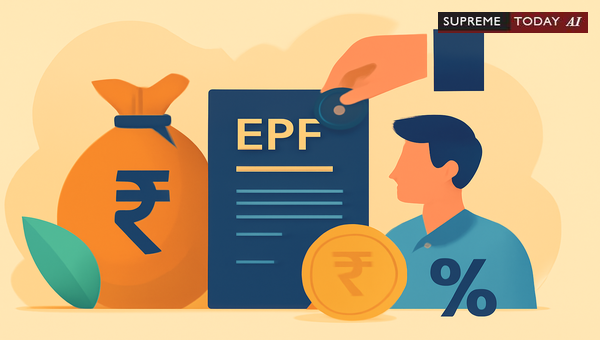
EPF Contributions: How, When Made & Distributed to Employees
Introduction
In the realm of employee benefits in India, the Employees' Provident Fund (EPF) stands as a cornerstone for financial security during retirement. A common query among employees and employers alike is: How and when has the Manner Employee Provident Fund been carried out, and how has the sum contributed been distributed to employees? This blog post delves into the mechanisms of EPF contributions under the , exploring timelines, processes, investments, and payouts. While this provides general insights, it is not personalized legal advice—consult professionals for specific cases.
Understanding these processes is crucial for ensuring compliance, avoiding penalties, and maximizing benefits. We'll cover statutory requirements, the role of , investment strategies, and distribution rules, drawing from key legal precedents and scheme guidelines.
What is the Employees' Provident Fund (EPF)?
The EPF is a mandatory savings scheme for salaried employees, managed by the . It involves contributions from both employers and employees, typically 12% of basic wages plus dearness allowance each. These funds are pooled, invested, and grown through interest, providing a lump-sum payout at retirement or termination. The appears to be simple mechanism where an employee is paid the total amount which he has contributed along with the equal contribution made by the employer ordinarily at the time of retirement of an employee. 2021 0 Supreme(J&K) 396
This distinguishes it from pensions, which are periodic payments. is payable periodically as long as the pensioner is alive whereas C.P.F. is paid only once on retirement. 2020 5 Supreme 129
How and When Are EPF Contributions Made?
Statutory Contribution Requirements
Under , employers must contribute a specified percentage of an employee's wages (historically starting at 6 1/4%, now standardized at 12%) to the Provident Fund. This includes the employee's share, deducted from wages as per . 1979 0 Supreme(SC) 313
Contributions must be deposited within 15 days after the close of each month into the EPFO account. Timely remittance is critical; delays trigger penalties. The employer handles both shares, ensuring periodicity—monthly or as specified. 1979 0 Supreme(SC) 313
Contributions Above Statutory Limits
For wages exceeding the statutory ceiling (e.g., Rs. 15,000 currently), contributions are capped unless a is exercised. Contributions above the statutory wage limit require a joint request (option) from both employer and employee, accepted by the (EPFO) 2024 0 Supreme(Ker) 722 2025 0 Supreme(Ker) 366. Even, later on, the employer and the employee have not opted to contribute on actual wages in the provident fund under . 2024 0 Supreme(Pat) 975
Voluntary contributions are possible, but post-retirement accumulation without department costs is noted in cases where employees deliberately leave funds for growth. 2023 0 Supreme(Del) 3266
Role of Under
is pivotal for enforcement. It empowers the to impose on defaulting employers, not exceeding arrears, to compensate employees for losses like foregone interest. The purpose of is to deter employers from defaulting on contribution payments by imposing that serve as compensation for employees’ loss, such as interest on delayed payments. 1979 0 Supreme(SC) 313
Crucially, (excluding administrative charges) are transferred directly to the Employees' Provident Fund and Family Fund, augmenting employee benefits. This ensures defaulters indirectly bolster the fund for workers. 1979 0 Supreme(SC) 313
Investment and Management of Contributions
Once deposited, contributions are invested by EPFO in secure instruments, generating interest credited to individual accounts. The contributions made by both employers and employees are invested, and the income generated interest forms part of the fund, which is ultimately distributed to employees upon retirement or as per scheme rules. 2011 4 Supreme 1
The PF is managed on an for long-term viability. The Provident Fund (PF) is managed on an , with contributions from both employees and employers invested to generate income through interest, which forms the core of the fund for payouts. 2025 0 Supreme(Ker) 2309 2024 0 Supreme(Ker) 722 2025 Supreme(Online)(Del) 1462
Interest accrual ensures growth, with rates declared annually (typically 8-8.5%). Trusts must maintain equivalent rates for transferred funds. 2022 0 Supreme(SC) 1130
How Is the Contributed Sum Distributed to Employees?
Distribution occurs primarily upon retirement, , resignation, or termination. The employee receives the full accumulated corpus: employee contributions + employer contributions + interest. Upon retirement, resignation, or , the accumulated amount in the employee’s Provident Fund account—comprising the contributions made by the employee and employer, along with the interest earned—is paid out to the employee as a . 1979 0 Supreme(SC) 313
This payout severs the employer-employee PF relationship, vesting full rights in the employee. The accumulated provident fund, comprising employee and employer contributions plus interest, is primarily the property of the employee.
01500074951
2025 0 Supreme(Bom) 920Payout Triggers and Limitations
- Retirement/: Full lump sum.
- Resignation/Termination: Eligible after scheme conditions; follow specific rules. 2011 4 Supreme 1
- Death: Nominee receives.
Deductions are limited; e.g., banks cannot deduct unverified losses beyond contributed amounts plus interest. The Bank can deduct the amount which has been contributed in the provident fund account of the employee with the interest thereof. 2021 0 Supreme(Guj) 529
Exceptions, Disputes, and Compliance
- Non-compliance leads to penalties, with benefiting the fund. 1979 0 Supreme(SC) 313
- Joint options for higher wages need EPFO approval. 2024 0 Supreme(Ker) 722
- Disputes (e.g., active vs. ) are resolved via appeals. 2023 0 Supreme(Cal) 482 2023 0 Supreme(Cal) 481
Employers must monitor timelines to avoid Regional PF Commissioner impositions. 2023 0 Supreme(Bom) 1321
Key Takeaways and Recommendations
- Timely Contributions: Deposit within 15 days monthly to evade . 1979 0 Supreme(SC) 313
- Employee Awareness: Track your Universal Account Number (UAN) for balances and claims.
- Employer Duty: Opt for higher contributions via joint requests if beneficial. 2024 0 Supreme(Ker) 722
- Investment Growth: Funds grow via interest, paid as lump sum at exit.
Regulatory oversight ensures fairness, but proactive compliance safeguards all. The shall explain as how much amount has been contributed by the appellant-bank. 2019 0 Supreme(P&H) 1035
In summary, EPF contributions are a structured, employee-centric process designed for retirement security. By adhering to timelines and rules, stakeholders maximize benefits while minimizing risks. For tailored guidance, reach out to EPFO or legal experts.
Word count: 1028. References cited inline from provided documents.
#EPFIndia, #ProvidentFund, #EmployeeBenefits












