Landmark Property Law Case: Equitable Partition Guide (2015-2025)
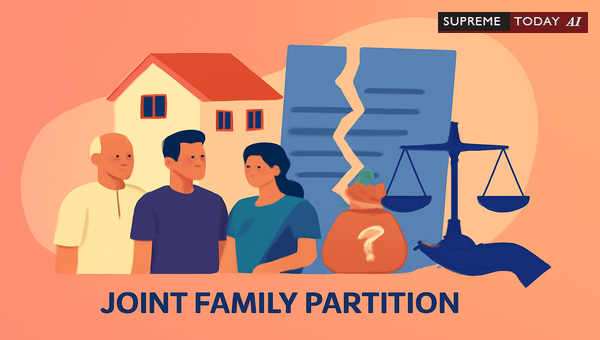
In the complex world of property disputes, especially involving joint family estates, courts often balance legal rights with fairness. A common query from property owners and legal enthusiasts is: Give me a Landmark Caselaw on Property Law Decided between 2015 and 2025. This question highlights the need for precedents that guide modern partition suits. One standout case from this period is R. Ramaprasada Rao vs. Subharamaiah, decided by the Andhra Pradesh High Court. This ruling underscores equitable distribution principles, offering valuable insights for co-owners navigating partition challenges.
This blog post dives deep into the case, its key holdings, and broader implications, while weaving in related developments from other judgments. Whether you're a co-owner in a joint family or simply interested in Indian property law, understanding these principles can clarify your rights and options.
Case Overview: R. Ramaprasada Rao vs. Subharamaiah
Court and Core Principle
The Andhra Pradesh High Court delivered this pivotal judgment, emphasizing equitable distribution among co-owners during the partition of joint estates. The key legal principle revolves around flexibility in partitioning properties that cannot be physically divided equally. Instead of rigid in-specie division, courts may opt for owelty—a method where one co-owner receives monetary compensation to retain the entire property. This approach ensures justice without causing undue hardship. 2004 0 Supreme(Raj) 779 1922 0 Supreme(Mad) 325
Facts of the Case
The dispute centered on partitioning joint family property. Co-owners clashed over rights and settled possession implications. One party had alienated portions of the property, leading to questions about fairness to non-alienating co-parceners. The trial court initially favored physical division, but the High Court intervened on appeal.
Court's Findings and Ruling
The court held that when properties defy physical partition, equitable remedies like owelty are preferable. It restored the decree in favor of the purchaser, noting no substantial injustice would be caused to the non-alienating co-parceners. 2004 0 Supreme(Raj) 779 1922 0 Supreme(Mad) 325 This discretion has been endorsed by the Supreme Court in later rulings, affirming courts' power to tailor partitions for just outcomes rather than strictly dividing every asset.
The appeal was allowed, reinforcing that judicial flexibility promotes equity in family property matters.
Broader Implications for Property Law
This case is more than a one-off ruling—it's a cornerstone for handling co-ownership disputes. Here's why it matters:
Equitable Principles in Joint Families: It prioritizes fairness over mechanical division, vital in Hindu Undivided Family (HUF) contexts. For instance, mere cohabitation doesn't presume HUF status without clear jointness in property and intent, as echoed in related precedents: It is trite law that mere cohabitation or joint family living does not, ipso facto, give rise to a presumption of an HUF or coparcenary, in the absence of a clear and unambiguous demonstration of jointness in property and intention to hold it as such. 2025 Supreme(Online)(Del) 1370
Judicial Discretion: Courts gain leeway to assess case-specific circumstances, preventing inequity. This aligns with public interest in property matters, where safety and legal acquisition often trump individual claims.
Owelty and Compensation: In indivisible assets, cash adjustments balance shares, reducing litigation.
Related Developments in Property Law (2015-2025)
The period 2015-2025 saw several cases reinforcing partition and transfer principles. Integrating these provides a fuller picture:
GPA Sales and Valid Transfers
Immovable property transfers demand registered deeds—GPA sales or SA/GPA/WILL don't convey title. One judgment clarifies: immovable property can only be legally transferred through a registered deed of conveyance, and GPA sales or SA/GPA/WILL transfers do not convey title or create any interest in immovable property. 2018 0 Supreme(Del) 3303 This bolsters the equitable focus in Ramaprasada Rao by ensuring clear title before partition.
Unauthorized Constructions and Public Interest
Public safety overrides historical claims on acquired land. In a demolition dispute: Public safety and adherence to land acquisition laws take precedence over claims of historical significance in unauthorized construction cases. 2025 0 Supreme(Guj) 1038 While not direct partition, it highlights courts' equitable balancing in property rights.
HUF and Ancestral Property Nuances
Echoing Ramaprasada Rao's family context, rulings stress proof of jointness: ancestral property becomes HUF only under specific conditions, per cases like Chander Sen and Yudhishter. 2025 Supreme(Online)(Del) 1370
Consumer Angles in Property Deals
Even commercial plots in projects like Yellowstone Landmark Infocity fall under consumer protections if delays occur, linking to possession rights in partitions.
DR. HARSHDEEP SINGH NAT vs SUKHUM INFRASTRUCTURE PVT. LTD - 2025 Supreme(Online)(SCDRC) 32231
These cases collectively emphasize documentation, equity, and discretion—core to modern property law.
Practical Takeaways for Co-Owners
Facing a partition suit? Consider these steps, generally applicable:
- Document Jointness: Prove HUF status or co-ownership clearly to invoke equitable remedies.
- Explore Owelty: Propose compensation for indivisible shares early.
- Seek Judicial Discretion: Courts typically favor fair outcomes over strict division.
- Avoid Informal Transfers: Use registered deeds to prevent title disputes. 2018 0 Supreme(Del) 3303
- Prioritize Public Interest: Unauthorized builds risk demolition, regardless of history. 2025 0 Supreme(Guj) 1038
| Aspect | Traditional Approach | Equitable Modern View ||--------|---------------------|----------------------|| Division | Physical split only | Owelty allowed 2004 0 Supreme(Raj) 779 || Discretion | Limited | Case-specific 1922 0 Supreme(Mad) 325 || Title Transfer | GPA possible | Registered deed mandatory 2018 0 Supreme(Del) 3303 |
Conclusion: Navigating Property Disputes with Equity
R. Ramaprasada Rao vs. Subharamaiah stands as a landmark for 2015-2025 property law, championing equitable distribution in joint estates. By allowing owelty and judicial flexibility, it guides fair resolutions amid complex co-ownership. Related cases on HUF, transfers, and public land reinforce these tenets, offering a robust framework.
Key Takeaway: Equity often trumps rigidity—consult professionals for your situation. This post provides general insights, not specific legal advice. Always seek tailored counsel from a qualified lawyer.
For more on Indian property law, stay tuned!
#PropertyLaw #LandmarkCase #PartitionSuit