


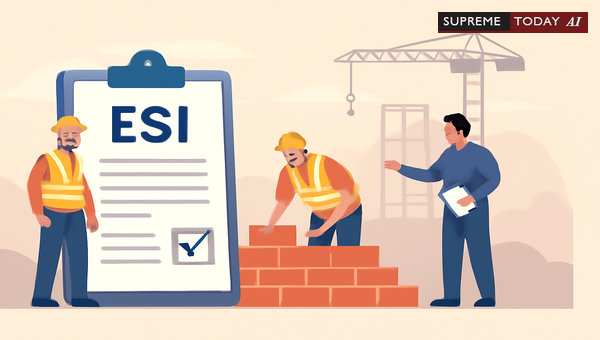
Applicability to Construction Companies: A Comprehensive Guide
In the dynamic world of construction, where projects rise and fall with seasonal demands, business owners often grapple with compliance under India's labour laws. One pressing question stands out: Applicability of on Construction Company—more precisely, the . Does this social security legislation cover your workers, or can you sidestep it by engaging contractors? This blog dives deep into judicial interpretations, key principles, and practical insights to help construction firms navigate ESI obligations effectively.
Understanding ESI applicability isn't just about ticking boxes; it's about safeguarding workers' health, maternity, and injury benefits while avoiding hefty penalties. Courts emphasize a liberal interpretation of the Act to promote social security. As noted, The Employees' State is a beneficial legislation. ... The Act, therefore, must receive a so as to promote its objects. 2023 0 Supreme(SC) 57
Main Legal Finding: Are Key
The cornerstone of applicability to a construction company hinges on whether it qualifies as an 'employer' under the Act. Specifically, this turns on over workers at construction sites. If your company directly oversees workers' tasks, timings, and conditions, the typically applies, extending coverage to medical benefits, sickness pay, and more. 2019 0 Supreme(Raj) 984
Conversely, if workers are hired via independent contractors without your direct intervention, they may fall outside your ESI ambit. This distinction protects principal employers from unintended liabilities but requires careful structuring of contracts. The definition under broadly encompasses workers 'employed in connection with the work of a factory or establishment,' including construction if incidental to core operations. 1985 0 Supreme(SC) 58
Detailed Analysis of Judicial Principles
Broad Definition of 'Employee' Under
Courts interpret 'employee' expansively to fulfill the Act's welfare goals. Construction workers qualify if their role supports the establishment's primary activities—like building expansions or site maintenance. For instance, construction of additional buildings necessary for factory expansion, if supervised by the main establishment, falls within the scope of work of the factory and the workers are considered employees under the . 1986 0 Supreme(SC) 162
This liberal lens ensures social security reaches vulnerable workers. should be given liberal interpretation and should be interpreted in such a manner so that social security can be given to employees. 2023 0 Supreme(SC) 57
The Pivotal Role of
Judicial rulings repeatedly spotlight as the litmus test for . If your construction firm directs workers' methods, provides tools, or dictates schedules, you're likely the employer. by the principal or main employer are essential factors in establishing employment under the . 2019 0 Supreme(Raj) 984
In contrast, true independent contractors operate autonomously. Mere material supply or site presence doesn't trigger coverage unless control is evident. When work is entrusted to independent contractors and the principal employer does not exercise supervision over the workers, the workers are generally not considered employees of the principal employer for ESI purposes. 2019 0 Supreme(Raj) 984 2019 0 Supreme(Raj) 599
Construction Work: Incidental vs. External
Not all construction triggers ESI. Work incidental or ancillary to main operations—like factory renovations—falls under coverage if supervised. However, standalone projects (e.g., unrelated buildings) may escape unless control is exercised. Construction work that is incidental or ancillary to the main activity of the establishment can be considered part of the establishment for ESI coverage. 1986 0 Supreme(SC) 162
Recent extensions affirm this for construction sites. There was no change in circumstances which compelled the respondents to bring in the construction site workers within the ambit of any ESI Scheme... Therefore, the person who is carrying on construction activities and if he is deploying such 'workers/employees', they should be covered and governed by the . 2017 0 Supreme(Bom) 657
Role of Independent Contractors and Exemptions
Engaging contractors is common in construction, but it doesn't automatically exempt you. Principal employers must ensure contractor compliance; failure invites scrutiny. In one case, a firm challenging a compliance notice for contract workers lost because it couldn't prove exemption. The duty of the Principal Employer to ensure compliance with the for contract workers and the Corporation's right to proceed in accordance with the law if the employer fails to comply. 2024 0 Supreme(Guj) 8
Exemptions exist (e.g., notifications for specific sectors), but they're narrow. Post- amendments, factories and establishments are covered regardless of employee numbers, favoring beneficiaries. 2023 0 Supreme(SC) 57
Exceptions and Limitations:- Purely preliminary construction may qualify if supervised. 1986 0 Supreme(SC) 162- Independent contractor work without oversight generally excludes coverage. 2019 0 Supreme(Raj) 984- External, non-incidental builds are riskier without control. 2019 0 Supreme(Raj) 984
Practical Recommendations for Construction Firms
To stay compliant:- Assess Control: Audit if you supervise workers directly—document instructions, payroll, and site logs.- Contractor Agreements: Include clauses clarifying contractor independence and their ESI duties.- Seek Coverage: If applicable, register promptly; benefits outweigh costs long-term.- Consult Experts: Tailor advice to your setup, as facts vary.
Note: Extensions like those under now cover diverse sites, including construction, reinforcing welfare aims. 2017 0 Supreme(Bom) 657
Key Takeaways and Conclusion
applicability to construction companies generally depends on supervision, control, and work's relevance to operations. Direct oversight? Likely covered. Pure contractors? Potentially not. Courts favor : ESI contributions – For demand notices for peri.... being a social welfare legislation, any interpretation which would lean in favour of beneficiary should be given. 2023 0 Supreme(SC) 57
Construction firms, prioritize worker welfare to build sustainably. Non-compliance risks demands, interest, and damages. This overview draws from precedents but isn't legal advice—consult a specialist for your case.
Summary: If your firm supervises construction workers integral to operations, ESI likely applies. Structure wisely to balance protection and flexibility.
#ESILaw, #ConstructionLaw, #LabourCompliance












