


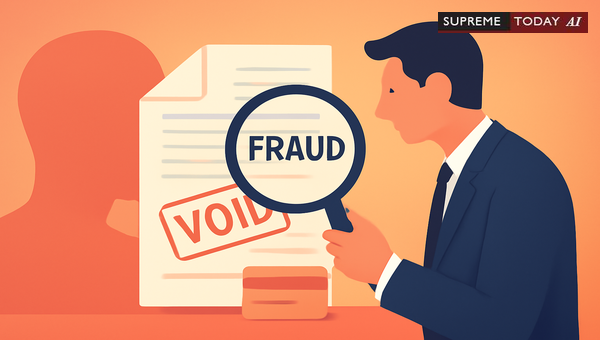
Fraud as a in Indian Law: Does No Consequence Matter?
In the complex world of legal transactions, few concepts strike fear like fraud. Imagine signing a high-stakes contract only to discover it was built on deception. A burning question arises: Fraud itself is a no Consequence is Necessary—does fraud alone render an agreement or act void, without needing further repercussions? This post dives deep into Indian jurisprudence, exploring this principle, key precedents, exceptions, and practical insights.
Whether you're a business owner, litigant, or curious reader, understanding fraud's power to 'vitiate'—or invalidate—transactions is crucial. We'll draw from established case law and principles to provide clarity, while noting this is general information, not specific legal advice. Consult a qualified lawyer for your situation.
Overview of the Principle
The cornerstone doctrine in Indian law is that . This means any transaction, contract, court decree, or administrative action tainted by fraud is —treated as if it never existed. Courts have long upheld that no person can benefit from their own fraud, applying this broadly across contexts like contracts, proceedings, and certifications. 2022 0 Supreme(P&H) 1967 2023 0 Supreme(Del) 757
This principle ensures the integrity of legal processes. Fraud doesn't just undermine consent; it strikes at the transaction's core validity. However, as we'll see, it's not always automatic—proof matters.
Key Legal Principles: Fraud's Vitiating Power
1. Fraud as a Fundamental
Fraud stands out among vitiating elements like coercion or misrepresentation because it universally invalidates. Courts hold that fraud affects primary proceedings and any collateral ones arising from the same facts. If proven, it nullifies related actions or agreements. 2023 0 Supreme(Del) 757
- General Rule: Transactions involving fraud are void from the outset. 2022 0 Supreme(P&H) 1967
- Broad Application: From revenue actions to judicial decrees, fraud's taint spreads. 2023 0 Supreme(Del) 757
2. Extrinsic vs.
Not all fraud equates to vitiation. For decrees, —deception preventing a party from presenting their case—vitiates. , like perjury or evidence suppression, typically doesn't, unless exceptional. Mere negligence or evidentiary lapses fall short. 1991 0 Supreme(Mad) 751
Judicial Precedents Shaping the Doctrine
The has reinforced fraud's seriousness: any deception depriving rights renders transactions void. 2023 0 Supreme(Del) 757 2003 7 Supreme 267
Specific Contexts
- Caste Validity Certificates: Fraud in caste claims invalidates certificates, with ripple effects on generations. 2010 0 Supreme(Bom) 1027
- Arbitration: Serious fraud allegations are ; courts, not arbitrators, decide.
Atul And Arkade Realty VS I. A. And I. C. Private Limited -
Other rulings highlight contrasts. For instance, Inordinate and unreasonable delay is treated as itself, showing delay can independently vitiate, akin to fraud in revenue matters. Yet, authorities must act within reasonable time, lest equities vest. 2017 0 Supreme(Guj) 952 2019 0 Supreme(Guj) 916 2018 0 Supreme(Guj) 687
Exceptions and Limitations: Proof is Paramount
While fraud vitiates, it's no free pass. Mere allegations aren't enough—specific pleadings and substantial evidence are required. Vague claims fail; the alleging party bears the burden. 1998 1 Supreme 90 2024 Supreme(Online)(KER) 9706 2022 Supreme(Online)(MAD) 18684
- No Automatic Nullification: Fraud provides grounds for challenge but needs court validation. Even with vitiating factors, parties (e.g., subsequent purchasers without fraud knowledge) may be protected.
INTEGRATED TRAINING AND SERVICES SDN BHD vs KERAJAAN MALAYSIA & ORS - Federal Court Putrajaya
PUJAAN PERTAMA SDN BHD vs YAP LEE CHUAN & ORS - Court Of Appeal Putrajaya
- Procedural Safeguards: In settlements, fraud, misrepresentation, or coercion must be pleaded and proved specifically. Irrelevant documents or irregularities alone don't vitiate unless tied to misconduct. 2024 Supreme(Online)(KER) 9706 2022 0 Supreme(Mad) 3514
- Timeliness: Challenges to fraud have a limitation period, typically three years from discovery.
MOKHTAR MATAMBUK vs KU HIEN LIONG - High Court Sabah & Sarawak Tawau
- Judicial Discretion: Courts weigh public interest; minor fraud may not unsettle long-standing rights. 2014 0 Supreme(Ker) 186 2012 0 Supreme(Ker) 1011 (Noting no fraud alleged in some cancellations.)
One source clarifies: There were also no allegations of fraud, misrepresentation or any other . 2012 0 Supreme(Ker) 1011 This underscores that without fraud, other grounds alone may not suffice.
In revenue contexts, the principle applies with force... they are not allowed to upset the action taken long back which may have resulted into vesting of rights. 2016 0 Supreme(Guj) 1117
Practical Implications and Recommendations
Fraud's vitiating role demands vigilance:
- For Litigants: Substantiate fraud claims with clear evidence in pleadings. General allegations crumble.
(Making an allegation of fraud is easy and making it out is not.)
- For Businesses: Scrutinize transactions for red flags; timely discovery aids remedies like .
- Key Takeaway: Fraud typically voids, but context, proof, and procedure govern outcomes.
Conclusion: Balancing Power and Proof
Fraud remains a powerful in Indian law, often needing no further 'consequence' to void acts—it's inherently destructive. Yet, courts demand rigorous proof to prevent abuse. This doctrine upholds justice while safeguarding stability.
Key Takeaways:- Fraud vitiates solemn acts . 2022 0 Supreme(P&H) 1967- on decrees; proof essential everywhere.- Exceptions for delay, discretion, and unproven claims.- Act promptly; vague pleas fail.
This analysis draws from precedents like 2023 0 Supreme(Del) 757, 1991 0 Supreme(Mad) 751, and others. For tailored advice, engage a legal expert. Stay informed—fraud's shadow looms large, but knowledge lights the way.
(Word count: 1028. General insights based on cited sources; not legal advice.)
#FraudLaw, #VitiatingFactors, #IndianContractLaw















