Searching Case Laws & Precedent on Legal Query.....!
Analysing the retrieved Case Laws
Scanned Judgements…!



Searching Case Laws & Precedent on Legal Query.....!
Analysing the retrieved Case Laws
Scanned Judgements…!
Iddat Expense Payment Timing - It is generally permissible to pay the Iddat expenses and maintenance even before the petitioner receives formal divorce (Talaq). The key requirement is that the Talaq is valid according to law and properly communicated. Several judgments emphasize that maintenance during Iddat can be paid irrespective of the timing of actual receipt by the wife, provided the Talaq is valid and properly pronounced ["2015 Supreme(Online)(Cal) 2"], ["
Ghulam Mohammad Pandit VS Mehbooba Akhter - Current Civil Cases
"], ["2025 Supreme(Online)(Kar) 41132"].Validity and Communication of Talaq - The validity of Talaq hinges on proper pronouncement, proper communication, and adherence to legal procedures. For instance, in some cases, Talaq pronounced in presence of witnesses and with intimation through registered post was deemed valid even if the wife refused to receive the notice ["2025 Supreme(Online)(Kar) 41132"], ["K.M.KADHAR vs TMT.MUMTHAJ - Madras"].
Maintenance and Dain Mehar During Iddat - Multiple sources clarify that the husband is liable to pay reasonable and fair maintenance and Dain Mehar during the Iddat period, regardless of whether the wife has physically received the amount before the formal divorce. The courts have held that maintenance obligations are ongoing during Iddat, and the payment can be made in advance if the Talaq is valid ["2015 Supreme(Online)(Cal) 2"], ["
Ghulam Mohammad Pandit VS Mehbooba Akhter - Current Civil Cases
"], ["K.M.KADHAR vs TMT.MUMTHAJ - Madras"].Legal Precedents Supporting Pre-Receipt Payments - Several judgments establish that the payment of Iddat expenses and Dain Mehar can be made prior to the wife actually receiving them, as long as the Talaq is properly pronounced and communicated. The courts have consistently held that the timing of receipt does not negate the husband's obligation to pay during Iddat ["2015 Supreme(Online)(Cal) 2"], ["2025 Supreme(Online)(Kar) 41132"].
Analysis and Conclusion:Based on the cited cases, the payment of Iddat expenses and maintenance can indeed be made before the petitioner receives the Talaq, provided the Talaq itself is valid, properly pronounced, and duly communicated to the wife. The obligation to pay during Iddat is independent of the actual receipt, and advance payments are permissible and recognized by courts as long as the Talaq is legally valid ["2015 Supreme(Online)(Cal) 2"], ["2025 Supreme(Online)(Kar) 41132"], ["
Ghulam Mohammad Pandit VS Mehbooba Akhter - Current Civil Cases
"].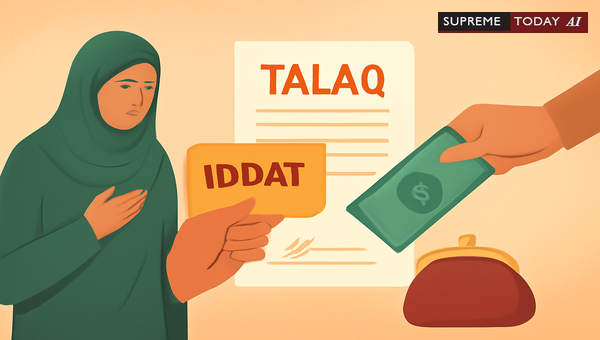
In the realm of Muslim personal law, divorce through and the associated period often raise complex questions about financial obligations. One common query is: whether expense can be paid even before the petitioner receiving . This issue touches on the timing of maintenance payments during the waiting period post-divorce, a critical aspect for many couples. Understanding this can help avoid disputes and ensure compliance with Islamic principles and Indian legal interpretations.
This article delves into the legal nuances, drawing from established case law and principles under Muslim law. Note that this is general information and not specific legal advice—consult a qualified lawyer for personalized guidance.
Under Muslim law, is the prescribed waiting period for a divorced woman, typically three menstrual cycles or three lunar months, to ascertain pregnancy and allow for potential reconciliation. During this time, the husband is obligated to provide maintenance, known as expenses, which cover living costs.
The reinforces these rights, emphasizing fair treatment post-divorce. However, the key question revolves around when these expenses become payable—does formal notice to the wife trigger this, or is the husband's pronouncement sufficient? 2022 0 Supreme(AP) 367
The cornerstone of the answer lies in the effectiveness of . Courts have consistently held that a divorce is valid once pronounced and communicated properly under Muslim law, even if the wife hasn't yet received formal notice.
For instance, legal documents clarify: Mere existence of does not make a legal or effective unless the is proved. 2022 0 Supreme(AP) 367 Similarly, the factum of this form of is required to be proved, if challenged before a court, and mere declaration by the husband, in any form, is not sufficient to hold that he has exercised the right to give legally and validly. 2022 0 Supreme(AP) 183
This means —whether oral, written, or through recognized forms like -e-sunnat—takes effect from the date of pronouncement and proper communication, not upon the wife's acknowledgment. Advance payments of expenses are thus permissible if the divorce is deemed effective. 2017 5 Supreme 577
Supporting this, other precedents highlight that a husband's statement in court proceedings can operate as a fresh pronouncement, entitling the wife to maintenance from that point. In one case, maintenance was awarded from the petition date until the counter-filing (alleging prior divorce) plus the period. 1968 0 Supreme(AP) 65
Yes, expenses can generally be paid even before the wife receives formal notice, provided the divorce is validly pronounced. The obligation arises from the effective date of divorce, not notice receipt.
Key points include:- Effectiveness over notice: The divorce is effective upon pronouncement and communication through proper channels. 2022 0 Supreme(AP) 367 2022 0 Supreme(AP) 183- Advance payments allowed: Expenses can be settled in advance as part of divorce proceedings. 2017 5 Supreme 577- Purpose of : It's a waiting period post-effective divorce, not contingent on notice. 2022 0 Supreme(AP) 367
In practice, husbands have paid expenses and () immediately after pronouncement, even if disputed later. One case noted payments made just after , though the divorce claim was ultimately invalidated for lack of proof. 2025 0 Supreme(Pat) 448
Related rulings under and the 1986 Act affirm that even post-triple (now illegal), husbands must provide maintenance and life provisions if not already done. For example: he was required not only to pay maintenance to his wife during period, he was also required to make provision for her life. 2025 0 Supreme(Pat) 539
Several judgments reinforce this position:
Courts dismiss unsubstantiated claims. In a appeal, the husband's suit for divorce declaration failed due to no cogent evidence of three pronouncements, despite claims of prior payments. So-called earlier pronouncement of three times '' has not been proved by plaintiff through any cogent and reliable evidence. 2025 0 Supreme(Pat) 448 2025 0 Supreme(Pat) 432
A divorced Muslim wife is entitled to maintenance, treated as an extension of marriage. One directed payment from the application date up to counter-filing plus three months . 1968 0 Supreme(AP) 65
Even if is valid (e.g., -e-sunnat via registered post), no penal consequences arise under the 2019 Act if not instantaneous triple . observance follows pronouncement. 2022 0 Supreme(Ker) 396
If is challenged successfully (e.g., no intermediate periods between pronouncements), prior payments may be reconsidered. In torture allegations, courts upheld maintenance claims alongside mahar. 2011 0 Supreme(Gau) 473 2011 0 Supreme(Pat) 1102
While permissible, caveats apply:- Invalid : Payments may be refundable if divorce is proven irregular. 2022 0 Supreme(AP) 367- : Now void; ongoing maintenance liability persists without provision. 2025 0 Supreme(Pat) 539- Undisputed claims: Courts favor wives if husband's denial lacks evidence, as in mahar disputes. 2011 0 Supreme(Pat) 1102
Recommendations:- Document pronouncement (e.g., witnesses, registered post).- Make payments with receipts as settlement evidence.- Seek or mediation for disputes.- Ensure and provisions to avoid CrPC Section 125 claims. 2015 0 Supreme(Ker) 5
Generally, under Muslim law as interpreted in Indian courts, expenses may be paid before formal notice if the divorce is effectively pronounced and communicated. The focus is on validity, not receipt—the effective date of divorce is the relevant point for legal obligations. 2017 5 Supreme 577
This balances Shariat principles with modern protections for women. For couples facing separation, prioritizing proof and documentation prevents prolonged litigation. Always consult legal experts, as outcomes depend on specific facts.
This post is for informational purposes only and does not constitute legal advice.
#TalaqLaw, #IddatExpenses, #MuslimDivorce


It was contended by the learned counsel for the petitioner that there is no evidence as to whether the talaq was pronounced according to law. Further, it was contended that still then the petitioner is entitled to get maintenance even after the period of Iddat. ... 9. ... The OP No. 2 used to torture the petitioner mentally and physically. Still the petitioner somehow put up with the same. On 6-1-2008, the petitioner was driven ou....

On receiving information that the Petitioner herein tortured and even tried to kill the opposite party by setting her on fire, her brother failed a criminal case at Khetri Police Station. ... The present Petitioner resisted the application, whereby the opposite party had sought for direction to be given to the present Petitioner to pay to her the said sum of Mahar and also maintenance for the period of Iddat. ... assaulted her brother and, when she went to rescue her brother, the prese....

Shaheen has further argued that even after giving ‘Talaq’, the husband is expected to make provision for maintenance of the wife and this provision needs to be made during ‘Iddat’ period. ... The Supreme Court has held that the amount of maintenance to be awarded in such a case cannot be restricted for ‘Iddat’ period and the maintenance to be fixed during ‘Iddat’ period should be such that it is sufficient for livelihood of the wife even after the ‘Iddat’ period or fo....

On receiving information that the petitioner herein tortured and even tried to kill the opposite party by setting her on fire, her brother filed a criminal case at Khetri Police Station. ... , Rs.3,000/- as maintenance for the period of iddat. ... During the first three months of her stay at the house of the present petitioner after her marriage, the brothers and sisters of the present petitioner used to torture her both mentally and physically by raising demand of money and one day, a....

The appellant never pronounced any “Talaq” as stated by him on 08.10.2007 and she is still legally married wife of the appellant. The appellant never paid any amount meant for “Dain Mehar” and expense of “Iddat”. 9. ... In para 12 of the plaint the appellant has stated that earlier he pronounced “Talaq” to the respondent and the expense of “Iddat” and amount of “Dain Mehar” was paid just after that, but after some period he re-married with the respon....
The appellant never pronounced any “Talaq” as stated by him on 08.10.2007 and she is still legally married wife of the appellant. The appellant never paid any amount meant for “Dain Mehar” and expense of “Iddat”. ... In para 12 of the plaint the appellant has stated that earlier he pronounced “Talaq” to the respondent and the expense of “Iddat” and amount of “Dain Mehar” was paid just after that, but after some period he re-married with the responden....

Accordingly, on 05.01.2011, in presence of witnesses and by uttering “Talaq, Talaq, Talaq”, he has given intimation of Talaq together with iddat period money which was sent to defendant. She deliberately refused to receive it. ... Only in extremely unavoidable situations, Talaq is permissible. But an attempt for reconciliation is to be made even in such extreme circumstance and if it succeeds, then revocation of Talaq is permissible. ... Hence, in pr....

Admittedly, even Dainmehar has not been paid by him to his former wife. 50. Now, question is whether the petitioner No.1/Bulbul Khatoon fulfills other conditions to get maintenance under Section 125 Cr.PC. 51. ... However, there is no claim that he has paid a single paisa to his wife during iddat period towards her maintenance, let alone making any provision for her life. It is also admitted that he has not paid even Dainmehar to his wife. ... #HL_ST....
However, there is no claim that he has paid a single paisa to his wife during iddat period towards her maintenance, let alone making any provision for her life. It is also admitted that he has not paid even Dainmehar to his wife. ... Even if, it is presumed for a moment that petitioner No. 1/Bulbul Khatoon is divorced, the liability of Md. ... Admittedly, even Dainmehar has not been paid by him to his former wife. 50. ... Anisa Khatun, 1931 SCC OnLi....

He further stated : "even now I am again divorcing the petitioner, Talaq Talaq, Talaq. " the Magistrate found on the evidence adduced that the earlier divorce had not been proved, that it has been established that the respondent had neglected to maintain his wife, that however as he has pronounced ... Both the Courts have consistently held that even in a petition under section 488, Criminal Procedure Code the maintenance during the period of Iddat can also be #HL_....

“Divorce is only permissible twice, after that, the parties should either hold together on equitable terms, or separate with kindness”[II: 229]. When the final talaq is pronounced, it becomes irrevocable and the marriage comes to an end. Not more than two talaq can be pronounced within the period of iddat. After the second pronouncement of talaq, if there is resumption of cohabitation within a period of one month, the pronouncement of divorce is treated as revoked. If the parties are unable to unite during the period of iddat, the final irrevocable talaq can be pr....

The valid forms of talaq recognized in Muslim law viz talaq ahsan and talaq hasan, both contemplated a period (iddat), immediately after the pronouncement of talaq, whether such pronouncement is only once or thrice over three successive lunar months, when the husband can revoke the talaq. State of U.P. 2002 KHC 829, has held that a mere plea taken in the written statement of a divorce having been pronounced sometime in the past cannot by itself at all be treated as a pronouncement of talaq by the husband on the wife and talaq to be effective must be for a reasonable cause a....

On the other hand, Ameer Ali suggests that a triple talaq can be revoked within the iddat period. See, e.g., Mulla p. 261-62; The Hedaya, p. 72-73, 83. There is, however, difference of opinion even within the sunni schools as to whether the triple talaq should be treated as three talaqs, irrevocably bringing to an end the marital relationship or as one rajai (revocable) talaq [Classical Hanafi law, especially as it is practiced in India, seems to take the opinion that triple talaq is sinful yet effective as an irrevocable divorce. These statements may not be accurate as to ....
Even after the Talaq letter, he made payments during the period of Iddat.
4. Sri Wasim Ahmed Khan, learned counsel for the petitioner/wife contended that mere pronouncement of triple Talaq is not valid, and even assuming that triple talaq was valid, a Muslim woman still would be entitled to maintenance even beyond the period of Iddat. The said decision was delivered by a Division Bench of this Court on 18.06.2002. He referred to the judgment of this Court in Syed Maqsoof vs State of A.P. (1 supra) relied upon by the trial Court and the revisional Court.


An indispensable Tool for Legal Professionals, Endorsed by Various High Court and Judicial Officers
Please visit our Training & Support
Center or Contact Us for assistance

Scan Me!
India’s Legal research and Law Firm App, Download now!


For Daily Legal Updates, Join us on :



 Back to top


