


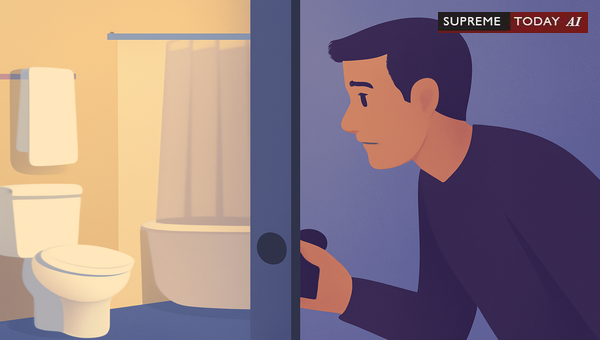
Karnataka HC: Peeping in Bathroom is
In an era where personal privacy is increasingly under threat, a recent decision has clarified the boundaries of under Indian law. The question on many minds: What did the decide regarding ? This ruling reinforces the legal protection against intrusive acts like peeping into private spaces, particularly bathrooms, emphasizing the victim's . This blog post delves into the judgment, its implications, and related precedents to provide a comprehensive overview.
Understanding under
, criminalized under , targets the act of watching or capturing images of a woman engaged in a where she has a reasonable expectation of not being observed. The provision states that such acts, when done without her consent, constitute a punishable offence. The law underscores the centrality of privacy—it's not just about the act itself but the context of expected seclusion. 2023 0 Supreme(Del) 1634
Key elements include:- A : Typically acts like bathing, undressing, or other intimate activities.- Expectation of privacy: The victim must reasonably believe she is not being watched.- Watching or capturing: Can be visual peeping or recording images/videos.
This section, introduced via the , aims to safeguard women's dignity in private settings. However, courts interpret it case-by-case, focusing on evidence and context. 2023 0 Supreme(Del) 1634
The Landmark Decision on
In a pivotal ruling, the upheld the conviction under for an act of peeping into a closed bathroom where a woman was bathing. The court held: peeping inside a bathroom during a woman’s bath, where she has a , constitutes under . 2023 0 Supreme(Del) 1634
Facts of the Case
The appellant was accused of intruding on the victim's privacy by peeping into her closed bathroom while she was engaged in bathing—a quintessential . Testimonies from the victim and her parents were consistent and credible, painting a clear picture of the violation. The convicted the accused, and the High Court affirmed this on appeal, dismissing challenges to the evidence. 2023 0 Supreme(Del) 1634
Court's Detailed Reasoning
The bench meticulously analyzed Section 354C, emphasizing: The Court examined the statutory provisions of , which criminalizes as watching or capturing the image of a woman engaged in a where she would usually have the expectation of not being observed. 2023 0 Supreme(Del) 1634
Key :- Privacy Expectation: In a closed bathroom, the victim undoubtedly expects privacy during bathing.- Nature of the Act: Peeping qualifies as 'watching' under the section.- Distinction from Public Acts: Unlike open or public spaces, a bathroom is inherently private.
The court clarified that such conduct clearly falls within the scope of as intended by the statute. 2023 0 Supreme(Del) 1634
Notably, while the conviction under Section 12 was set aside due to unproven victim age, this did not impact the IPC 354C finding. 2023 0 Supreme(Del) 1634
Contrasting Cases: When Charges Fail or Persist
Judicial interpretations vary based on evidence and facts, as seen in related and other decisions.
In one instance, proceedings under were quashed due to insufficient evidence for and related charges. The court found no proof of a '' as alleged—photographing a woman drying clothes near a shed did not meet the threshold, deeming complaints unmeritorious. 2026 Supreme(Online)(Ker) 5406
Similarly, in another case involving allegations under , the court held: the allegations in the written complaint did not disclose any offence under Section 354C of the IPC. It stressed the need for disclosure of a , leaving sufficiency for trial. 2024 0 Supreme(Cal) 744
On the bail front, was denied in a grave sexual offences case including (IPC 354C), where the court noted: The court denied due to the gravity of sexual offences and evidence against the petitioner, highlighting risks of witness tampering. This underscores how strong evidence bolsters prosecutions. 2024 0 Supreme(Kar) 557
These cases highlight limitations: mere allegations without evidence of privacy violation or private acts may not sustain charges, but credible proof—as in the main ruling—leads to conviction.
Implications for Law Enforcement and Victims
This decision sets a strong precedent:- Recognition of Peeping as : Law enforcement must treat bathroom intrusions seriously under IPC 354C. 2023 0 Supreme(Del) 1634- Victim-Centric Approach: Evaluate based on , not merely on the act itself. 2023 0 Supreme(Del) 1634- Recommendations: Courts and police should enforce privacy rights strictly, protecting victims from such invasions.
For victims, consistent testimonies and circumstantial evidence (e.g., witness accounts) prove pivotal. However, proving age or other elements may limit overlapping charges like POCSO.
Key Takeaways
- Peeping into a closed bathroom during a like bathing typically constitutes under , given the privacy expectation. 2023 0 Supreme(Del) 1634
- Courts prioritize credible evidence; weak cases risk quashing. 2026 Supreme(Online)(Ker) 5406 2024 0 Supreme(Cal) 744
- In serious cases with proof, bail may be denied to prevent tampering. 2024 0 Supreme(Kar) 557
- Always assess context: private space + + no consent = offence.
Conclusion
The 's stance on powerfully upholds privacy rights, signaling zero tolerance for peeping toms invading intimate spaces. While generally protective, outcomes depend on facts and evidence, as seen in contrasting rulings. This is for informational purposes only and not legal advice—consult a qualified lawyer for specific cases. Stay informed, respect privacy, and advocate for justice.
#VoyeurismLaw, #KarnatakaHC, #IPC354C












