


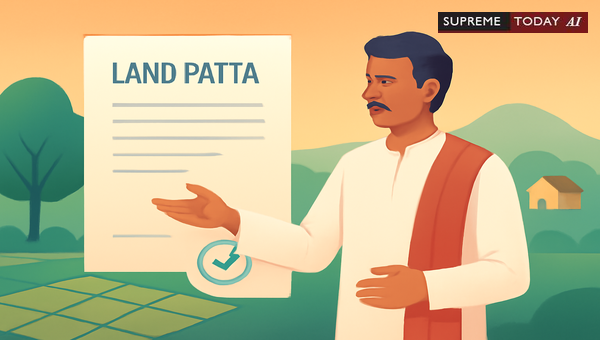
Holder vs : Key Differences Explained
In the complex world of Indian land laws, terms like ' holder' and '' often cause confusion among property owners, buyers, and investors. Whether you're dealing with rural land in Assam, assigned lands in , or settlement schemes elsewhere, understanding these distinctions is crucial to avoid legal pitfalls. A common question arises: Is Holder same as ?
This blog post breaks down the definitions, key differences, relevant legal provisions, and insights from judicial precedents. Note that this is general information based on legal interpretations and should not be considered specific legal advice. Consult a qualified lawyer for your situation.
Definitions: What Do These Terms Mean?
To clarify, let's start with precise definitions drawn from legal contexts.
Holder: A person who has been granted a (a legal document) that confers rights over a specific piece of land, typically indicating ownership or entitlement to use the land. 2025 0 Supreme(Ker) 1966 The court has held that the holder is a person who has been granted a (a legal document) that confers rights over a specific piece of land, typically indicating ownership or entitlement to use the land. 2025 0 Supreme(Ker) 1966 are essentially registered landowners liable for land revenue. 2025 0 Supreme(Ker) 1966
: A person to whom land has been allotted by the government or relevant authority, often under specific conditions and for designated purposes. For instance, allotments may require utilization within a prescribed time, failing which they stand cancelled. 2025 0 Supreme(Gau) 669 In one case, it was mentioned that the said allottee however did not utilize the allotted land within the specific time as prescribed by law and hence the allotment no longer existed and automatically stood cancelled and reverted to the Government of Assam. 2025 0 Supreme(Gau) 669
While both involve government involvement in land rights, the represents a more formalized status compared to the conditional nature of allotments.
Key Differences Between Holder and
The distinctions go beyond mere terminology—they impact rights, obligations, and enforceability. Here's a detailed comparison:
1. Nature of Rights
Holder: Rights are often permanent, heritable, and transferable under land revenue regulations. For example, the Assam Land and Revenue Regulation states that a holder has a in their land. 2011 0 Supreme(Gau) 417
Allottee: Rights are typically conditional. Allotment may restrict usage or transfer, and non-compliance can lead to cancellation. 2021 0 Supreme(AP) 312 In cases of non-utilization, the allotment no longer existed and automatically stood cancelled. 2025 0 Supreme(Gau) 669
2. Legal Standing
Holder: The serves as strong evidence of ownership or entitlement, defendable in court. 2014 0 Supreme(Gau) 960
Allottee: Limited rights, especially under schemes like government assignments. The Assigned Lands (Prohibition of Transfers) Act, 1977, imposes restrictions, indicating allotment does not equate to full ownership. 2023 0 Supreme(AP) 604 An allottee like Bangali Ram was not having any legal right and title over the land. 2023 0 Supreme(Raj) 444
3. Transferability
Holder: Generally transferable, subject to conditions. 2021 0 Supreme(AP) 312
Allottee: Often restricted, requiring government permission or facing time-bound prohibitions. 2021 0 Supreme(AP) 312 Transfers post-cancellation are invalid. 2023 0 Supreme(Raj) 444
These differences highlight why a holder enjoys more robust protections.
Relevant Legal Provisions and Case Insights
Indian land laws vary by state, but key statutes illustrate the divide:
: Grants holders permanent, heritable rights, distinguishing them from allottees. 2011 0 Supreme(Gau) 417
Assigned Lands (Prohibition of Transfers) Act, 1977: Prohibits transfers of assigned lands, underscoring conditional allottee rights. 2023 0 Supreme(AP) 604
Judicial precedents reinforce these:
In allotment disputes, failure to utilize land leads to automatic reversion: the said allottee however did not utilize the allotted land within the specific time... and hence the allotment... stood cancelled. 2025 0 Supreme(Gau) 669
Pattas under schemes like Natham provide possession rights where the Government has no right to interfere with the possession of land by the Pattadhar or the allottee. 2024 0 Supreme(Mad) 2593 However, even here, elevates status beyond mere allotment.
Transfers by allottee heirs or successors may be invalid if the original allottee lacked full rights. For example, vendors as members of an original allottee faced competency issues in sales. 2021 Supreme(Online)(MAD) 30403
lands are classified as privately owned, not requiring leases for certain activities. 2020 0 Supreme(Kar) 164 land means any private land classified as land owned by pattadar by inheritance or acquired through ancestral property. 2020 0 Supreme(Kar) 164
These cases show courts scrutinize the origin of rights— vs. allotment—before upholding claims.
Special Considerations and Risks
Cancellation Risks for Allottees: Non-compliance voids rights, invalidating subsequent agreements. 2023 0 Supreme(Raj) 444
Inheritance and Sales: holders' heirs inherit robust rights, but allottee descendants may not if allotment lapsed.
RAJA vs AYYAKANNU - Madras
Verification Tips: Always check revenue records, status, and allotment conditions before transactions. Bona fide purchasers risk loss if records are flawed. 2021 0 Supreme(Telangana) 44
In schemes like Grama Natham, once is issued, government interference is limited. 2024 0 Supreme(Mad) 2593
Conclusion and Key Takeaways
No, a holder and a are not the same. holders typically hold permanent, transferable rights backed by formal documents, while allottees face conditional, revocable entitlements. 2021 0 Supreme(AP) 312 2011 0 Supreme(Gau) 417
Key Takeaways:- Seek for stronger legal standing.- Review allotment conditions to prevent cancellation.- Verify records before buying or transferring land.- State-specific laws (e.g., Assam, Andhra) apply—get professional advice.
Understanding these nuances protects your property interests. For personalized guidance, consult a land law expert.
References: 2021 0 Supreme(AP) 312 2023 0 Supreme(AP) 604 2011 0 Supreme(Gau) 417 2014 0 Supreme(Gau) 960 2025 0 Supreme(Gau) 669 2025 0 Supreme(Ker) 1966 2023 0 Supreme(Raj) 444 2024 0 Supreme(Mad) 2593 2021 Supreme(Online)(MAD) 30403
#LandPatta, #LandRights, #PropertyLaw















