


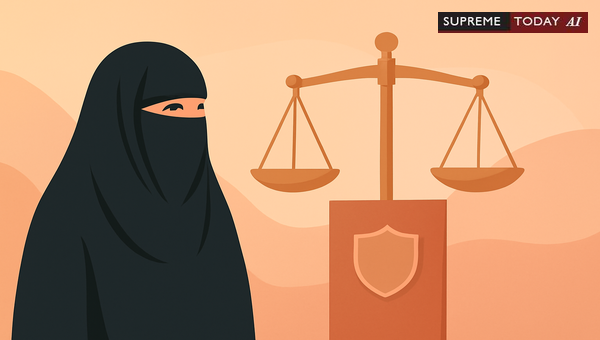
Who Is a Muslim Woman? Legal Guide
In the diverse legal landscape of India, certain groups receive special protections due to their unique social and cultural circumstances. One such group is women, particularly those from Muslim communities who observe . But who exactly is a Muslim woman, and why does the law treat their legal transactions differently? This blog post dives deep into the definition, characteristics, legal safeguards, and judicial precedents surrounding Muslim women, helping you understand this important concept.
Whether you're a legal professional, a community member, or simply curious about Indian family and property law, this guide provides comprehensive insights. Note: This is general information and not specific legal advice. Consult a qualified lawyer for personalized guidance.
Definition and Historical Background
A woman refers to a woman who observes , a practice of seclusion and modesty rooted in Persian customs and adopted widely in Muslim communities during the Mughal era in Northern India. These women typically live in seclusion, veiling themselves with garments like the burqa (covering the entire body) or hijab (covering hair and neck), limiting their interaction with the outside world 2024 0 Supreme(Del) 512 2024 Supreme(Online)(Del) 33443 2024 Supreme(Online)(DEL) 10195.
This observance is often a religious obligation or personal choice tied to modesty and identity. As one source notes, Muslim women are traditionally women who observe pardah, a practice originating from Persian customs, involving modesty and veiling 2024 0 Supreme(Del) 512. Historically, courts have presumed Muslim women to be , especially in legal contexts involving transactions, due to potential illiteracy or social isolation 2021 0 Supreme(Telangana) 119.
Legal Context and Special Protections
Indian law recognizes the vulnerabilities of women, presuming they have imperfect knowledge of worldly affairs because of their sheltered lives. This leads to heightened protections in contracts, property deals, and document executions.
Key principles include:- : When a woman signs a document, the party enforcing it must prove she fully understood the transaction's nature and implications 2020 0 Supreme(All) 918 2021 0 Supreme(Telangana) 119 1954 0 Supreme(Cal) 123.- : Courts require evidence that the woman was not coerced and comprehended the legal effects, safeguarding against exploitation.
This protection extends beyond strict observers to illiterate women facing similar disadvantages 1954 0 Supreme(Cal) 123 2007 0 Supreme(Ker) 641. For instance, The legal framework in India recognizes the unique vulnerabilities of women. They are presumed to have imperfect knowledge of the world due to their sheltered lives 2020 0 Supreme(All) 918.
Characteristics of Muslim Women
Muslim women often exhibit traits that underscore their legal vulnerabilities:- Social Isolation: They rarely engage with the outside world, limiting exposure to legal, financial, or business matters 2020 0 Supreme(All) 918.- Illiteracy or Limited Education: Many lack formal education, making them prone to misunderstanding complex documents 2020 0 Supreme(All) 918 2022 0 Supreme(Cal) 1400.- Dependence on Others: As seen in cases, First plaintiff is a Muslim widow and a lady. She cannot go outside under normal circumstances for the management of the properties, especially when her children are all kids 1998 0 Supreme(Mad) 585.
However, not every woman observing qualifies legally. As clarified, Thus although ladies is a privileged class having been given special protection under the law, every lady who observe parda and loosely described as is not a in the legal sense of the term 2011 0 Supreme(Pat) 435. Courts assess based on evidence of actual ignorance or seclusion.
Judicial Precedents and Court Rulings
Indian courts have consistently upheld these protections through landmark decisions:- In property transaction cases, the executing party must demonstrate full disclosure and understanding 1970 0 Supreme(Ker) 77 2007 0 Supreme(Ker) 279.- Protections apply similarly to illiterate non- women 1954 0 Supreme(Cal) 123 2007 0 Supreme(Ker) 641.- Modern rulings balance tradition with rights, affirming dignity: Courts emphasize that women deserve respect for their practices while ensuring fair treatment 2024 0 Supreme(Del) 512.
These precedents ensure women aren't disadvantaged by their cultural practices. For example, rulings reinforce that courts have historically recognized the status of women, extending protections not only to those strictly adhering to but also to illiterate women who may not be but are similarly disadvantaged 1954 0 Supreme(Cal) 123 2007 0 Supreme(Ker) 641.
Cultural Significance and Modern Adaptations
holds deep cultural and religious significance, symbolizing modesty. Yet, legal perspectives evolve: women are entitled to dignity and decency like all citizens. Courts adapt the concept to contemporary contexts, honoring practices without compromising rights 2024 0 Supreme(Del) 512 2024 Supreme(Online)(Del) 33443 2024 Supreme(Online)(DEL) 10195.
While some sources discuss broader Muslim women rights (e.g., or the ), the focus for women remains transaction safeguards 2025 Supreme(Online)(Ker) 58551 2025 Supreme(Online)(Gau) 7768.
Recommendations and Key Takeaways
To empower Muslim women:- Seek Legal Counsel: Always involve a lawyer for transactions to verify understanding and consent.- Education Initiatives: Community programs on legal rights can bridge knowledge gaps.- Documentation Best Practices: Parties dealing with them should record explanations, witnesses, and translations.
In conclusion, a Muslim woman is defined by her observance, leading to legal presumptions of limited worldly knowledge. Indian courts provide robust protections, shifting the burden of proof to prevent exploitation. This framework balances cultural respect with individual rights, adapting to modern needs 2021 0 Supreme(Telangana) 119 2024 0 Supreme(Del) 512.
Key Takeaways:- Presumption of imperfect knowledge in transactions.- Strict proof requirements for enforceability.- Extensions to similar vulnerable groups.
References: 2020 0 Supreme(All) 918 2021 0 Supreme(Telangana) 119 1954 0 Supreme(Cal) 123 2022 0 Supreme(Cal) 1400 1970 0 Supreme(Ker) 77 2007 0 Supreme(Ker) 279 2007 0 Supreme(Ker) 641 2011 0 Supreme(Pat) 435 1998 0 Supreme(Mad) 585 2024 0 Supreme(Del) 512 2024 Supreme(Online)(Del) 33443 2024 Supreme(Online)(DEL) 10195
#PardanashinWomen, #MuslimLawIndia, #LegalProtections












