


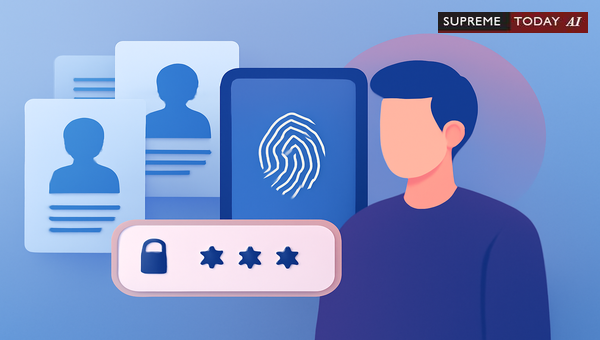
Can the Same Person Legally Hold One Password Under Different Names?
In today's digital age, where people often use nicknames, abbreviations, or variations of their names across platforms, a common question arises: Holding to Password of same person with different names—is it legally recognized? Imagine using 'Surendra Kumar Chanda' on one site and 'S.K. Chanda' on another, both protected by the same password. Does the law view this as one identity or potential fraud?
This blog dives into Indian legal principles on personal identity, declarations under , and the nuanced role of passwords as private credentials. While courts flexibly handle name variations, passwords introduce privacy and security layers not directly addressed in identity cases. Note: This is general information, not legal advice. Consult a qualified lawyer for your situation.
Legal Recognition of Multiple Names as the Same Person
Indian courts have long recognized that a single individual can be known by multiple names without implying separate identities. This is rooted in principles of and status.
The key provision is , which allows declarations regarding legal character or rights to property. Courts have held that a declaration that a person is known by two different names or that two different names refer to the same individual is a relief that falls within 2019 0 Supreme(Ker) 393. For instance, variations like Surendra Kumar Chanda, S.K. Chanda, and Suren Chanda were deemed minor and supported by documentary evidence, confirming one person 2019 0 Supreme(Ker) 393.
This flexibility extends beyond civil matters. In criminal law, Criminal law does not attach importance on names of the accused, but gives importance to identity of the accused. One person may be called with many names, but all those names refer to one and the same person and not different persons 2011 0 Supreme(AP) 503. Similarly, It is just like referring the same person with different descriptions and names 2002 0 Supreme(AP) 957 2001 0 Supreme(AP) 486.
- Key takeaway: Name discrepancies alone don't discredit evidence if identity is proven via documents or testimony 2019 0 Supreme(Ker) 393 2011 0 Supreme(AP) 503.
- : Documentary evidence and consistent details establish unity 2019 0 Supreme(Ker) 393.
Passwords: Personal Credentials Beyond Identity Declarations
Passwords differ from names—they're authentication tools, inherently private. Legal documents don't explicitly link password uniformity to name variations, focusing instead on identity via evidence, not digital access methods 2019 0 Supreme(Ker) 393 2002 6 Supreme 508.
The closest principles emphasize passwords' personal nature. The user name and password of social media/digital platform like Facebook or YouTube is personal in nature, since without such user name and password no person can access such social media or digital platform
. Courts treat them akin to signatures: The password is a very important tool in Computer System and same has to be guarded with utmost care. In EDI System, password is akin to signature and it is the only proof that a particular person has fed the data
. Misuse claims, like The appellant has claimed that his password was mis-used by some other person, are often rejected without strong proof
.
In privacy contexts, forcing password disclosure raises constitutional issues. Providing passwords may implicate rights against , as seen in cases questioning polygraph tests or device unlocks without consent 2021 0 Supreme(Kar) 2. Courts stress: no polygraph test can be administered without obtaining the consent of the person 2021 0 Supreme(Kar) 2.
Identity Verification vs. Password Consistency
While names can be declared identical under Section 34, passwords aren't tethered to this. Identification in trials relies on trustworthy evidence, not FIR names or delays: principles from accused identification cases highlight documentary and testimonial reliability over rigid credentials 2002 6 Supreme 508. Password resets or shared access (e.g., using Netflix passwords for laptops 2022 Supreme(US)(ca9) 187) underscore they're functional, not identity proofs.
No ruling deems same-password/different-names setups invalid per se. Instead:
- Privacy governs: Passwords fall under and , separate from name declarations.
- Fraud risks: Uniform passwords across aliases could aid misuse but aren't barred if identity holds
.
Case Insights: Bridging Identity and Digital Realities
Real-world applications show courts prioritize substance over form:
- Railway claims: A widow's claim wasn't doubted despite potential name variations; she'd know her husband's identity 2022 0 Supreme(Mad) 1461.
- Corporate contexts: Names in folios may vary with joint holders, but voting rights follow register order—not passwords 2003 0 Supreme(Bom) 806.
- Criminal evidence: Name inconsistencies don't undermine prosecution if identity is clear 2011 0 Supreme(AP) 503.
In digital fraud, like via forgotten passwords or security questions 2022 Supreme(US)(ca9) 187, focus shifts to unauthorized use, not name-password parity.
Implications for Individuals and Businesses
For everyday users:- Social media/logins: Using aliases with shared passwords is common and generally fine, as identity trumps form 2019 0 Supreme(Ker) 393.- Legal disputes: Seek Section 34 declarations for name unity, backed by IDs 2019 0 Supreme(Ker) 393.
Businesses handling credentials:- Treat passwords as personal signatures—guard them strictly
.- Verification should blend docs, biometrics, not just passwords.
Limitations: No direct precedent on same-password/multiple-names. Digital credentials invoke , privacy rights—not purely 2021 0 Supreme(Kar) 2.
Recommendations and Best Practices
To navigate this:1. Document identity: Use affidavits or court declarations under Section 34 for name variations 2019 0 Supreme(Ker) 393.2. Secure passwords: Avoid reuse across high-risk accounts; enable 2FA.3. Disputes: Rely on evidence over credentials; challenge misuse claims with logs
.4. Seek advice: For cyber issues, invoke consent/privacy precedents 2021 0 Supreme(Kar) 2.
Key Takeaways
- Courts recognize multiple names as one identity via Section 34 declarations, supported by evidence 2019 0 Supreme(Ker) 393.
- Passwords are private tools, not identity mandates—uniformity across names isn't legally required or prohibited
.
- Focus on proof: Documents trump names or credentials 2002 6 Supreme 508 2011 0 Supreme(AP) 503.
In sum, while name flexibility exists, treat passwords cautiously. This blend of identity law and digital privacy offers leeway but demands vigilance. Always consult legal experts for tailored guidance.
#LegalIdentity #MultipleNamesLaw #PasswordRights















