


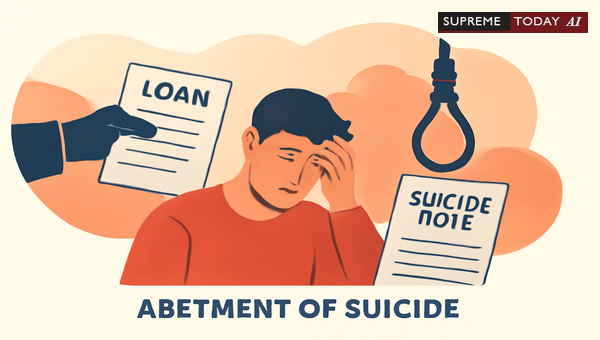
Loan Repayment Demand: Not ?
In the realm of financial transactions, tensions can arise when loans go unpaid. A pressing question for many lenders and legal observers is: Need judgment that demanding back of money given on loan does not amount to ? This issue frequently surfaces in cases where a borrower takes their own life, leaving behind allegations or a suicide note blaming the lender for harassment over repayment.
have repeatedly clarified that mere demands for repayment of lawful debts do not equate to under . This post delves into pivotal judgments, legal principles, and real-world applications, drawing from established case law. Note: This is general information based on precedents and not specific legal advice. Consult a qualified lawyer for your situation.
Understanding Under Indian Law
Section 306 IPC punishes , which hinges on 's definition of abetment: , , or . Key elements include:
- (): The accused must have intended or known their actions would provoke suicide. 2024 0 Supreme(MP) 629
- : Active encouragement or provocation, not passive pressure. Mere words in the heat of the moment do not suffice. 2018 0 Supreme(MP) 651
- Direct Link: A clear causal connection between the act and suicide, beyond emotional distress.
Courts emphasize that financial pressure from lawful debt recovery is a , not inherently criminal. As one ruling states, demand of money or loan does not amount to an abetment of commission of suicide. 2019 0 Supreme(MP) 675
Demands become problematic only with harassment, threats, , or —elements absent in routine repayment requests. 2025 0 Supreme(AP) 1065
Landmark Cases: Demands Alone Do Not Constitute Abetment
Indian judiciary has charges, granted , and in numerous instances where allegations boiled down to loan demands.
Key Rulings on Loan Repayment Demands
- In a significant case, the court held that a demand for loan repayment does not constitute abetment under . No evidence of existed, leading to charges under Section 306 being set aside. 2024 0 Supreme(MP) 629
- Another granted , ruling that demand for lawful debt repayment without criminal intent does not amount to . Mere financial pressure was insufficient. 2025 0 Supreme(AP) 1065
- Demands were deemed non-abetment where no active incitement was shown: demanding repayment of a loan does not necessarily amount to . Charges . 2023 0 Supreme(MP) 772
- granted as mere debt recovery demands, without or illegal pressure, do not suffice for abetment. 2025 0 Supreme(AP) 1066
Suicide Notes and Insufficient Evidence
Suicide notes often name lenders, but courts scrutinize for legal thresholds. Allegations against accused based solely on a do not establish necessary legal elements for abetment. Emotional expressions alone fail without direct provocation. 2025 0 Supreme(Kar) 1542
In one matter, the was despite a note naming petitioners: mere demands for repayment and being named in a suicide note were insufficient to prove intent to instigate suicide. 2024 0 Supreme(P&H) 313
No Harassment, No Abetment
If there was any demand made by the petitioner, that cannot be treated as abetment as any person who has given loan would certainly like to get it back... By no stretch of imagination could be termed to be abetment. 2024 0 Supreme(P&H) 313
Even aggressive recovery efforts for one's money aren't criminal: Money borrowed to the deceased and demanding back of money was not an act of harassment. 2018 0 Supreme(MP) 651
A discharge order noted: accused persons if at all exchanged any dialogue for demanding back their money does not constitute the offence of or abetment to commit suicide. 2018 0 Supreme(MP) 703
When Does It Cross the Line?
While routine demands are safe, courts distinguish based on facts:
- Harassment or Threats: Continuous abuse, physical intimidation, or exorbitant illegal demands may qualify. However, even post-repayment pressure needs proof of . 2018 0 Supreme(MP) 950
- Family History or Other Factors: Suicide notes must be corroborated; family suicide history can undermine claims. 2018 0 Supreme(Kar) 302
- Investigation Stage: is often granted if no abetment exists. At the investigation stage, allegations alone... do not warrant denial of . 2025 0 Supreme(AP) 1066
One acquittal highlighted: Demanding the money borrowed or the money due to a person cannot constitute , as held by the Hon’ble Apex Court in a . 2018 0 Supreme(Kar) 302
, Quashing, and Practical Implications
- Granted: In debt-related cases without incitement, courts favor liberty. 2025 0 Supreme(AP) 1065 2025 0 Supreme(AP) 1066
- : Proceedings halted for lack of ingredients. 2023 0 Supreme(MP) 772 2024 0 Supreme(P&H) 313
- Acquittals: No direct aid or intent proven. 2024 0 Supreme(MP) 629 2024 0 Supreme(Kar) 500
For lenders: Document transactions, avoid aggression, and pursue civil remedies like recovery suits or .
Summary of Legal Position
- Demands for lawful debts generally do not constitute abetment absent harassment or intent. 2019 0 Supreme(MP) 675
- Proof of , incitement, or aid is mandatory. 2024 0 Supreme(Kar) 500
- Suicide notes require substantive evidence; mere blame insufficient. 2025 0 Supreme(Kar) 1542
- Courts protect against misuse of Section 306 in civil disputes.
Conclusion and Key Takeaways
The consistent judicial stance is clear: Demanding repayment of a loan typically does not amount to . Rulings like those in 2024 0 Supreme(MP) 629, 2025 0 Supreme(AP) 1065, and others safeguard legitimate creditors from criminal overreach, provided no criminal elements taint the recovery.
Key Takeaways:- Focus on lawful recovery methods.- Evidence of direct provocation is crucial for prosecution.- Early legal consultation prevents escalation.
This analysis underscores the balance between debt enforcement and criminal liability. Stay informed, act responsibly.
References:- 2024 0 Supreme(MP) 629, 2025 0 Supreme(AP) 1065, 2023 0 Supreme(MP) 772, 2025 0 Supreme(AP) 1066, 2024 0 Supreme(Kar) 500, 2024 0 Supreme(P&H) 313, 2025 0 Supreme(Kar) 1542, 2019 0 Supreme(MP) 675, 2018 0 Supreme(MP) 950, 2018 0 Supreme(MP) 703, 2018 0 Supreme(MP) 651, 2018 0 Supreme(Kar) 302
Word count: ~1050. General insights only—seek professional advice.
#AbetmentOfSuicide, #IPC306, #LoanDemand












