


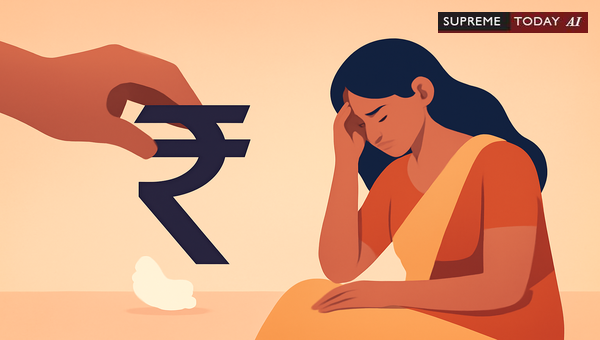
Non-Payment of Maintenance: Economic Violence Against Women?
In many households across India, financial dependence can turn into a tool of control, leaving women vulnerable when maintenance payments stop. Imagine a wife or partner, entitled to support for basic needs, suddenly deprived of funds for food, shelter, or medical care. Is this mere financial dispute, or does it cross into legal territory as economic violence? The question arises: Non Payment of Maintenance is a Economic Violence against Women? Under Indian law, the answer is a resounding yes, generally speaking. This blog delves into the (DV Act), judicial insights, and practical steps for recourse.
This comprehensive guide breaks down the legal framework, precedents, and remedies, empowering women to recognize and enforce their rights. Note: This is general information, not specific legal advice. Consult a qualified lawyer for personalized guidance.
Understanding the Legal Framework
Definition of
The DV Act, 2005, provides a broad shield against abuse in domestic relationships. It defines to include physical, sexual, verbal, emotional, and crucially, 2017 0 Supreme(MP) 930 2023 0 Supreme(Mad) 405.
is explicitly outlined as deprivation of economic or financial resources to which the aggrieved woman is entitled, such as maintenance payments. This encompasses not just direct denial but also actions that hinder access to necessities 2017 0 Supreme(MP) 930 2022 0 Supreme(Ker) 916.
As noted in legal discourse, of a woman is one of the incidences of which is sought to be guarded against by the Act. lists the categories and nature of 2018 0 Supreme(Pat) 1720. This provision ensures women aren't left destitute in shared households or post-separation.
The Act's purpose stems from a need for civil remedies: In order to provide a remedy in the civil law for the protection of women from being victims of and to prevent the occurrence of in the society the was introduced in 2023 Supreme(Online)(KAR) 22598.
Forms of
isn't vague—it's actionable. Key examples include:- Deprivation of financial resources necessary for survival, like food, clothing, or medical aid.- Non-payment of maintenance, which courts view as essential for life's necessities 2017 0 Supreme(MP) 930 2022 0 Supreme(Ker) 916.- Refusal to provide shelter in the or funds for rent.
Courts have held that such non-payment breaches , triggering enforcement under of the DV Act 2017 0 Supreme(MP) 930. Additionally, often qualifies as a : of attracts the concept of , the of continues till the deprivation of monetary requirement continues 2018 0 Supreme(Gau) 641. This means time limits for filing complaints may not bar claims if deprivation persists.
Judicial Precedents Reinforcing Economic Rights
Indian courts have consistently upheld non-payment as economic violence. In Surya Prakash v. Rachna, the ruled that failing to pay maintenance violates , invoking remedies 2022 0 Supreme(Ker) 916.
The judgment stressed: maintenance isn't confined to bare household needs—it extends to rental payments for the , affirming economic support as a under the DV Act 2017 0 Supreme(MP) 930.
These precedents align with broader goals, like those in the Beijing Platform for Action, which flags violence against women and inequality in economic structures 2019 0 Supreme(MP) 517. While global, they echo India's commitment to eliminating such disparities.
Key Findings: Non-Payment as Economic Violence
- Classification as Violence: Non-payment deprives women of vital resources for well-being, squarely fitting economic violence definitions 2017 0 Supreme(MP) 930 2023 0 Supreme(Mad) 405.
- Legal Recourse Available: Aggrieved women can file under for breaches of maintenance-related 2017 0 Supreme(MP) 930 2022 0 Supreme(Ker) 916.
- Affirmative : Courts may issue orders under , mandating maintenance and residence rights 2017 0 Supreme(MP) 930 2014 0 Supreme(Kar) 311.
In practice, this means magistrates can direct payments, attach properties, or even imprison for willful default, ensuring swift relief.
Broader Context: Violence Against Women
Economic violence intersects with other abuses, forming a pattern courts scrutinize holistically. The UN's view resonates: violence against women means any gender-based act causing harm, including economic coercion 2022 0 Supreme(Del) 419. In India, the DV Act operationalizes this by prioritizing civil remedies alongside criminal safeguards.
For instance, in cases of ouster from shared homes, courts direct separate rooms or accommodations, recognizing widows or single mothers' vulnerabilities 2018 0 Supreme(Pat) 1720. Such rulings underscore that economic deprivation isn't isolated—it's part of systemic .
Practical Steps and Recommendations
If facing non-payment:1. Document Everything: Keep court orders, payment proofs, and deprivation evidence.2. File Promptly: Approach the Magistrate under or 31 of the DV Act.3. Seek : Request residence, maintenance, and monetary relief under .4. Awareness of Rights: Know 's continuing nature aids late filings if deprivation ongoing 2018 0 Supreme(Gau) 641.
Victims should act swiftly—delays can complicate enforcement. Support services like women's helplines (1091) or legal aid cells offer initial help.
Conclusion: Empowering Women Through Law
The DV Act transforms non-payment of maintenance from a private grievance into punishable economic violence. Backed by precedents like Surya Prakash v. Rachna and statutory clarity, women have robust tools for justice 2017 0 Supreme(MP) 930 2022 0 Supreme(Ker) 916.
Key takeaways:- Non-payment typically constitutes under .- Remedies via Sections 18, 31 ensure financial security.- It's a continuing wrong—don't hesitate to claim rights.
Educate, document, and litigate. While laws evolve, prompt action upholds dignity. For tailored advice, consult a legal expert.
References:2022 0 Supreme(Ker) 916 2017 0 Supreme(MP) 930 2023 0 Supreme(Mad) 405 2014 0 Supreme(Kar) 311 2018 0 Supreme(Pat) 1720 2018 0 Supreme(Gau) 641 2023 Supreme(Online)(KAR) 22598 2019 0 Supreme(MP) 517 2022 0 Supreme(Del) 419
#EconomicViolence, #DVActIndia, #WomensRights












