


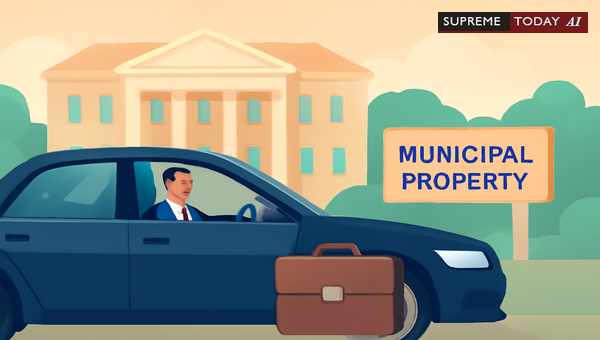
Can a Municipal Chairperson Use the Official Board in Their Private Car?
In the world of local governance, municipal chairpersons hold significant responsibilities, often navigating the fine line between official duties and personal life. A common question arises: Can a Municipal Chairperson Use Chairperson Board in his Private Car? This issue touches on the , , and legal boundaries. While it may seem minor, unauthorized use could lead to legal challenges or perceptions of misconduct.
This blog post dives into the legal principles governing such practices, drawing from key judgments and municipal laws. We'll examine whether displaying or transporting the Chairperson Board—typically an official sign or placard denoting the position—in a private vehicle is permissible. Note: This is general information based on available legal documents and not specific legal advice. Consult a qualified attorney for your situation.
Main Legal Finding
Generally, a municipal chairperson cannot unilaterally use the municipal chairperson's board or office facilities in their private vehicle without proper authorization or legal sanction1983 0 Supreme(Raj) 442. The provided legal documents do not explicitly address transporting official property like a chairperson's board in a personal car. However, core principles of , , and strongly imply that such actions require adherence to established rules and formal approval 1993 0 Supreme(Raj) 479 1983 0 Supreme(Raj) 442.
Municipal officials must act strictly within their . Deviating for personal convenience, even innocently, risks being seen as improper use of public resources.
Key Principles from Legal Documents
Several foundational rules emerge from the analyzed cases:
Lawful Authority and Procedures: Municipal officials, including chairpersons, must operate within the and follow . For instance, the chairperson's role is , derived from election and subject to municipal board rules, such as 2015 0 Supreme(SC) 477 1983 0 Supreme(Raj) 442.
: Using municipal property for personal benefit or in unofficial contexts without authorization is typically not permitted. A judgment on municipal chowk and bus stand use clarifies that municipal land and facilities cannot be exploited by private entities without permission, underscoring the municipality's regulatory rights 1993 0 Supreme(Raj) 479. This principle extends to assets like official boards.
Official Purposes Only: Official roles and property are reserved for public duties. Any non-standard use demands formal approval 1983 0 Supreme(Raj) 442.
These points highlight a consistent theme: public office demands .
Detailed Analysis
Use of Municipal Property and Assets
Legal documents emphasize regulated use of municipal resources. In one case, municipal land for halting or parking required declaration or contractual agreement, prohibiting unauthorized private use 1983 0 Supreme(Raj) 442. Similarly, for a chairperson's board—an emblem of office—transporting or displaying it in a private car without sanction could mirror such misuse 1993 0 Supreme(Raj) 479.
Municipal property and assets are to be used lawfully and with proper authorization; unauthorized use is not permitted and can be regulated or prohibited by the municipality 1993 0 Supreme(Raj) 479.
Chairperson's Official Role and Authority
The chairperson's powers stem from the municipal board, not personal discretion. Cases on elections and tenure, like those under the , detail provisions for filling vacancies and holding no-confidence meetings 2024 Supreme(Online)(GAU) 4570 2025 Supreme(Online)(GAU) 796. governs for chairperson and vice-chairperson, reinforcing 2025 Supreme(Online)(GAU) 796.
In election disputes, such as the Piravom Municipality case, notices and timelines are strictly enforced, showing authority is tightly bound by law 2024 0 Supreme(Ker) 252. No provision extends this to personal vehicle use.
Personal Vehicles for Official Purposes
No document directly tackles private cars carrying official boards. However, inferences from related rulings suggest caution. Officials must avoid actions that blur public-private lines. For example, removal cases stress acting within legal bounds, where unauthorized asset use could invite challenges 2024 0 Supreme(Gau) 893.
Other sources on municipal governance, like special board meetings for no-confidence motions, focus on official channels, not personal adaptations 2024 Supreme(Online)(GAU) 4570.
Insights from Broader Municipal Contexts
Additional cases reinforce asset protection:
Public parks and green zones cannot be misused for private functions, per Supreme Court and NGT orders, prioritizing public rights
-
-
-
.Unauthorized infrastructure changes, like parking alterations, face scrutiny 2024 Supreme(Online)(NGT) 917—noted in summaries.
Election and nomination rules limit chairperson roles to elected councilors, syncing with constitutional provisions 2015 0 Supreme(Del) 650.
These illustrate a pattern: strict adherence to rules for public resources, with no leeway for signage in private contexts unless specified.
Exceptions and Limitations
While the general rule requires authorization, exceptions may apply:
Specific municipal regulations or directives permitting private vehicle use for official duties (none cited here).
Formal board approval for transporting assets during official functions.
Protocols for official vehicles, which do not extend to personal ones without sanction 1983 0 Supreme(Raj) 442.
Absent explicit permission, such as in bye-laws or policies, the safer path is official channels.
Practical Recommendations
To avoid pitfalls:
Seek Formal Approval: Always obtain written permission from the municipal board before using personal vehicles for official property.
Review Local Rules: Check specific municipal acts, like Assam's 1956 Act, or bye-laws for clarity 2024 Supreme(Online)(GAU) 4570.
Document Everything: Maintain records of authorizations to defend against challenges.
Amend Policies if Needed: Municipalities should update rules to address modern scenarios like signage transport.
Unauthorized actions may lead to legal scrutiny, as seen in misconduct cases 2024 0 Supreme(Gau) 893.
Conclusion and Key Takeaways
In summary, while no document explicitly bans a municipal chairperson from using their private car for the chairperson board, overarching principles demand proper authorization. Acting without it risks violating norms 1993 0 Supreme(Raj) 479 1983 0 Supreme(Raj) 442.
Key Takeaways:
- Municipal assets like official boards are for official use only.
- Personal vehicles require explicit permission for such purposes.
- Prioritize procedures to uphold public trust.
For tailored advice, consult legal experts familiar with your local municipal laws. Stay compliant and lead by example!
References
- 1983 0 Supreme(Raj) 442: Lawful use of municipal facilities.
- 1993 0 Supreme(Raj) 479: Regulation of municipal assets.
- 2015 0 Supreme(SC) 477: Chairperson election bye-laws.
- 2024 0 Supreme(Gau) 893: Official removal and conduct.
- 2024 Supreme(Online)(GAU) 4570: Assam Municipal Act provisions.
- Others as integrated above.












