


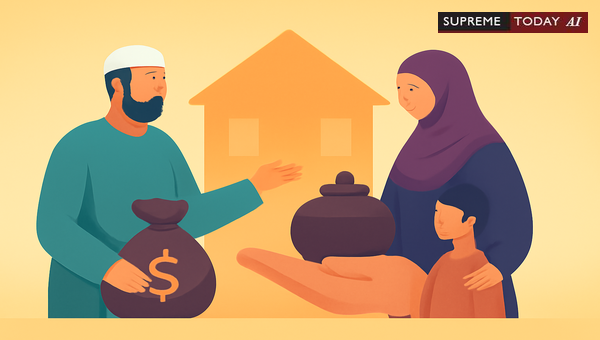
Muslim Sons & Daughters' Rights in Father's Property During His Lifetime
Introduction
In family disputes over property, a common question arises: Do Muslim sons and daughters have rights in during their father's lifetime? Often phrased as Uslim Son and Daughter Right in Anestral Property during Lifetime of their Father, this issue touches on core principles of . Understanding these rights is crucial for families planning estates, avoiding litigation, or navigating property transactions.
Under , the rules differ significantly from other systems like Hindu law. This post breaks down the legal framework, key principles, supporting cases, and practical implications. Note: This is general information based on established precedents and not specific legal advice. Consult a qualified lawyer for your situation.
Overview of Rights Under Muslim Law
Muslim law emphasizes that children—sons or daughters—do not possess any rights in their father's property during his lifetime. This is a foundational rule in Islamic jurisprudence. The father holds absolute ownership, meaning no child can claim a share, demand , or assert interest while he lives. 1992 0 Supreme(Kar) 230 2010 0 Supreme(Jhk) 478
Rights only activate upon the father's death. At that point, heirs including living sons and daughters inherit according to . Predeceased children do not pass rights to their descendants—grandchildren are excluded, with no . 1992 0 Supreme(Kar) 230 2017 0 Supreme(Jhk) 1164
This contrasts with concepts like in Hindu law but aligns with the principle of .
Key Legal Principles
Here are the core tenets, supported by judicial insights:
: Unlike Hindu joint family systems, Muslim law rejects . Children gain no inherent rights until death. Muslim law does not recognize the concept of joint family or ... legal rights of heirs only accrue upon the death of the property owner. 1992 0 Supreme(Kar) 230 2010 0 Supreme(Jhk) 478
Inheritance Triggers on Death: Sons and daughters inherit only if alive at the father's passing. If a child predeceases the father, their descendants do not inherit. 1992 0 Supreme(Kar) 230 2010 0 Supreme(Jhk) 478
Exclusion of Grandchildren: No substitution for predeceased heirs. In cases where a son dies before the father, the grandchildren... are excluded from inheriting. 1992 0 Supreme(Kar) 230 2017 0 Supreme(Jhk) 1164
Father's Absolute Ownership: He can gift, sell, or will property freely (subject to Sharia limits on wills). Children cannot demand . A father retains absolute ownership... no one, including his children, can claim any right to it until he passes away. 2010 0 Supreme(Jhk) 478 2023 0 Supreme(All) 746
These principles ensure the property owner's autonomy during life.
Insights from Case Law
Judgments reinforce this stance:
In a key ruling: If a legitimate son cannot file a suit claiming share in respect of his father's property... the illegitimate son... has no right to claim a share in the father's property by filing a suit. In other words, during the lifetime of a father, a son, legitimate or illegitimate, has no right to seek a share in father's property.2018 0 Supreme(Bom) 583 2008 0 Supreme(Kar) 743
Another case echoes: Limited Rights in Lifetime of Father: Under Muslim law, sons and daughters do not possess rights or interests in the father's property during his lifetime. Their rights only accrue upon the father's death... a Muslim son or daughter does not become a landholder or have rights in the property during the father's lifetime. 2022 0 Supreme(Guj) 1064
Even in blended contexts: It is settled law that a son or daughter can ask for of from the father during his lifetime, but not of . This highlights Muslim law's stricter lifetime bar, unlike selective Hindu exceptions. 2012 0 Supreme(Del) 2766
These cases, including family disputes over mutations post-father's death (e.g., father died , mutation ), underscore timing's importance. 2023 0 Supreme(Kar) 1288
Comparison with Hindu Law
For context, Hindu law grants sons rights by birth in , though claims during the father's lifetime are limited. In Hindu law, sons acquire a right by birth in ... but this right does not extend to claiming or separate ownership during the father's lifetime. 2024 0 Supreme(Kar) 613
Daughters, post- amendments, share equally but face similar lifetime restrictions. Muslim law, however, offers no birth rights at all—purely or upon death. Residence or maintenance rights may exist (e.g., for daughters/widows pre-), but these are personal, not proprietary. 2025 0 Supreme(Bom) 1097
This distinction matters in mixed-faith families or conversions.
Practical Implications and Estate Planning
No Suits: Children filing for shares while father lives typically fail.
Gifts and Wills: Fathers can dispose of freely; ancestral may have nuances, but lifetime control prevails.
Maintenance: Sons/daughters may claim support, but not ownership.
Recommendations:- Educate on implications for estate planning.- Draft Sharia-compliant wills (up to 1/3 disposable).- Use trusts or nominations for clarity. 2010 0 Supreme(Jhk) 478
In disputes like loans repaid from family funds or sales during lifetime, courts prioritize the living owner's rights. 2025 0 Supreme(Mad) 4516
Conclusion and Key Takeaways
In summary, under Muslim law, sons and daughters have no rights to ancestral or during their father's lifetime. Claims arise only post-demise, emphasizing absolute paternal ownership. This protects family harmony but requires proactive planning.
Key Takeaways:- Lifetime: No shares, no .1992 0 Supreme(Kar) 230 2010 0 Supreme(Jhk) 478- Death: Living heirs inherit; no representation.2017 0 Supreme(Jhk) 1164- Plan ahead: Wills, gifts comply with Sharia.- Hindu Contrast: Birth rights exist but limited.
Disclaimer: Laws evolve; outcomes depend on facts, jurisdiction (e.g., India). Seek professional advice. References include 1992 0 Supreme(Kar) 230, 2010 0 Supreme(Jhk) 478, 2017 0 Supreme(Jhk) 1164, 2023 0 Supreme(All) 746, 2018 0 Supreme(Bom) 583, 2022 0 Supreme(Guj) 1064, 2024 0 Supreme(Kar) 613, 2025 0 Supreme(Bom) 1097,
#MuslimInheritance #PropertyRights #IslamicLaw















