




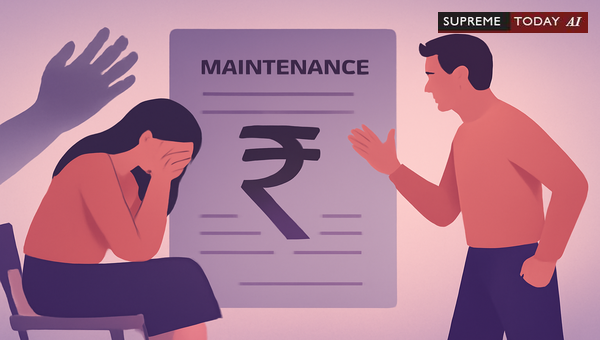
Is Non-Payment of an Offence Under Section 31 of the ?
In the realm of family law in India, disputes often intersect with protections against domestic violence. A common question arises: Is non-payment of an offence under Section 31 of the , (DV Act)? This issue pits against potential , with courts offering nuanced interpretations. Understanding this can help aggrieved parties enforce rights effectively while avoiding misconceptions about penal consequences.
This blog post delves into key provisions, judicial precedents, and contrasting views to provide clarity. Note: This is general information based on legal analyses and case law, not specific legal advice. Consult a qualified lawyer for your situation.
Overview of the and
The DV Act, enacted in , aims to protect women from domestic violence, broadly defined under to include physical, sexual, verbal, emotional, and . encompasses deprivation of financial resources, such as , to which the aggrieved person is entitled 2022 0 Supreme(Ker) 560.
is typically granted under , providing for living expenses, loss of earnings, and medical costs. under prevent acts of domestic violence, including economic harm. Section 31 makes breach of such a punishable offence, attracting up to one year's imprisonment or a fine of ₹20,000, or both.
The crux: Does failing to pay court-ordered breach a protection order, triggering Section 31? Courts have split on this, linking it to whether non-payment qualifies as within a protection order's scope 2017 0 Supreme(MP) 930 2022 0 Supreme(Ker) 916.
Key Legal Provisions Explained
- (): Magistrates can prohibit the respondent from committing domestic violence, including like depriving . Breaches here invoke Section 31
-
2024 0 Supreme(Ker) 1154. - (): Covers but is distinct from . Non-compliance is generally enforced civilly, not criminally 2025 0 Supreme(HP) 324.
- Section 31 (Punishment for Breach): Strictly for protection order violations, described as and offences involving acts like entering the residence or causing harm 2025 0 Supreme(Kar) 169 2024 0 Supreme(Ker) 1154.
allows enforcement of all DV Act orders as , while , aids execution of under 2023 0 Supreme(P&H) 1882. However, Section 31 is reserved for protection order breaches, not standalone monetary defaults 2025 0 Supreme(HP) 324 2024 0 Supreme(P&H) 520.
Judicial Views Supporting Non-Payment as an Offence
Some courts have held that non-payment of constitutes , thus breaching under and attracting Section 31.
- Non-payment falls under per , leading to Section 31 proceedings: Non-payment of is considered a breach of a protection order as it falls under the definition of 2017 0 Supreme(MP) 930 2022 0 Supreme(Ker) 916.
- Courts emphasize: Failure to comply with orders can be interpreted as a violation of the protection order 2017 0 Supreme(MP) 930 2022 0 Supreme(Ker) 916.
In cases where orders explicitly link to protection, non-compliance triggers criminal action. Vague orders risk treating any default as a breach, so specificity is urged
-
2017 0 Supreme(Ori) 131.Additionally, breaches of Magistrate orders under the DV Act are punishable, with Section 31 deeming them offences 2023 0 Supreme(Raj) 10.
Contrasting Judicial Interpretations: Not an Offence
A stronger body of case law clarifies that non-payment of does not invoke Section 31, as it applies only to , not .
- Explicit Restriction: Section 31 of the (D.V. Act) - Creates an offence primarily for breach of ... Non-payment of or arrears does not constitute a breach of a protection order under Section 31. The law explicitly restricts Section 31 to breaches of issued under , not to monetary or orders 2025 0 Supreme(HP) 324 2024 0 Supreme(Ker) 1154 2025 0 Supreme(Kar) 169.
- Courts hold: Penal provisions apply only to domestic violence acts in , not failure, which is civil 2025 0 Supreme(HP) 324 2024 0 Supreme(Ker) 1154 2024 0 Supreme(P&H) 520.
- orders are civil; violations don't trigger under Section 31
Akshay Thakur VS State of H. P. -
2023 0 Supreme(Mad) 2965.
For instance: Hence, definitely the elder child was not entitled for under of the highlights enforcement limits, but without criminal tag 2018 0 Supreme(Ker) 563. Overlap with is noted, where is civil 2018 0 Supreme(Del) 337.
Sections 21 (custody) and 22 (compensation) further distinguish remedies, with reliefs seekable in other courts under 2024 0 Supreme(Mad) 2232 2025 0 Supreme(Del) 571.
Practical Implications and Enforcement
- Enforcement Options: Use for civil execution of , not Section 31 prosecution 2023 0 Supreme(P&H) 1882.
- Child : Limited to minors; adults ineligible under 2018 0 Supreme(Ker) 563.
- Risks of Ambiguity: Link explicitly to for stronger enforcement, but courts caution against overreach
-
.
Practitioners should draft precise orders. Aggrieved parties can pursue compensation under for emotional distress from non-payment 2023 0 Supreme(Raj) 10.
Conclusion and Key Takeaways
Generally, non-payment of is not automatically an offence under Section 31, confined to protection order breaches involving domestic violence acts. While some views treat it as if linked to orders 2017 0 Supreme(MP) 930, prevailing interpretations distinguish civil () from criminal violations 2025 0 Supreme(HP) 324 2024 0 Supreme(Ker) 1154.
Key Takeaways:- Seek civil enforcement for defaults.- Ensure orders specify protection linkages for potential Section 31 application.- Non-payment may support DV claims but rarely leads to immediate arrest.- Always consult legal experts; outcomes depend on case specifics.
References:- 2017 0 Supreme(MP) 930 2022 0 Supreme(Ker) 916 2012 0 Supreme(Raj) 217 2012 0 Supreme(AP) 712
-
2017 0 Supreme(Ori) 131- 2023 0 Supreme(P&H) 1882 2023 0 Supreme(Raj) 10 2025 0 Supreme(Del) 571 2024 0 Supreme(Mad) 2232 2022 0 Supreme(Ker) 560 2018 0 Supreme(Ker) 563 2018 0 Supreme(Del) 337--
2024 0 Supreme(Ker) 1154 2025 0 Supreme(Kar) 169 2025 0 Supreme(HP) 324 2024 0 Supreme(P&H) 520Akshay Thakur VS State of H. P. -
2023 0 Supreme(Mad) 2965 #DVAct, #MaintenanceLaw, #DomesticViolenceIndia















