Searching Case Laws & Precedent on Legal Query.....!
Analysing the retrieved Case Laws
Scanned Judgements…!



Searching Case Laws & Precedent on Legal Query.....!
Analysing the retrieved Case Laws
Scanned Judgements…!
Summary of Main Points and Insights:
Analysis and Conclusion:
References:
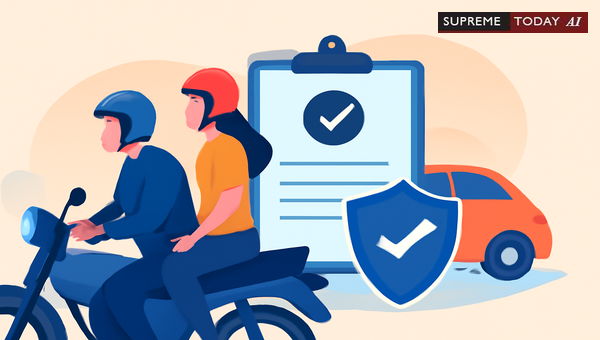
Imagine you're riding pillion on a friend's two-wheeler, enjoying the breeze, when suddenly an accident occurs. You're injured, medical bills pile up, and you wonder: Pillion rider jiska bima nahi hua, kya wo claim pa sakta hai? (Can a pillion rider without insurance claim compensation?). This is a common query in India, especially with rising two-wheeler accidents. The answer hinges on the type of insurance policy, terms under the , and judicial precedents. This post breaks it down step-by-step, drawing from legal principles and court rulings. Note: This is general information, not legal advice. Consult a lawyer for your specific case.
A pillion rider is the passenger seated behind the driver on a two-wheeler motorcycle or scooter. Under Indian law, they are often classified as a —someone carried for free, without hire or reward. This distinction is crucial because standard insurance policies may not automatically cover them. , outlines the requirements for insurance policies, focusing primarily on . 2012 8 Supreme 71
Accidents involving pillion riders raise questions about liability: Can the insurer pay out if the policy doesn't explicitly cover passengers? The short answer: It depends on whether it's an or a .
These are basic policies mandated by law, covering only —damage or injury to others caused by the vehicle. They do not cover the owner, driver, or gratuitous passengers like pillion riders unless explicitly stated and extra premium paid.
These offer broader protection, including and sometimes passenger coverage, but only if:- The policy explicitly includes pillion riders.- Extra premium has been paid for that risk.
Pro Tip: Always check your policy document for like coverage for pillion passenger and proof of extra premium.
Indian courts have clarified this through multiple rulings, emphasizing policy terms over assumptions.
In criminal contexts, pillion riders have appeared in cases like road rage incidents, highlighting their vulnerability. For instance, in a matter, a pillion rider dismounted during a quarrel over a stopped vehicle, underscoring real-world accident scenarios.
But these don't alter insurance principles—they reinforce the need for proper coverage.
Exceptions:- Policies with specific clauses like not carried for hire or reward still require premium for passengers.- / guidelines bind insurers: Coverage for occupants in comprehensive policies if premiums paid. 2009 0 Supreme(Del) 1424
Recommendations:- For Riders/Claimants: Insist on comprehensive policies with pillion add-ons. Verify before riding.- For Policyholders: Pay extra premium; specify coverage clearly.- Insurers: Document terms transparently to avoid disputes.
Courts urge scrutiny: Courts should scrutinize policy terms and premiums paid before directing insurers to pay compensation to gratuitous passengers.
| Policy Type | Pillion Rider Coverage? | Conditions ||-------------|--------------------------|------------|| Act Only | Generally No | Extra premium & explicit mention required 2012 8 Supreme 71 || Comprehensive | Yes | Explicit inclusion & premium paid 2011 0 Supreme(Raj) 1812 |
Pillion rider jiska bima nahi hua typically cannot claim under a basic , as they are gratuitous passengers without specified coverage. However, comprehensive policies with extra premium offer protection. Backed by Section 147, guidelines, and rulings like those in 2012 8 Supreme 71, 2009 1 Supreme 447, the law prioritizes explicit terms. Stay safe: Opt for add-on covers and ride responsibly. For personalized advice, reach out to a legal expert or insurer.
References:1. 2012 8 Supreme 71: Act vs. comprehensive distinction.2. 2009 1 Supreme 447: No coverage for gratuitous passengers in Act policies.3. 2011 0 Supreme(Raj) 1812: Comprehensive liability with premiums.4. 2009 0 Supreme(Del) 1424: / on occupant coverage.5. 2006 3 Supreme 332: Confirms exclusions without premium.
Last Updated: Current as per referenced judgments. Laws may evolve.
#PillionRiderClaim, #BikeInsuranceIndia, #MotorAccidentLaw


Mai RTI k through SSC Headquarter se Ye jaana chahta hu ki Mai kya kru SSC NR meri kisi email ya call ka jawab nhi deti hai. Mujhe financial loss bhi ho raha hai aur mere seniority lose ho Rahi hai. ... Kripya krke aap btaye ki ab mujhe kya krna chahiyea mai apni saari koshish kar chuka hu pichle 8 months se. Please Give me the solution. Aur SSC NR debarred candidates ko job de rahi hai Debarred list me MTS 2019 Debarred list me 137 number per Jatin naam ka ladka #HL_....
DESH KI SABHI DR HOSPITAL KO US BIMARI KE ILAJ ME LAGA DIYA HAI JISKI KOI DAWAYI NAHI HAI. JO APNE AAP THIK HO JATI HAI. GHAR BAITHENE SE BADIYA KHANE OR SAF SUTHRA RAHNE ME. JISE MEDIA OR AKHABAR WALE NHI DIKHA RAHE HAI. IS TARAH KI KHABAR HAI MUJHE ANJAN LOGON SE SUNAI DE HAI KYA YAH KHABAR. ... BHARAT DESH ME BJP KI SARKAR KO BATAYA JA RAHA HAI KYA YAH KHABAR SACHI HAI YA NAHI. ISKI KOI INFORMA....

hai", she informed the Court "Parveen"; on being asked "apke pita ji ka kya naam hai" she informs "Mustqeem"; (Balika)"; On being asked "apki umra kitni hai? ... On being asked, " Kiske Sath Ki, she replied "Shahid Ali ke sath ki hai bina kisi dabao ke apni marzi se ki hai".

On being further asked "apki umra kya hai" she informs that "19 saal". On being further asked "kya apne shiksha grahan ki hai" she informs the Court " Nhi". ... On being asked "apka naam kya hai" she informs the Court "Shama Bi". On being asked "apke pita ji ka naam kya hai" she informs the Court "Mohd. Arif".
On being further asked "apki umra Mai padhi likhi nhi hu". ... On being asked "apka naam kya hai" she informs the asked "app kitna padhi likhi hai" she informs the Court " p style="position:absolute;white-space:pre;margin:0;padding

In the meantime, the motorcycle was stopped and the pillion rider got down and stood near the door of the car. Thereafter, Keshav asked Manish that 'tu Guptaji ka ladka hai' to which Manish replied 'na main gaon ka hun'. During the aforesaid conversation, the pillion driver i.e. ... On seeing them banging, he rolled down the window and asked 'kya'. The person who was driving the said motorcycle was Manish Tiwari and said 'tune gaadi kaise roki'. He replied 'road kharab hai, saamne se a....
Iske atirikt is bayan par purn rup se vishwas nahin kiya ja sakta. Kyonki yed pata nahin ki kin paristhitiyon ke bich yeh bayan huwa. Is bayan me lakhapal ki diary aur tithi ka varnan nahin hai. ... Ramdev ke taraf se ek bayan ki nakal dakhil ki gayee hai. Jisme Mangaru ne kaha hai ki is par mera kabja nahin hai. ... Yeh nakal kisi nyayik record ki nahin hai aur na is par koi ticket adi laga huaa hai, Aur na hi is bayan ko Ram Dev ne apne apatti me j....

He replied 'road kharab hai, saamne se auto aa raha hai, gaadi na roku to kya karun'. ... In the meantime, the motorcycle was stopped and the pillion rider got down and stood near the door of the car. ... As noted above, the quarrel took place when due to an auto coming from the opposite side, Keshav stopped his vehicle on the road and the appellant who was a pillion rider on the motorcycle came and started fighting with him. ... Thereafter, Keshav asked ....
He replied 'road kharab hai, saamne se auto aa raha hai, gaadi na roku to kya karun'. ... In the meantime, the motorcycle was stopped and the pillion rider got down and stood near the door of the car. ... As noted above, the quarrel took place when due to an auto coming from the opposite side, Keshav stopped his vehicle on the road and the appellant who was a pillion rider on the motorcycle came and started fighting with him. ... Thereafter, Keshav asked ....
He replied 'road kharab hai, saamne se auto aa raha hai, gaadi na roku to kya karun'. ... In the meantime, the motorcycle was stopped and the pillion rider got down and stood near the door of the car. ... As noted above, the quarrel took place when due to an auto coming from the opposite side, Keshav stopped his vehicle on the road and the appellant who was a pillion rider on the motorcycle came and started fighting with him. ... Thereafter, Keshav asked ....

The transcript of the video recording reposted by the Petitioner on Twitter is as follows: "Person addressing the crowd (Person 1): In the video, a member of the crowd is seen blaming the Prime Minister of India for the outbreak of Covid-19 pandemic. Tum log jo ye dar rahe hai thik hai, takleef hai, takleef ho Rahi hai, mein samaj sakta hu, lekin..... ye Allah ke tarraf se hai, agar jo ye bol de ke ye Allah ke taraf se nahi hai wo iman waala nahi hai.

Mere bichhar se yadi koi pakshkar koi sakshya prastut karma chata hai or wo mukdme ke uchit nirnay hetu mahtawpurn ho sakta hai to usko prastut karne ki anumati di jani chaiya. Kisi sakhis ka sakhiyak mulya kya hoga yeh nirnay ke dauran ubhay pachho ko sunne ke bad nayalaya dwara bichhar hoga. Abhiyozan pachha ke do kagjat jisme mritak ka atma-hatya tipni (Suicidal note) or abhiyukta ke nayayik bahya sanswikriti ka kagaj hai, jo es mukdeme me arop ko sabit karne ya na sabit karne me mahtwapurna bhumika nibha sakte hai. Prastut sachya ka satwik mulya ka nirdharan nayalaya ko....

(iii) PW-172 received information after about 7-8 days (around 5th or 6th February) that instead of silver, landing of some chemical had taken place on 03.02.1993 at Shekhadi. (what can be done) and in cross PW-172 says ‘Acha thik hai, main dekhta huin kya hoga’ (let me see what can be done). He told A-112 about this information and A-112 said ‘kya ho sakta hai’?
The man again asked Sunil "Tum Nilesh ke Chacha Ho Kya ?" PW-1 Sunil I questioned the said person "Turn Koun Bol Raha Hai ?" The said person stated that "Nilesh Mere Kabjemein Hai. Mereko Pachis Peti Paisa Chahiye." The man asked him, "Anil Salokhe Hai Kya ?" Sunil replied in Hindi "Wo Nahin Hai."
Ye problem is wajah se ho rahi hai ki jo aap ke nazdiki hai wo kisi na kisi wajah se kisi ko koi mana kar raha hai, kisi ko koi wife mana kar rahi hai, is wajah se ye saari problem ho rahi hai. Jisne aap ko paida kiya, uske liye aapko sochna par raha to jiska kisi ke koi matlab hi nahi door door tak usko kya karan hai ki wo de rahi hai. Usko bhi utna hi dar hoga, utna hi khatra hoga, jaan sabko pyari hoti hai.


An indispensable Tool for Legal Professionals, Endorsed by Various High Court and Judicial Officers
Please visit our Training & Support
Center or Contact Us for assistance

Scan Me!
India’s Legal research and Law Firm App, Download now!


For Daily Legal Updates, Join us on :



 Back to top


