


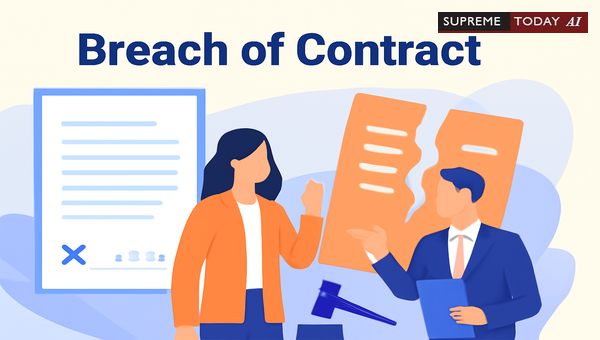
Understanding in
In contract disputes, the courtroom battle often hinges on the early stages of trial—specifically, the . This is where the plaintiff gets the first shot at proving their case. But what happens when the issue is a ? A sample question on in exam-in-chief might ask: Does the plaintiff's evidence sufficiently establish the breach at this initial stage? Generally, courts focus on whether a has been made, setting the tone for the entire proceedings.
This blog post breaks down the legal principles, drawing from established cases and practices. Whether you're a business owner facing a contract dispute or a law student preparing for exams, understanding this stage is crucial. Note: This is general information, not specific legal advice—consult a qualified attorney for your situation.
The Role of in Proving Breach
The is the primary opportunity for the party alleging breach—typically the plaintiff—to present their evidence. Courts emphasize that this stage is key for laying the foundation of the claim. As noted in legal precedents, the is the main stage for establishing 2015 0 Supreme(SC) 542.
Here, the plaintiff must introduce factual testimony, documents, and other evidence to show:- The existence of a valid contract.- The defendant's failure to perform (the breach).- Resulting damages, where applicable.
The court's role at this juncture is limited: it assesses whether the evidence convincingly demonstrates the breach on a prima facie basis, without delving into full merits or defenses yet. The plaintiff must present clear, specific, and credible evidence of the breach during 2006 5 Supreme 890. Failure to do so can lead to early dismissal.
For instance, in cases involving service contracts or sales, plaintiffs often rely on emails, agreements, or witness statements. If the evidence is weak—say, vague allegations without supporting documents—the case may falter right here.
Sufficiency of Evidence: Making a
A cornerstone principle is the . Courts evaluate if the plaintiff's evidence, standing alone, would reasonably support a finding of breach. If the answer to that question is 'Yes', then a has been made out and the defence should be called
.
Key factors include:- Clarity and Specificity: Evidence must directly link to the breached terms. Generic claims won't suffice.- Credibility: Witnesses should be reliable, and documents authenticated.- Relevance: Focus on the breach itself, not defenses.
In one analyzed case, the court clarified: the court's role at this stage is to determine whether the breach has been sufficiently proved based on the evidence in the , before considering rebuttal or defenses 1979 0 Supreme(SC) 539. If sufficient, the trial proceeds; if not, the defendant may not even need to respond fully.
This aligns with broader contract law. Under principles like those in the , plaintiffs must prove to perform their part, especially in suits. In a suit for , the plaintiff has not only to aver but also prove his to perform his part of the contract continuously at all material times 1999 0 Supreme(AP) 1156.
Defendant's Rebuttal: What Comes Next?
Once breach is prima facie established, the defendant enters with rebuttal evidence or defenses. However, the initial burden remains heavy on the plaintiff. Once the breach is established in the , the defendant may present rebuttal evidence or defenses—but poor initial proof can doom the case regardless 1979 0 Supreme(SC) 539.
Exceptions exist, such as when breach is admitted or evident from documents alone. Still, plaintiffs should prepare meticulously. Relatedly, in some jurisdictions, limitation periods for breach claims start from the breach date, typically three years 2023 0 Supreme(Del) 2782 2023 Supreme(Online)(DEL) 1872
.
Insights from Related Cases and Practices
Examining broader sources reveals patterns. In employment or procurement contracts, breaches often involve non-performance or defective delivery. For example, On account of a committed by the respondent no. 2 led to arbitration claims 2014 0 Supreme(Bom) 1825. Courts scrutinize if performance was defective, as in New Jersey law requiring valid contract, breach, and damages 2024 Supreme(US)(ca1) 75.
Sample exam scenarios mirror real trials: Has there been any on the part of defendant No.2? 2011 0 Supreme(SC) 1006. Or assessing damages for non-delivery
NOORBHAI v. KARUPPEN CHETTY
. Even in technical contexts, like university exams or medical reports, evidence in chief must clarify breaches, such as mismatched samples or statements 2025 Supreme(Online)(NCDRC) 2571.Malaysian cases highlight evidentiary pitfalls, like submitting only 1 botol sampel air kencing (one urine sample bottle), questioning in alleged breaches
. Doctrines like don't bind public bodies if they breach statutes 2023 0 Supreme(Del) 2215.
Practical Recommendations for Litigants
To strengthen your position:- Organize Evidence: Use timelines, authenticated contracts, and witness prep.- Anticipate Scrutiny: Courts may dismiss if proof is insufficient 1979 0 Supreme(SC) 539.- Link to Damages: Show how breach caused loss, as recoverable under typical rules
.- Prepare for Re-exam: Clarify ambiguities post-cross-examination
NOORBHAI v. KARUPPEN CHETTY
.Parties relying on documents should ensure they're directly tied to the breach. In , prove continuous readiness 1999 0 Supreme(AP) 1156.
Exceptions and Evolving Trends
While exam-in-chief bears the brunt, admissions or incontrovertible documents can lighten the load. Digital evidence, like emails proving repudiation, increasingly supports claims. However, plaintiffs generally can't shift burden early.
Key Takeaways
- Exam-in-chief is pivotal for proving breach via clear, credible evidence 2015 0 Supreme(SC) 542.
- Courts check for prima facie sufficiency before defenses 2006 5 Supreme 890.
- Weak proof risks dismissal 1979 0 Supreme(SC) 539.
- Integrate documents and testimony effectively.
- Understand limitation and damages rules for holistic strategy.
In summary, a sample question on in exam-in-chief tests evidence quality at trial's outset. Mastering this ensures stronger claims. For tailored advice, seek professional counsel.
#BreachOfContract #ExamInChief #ContractLaw















