


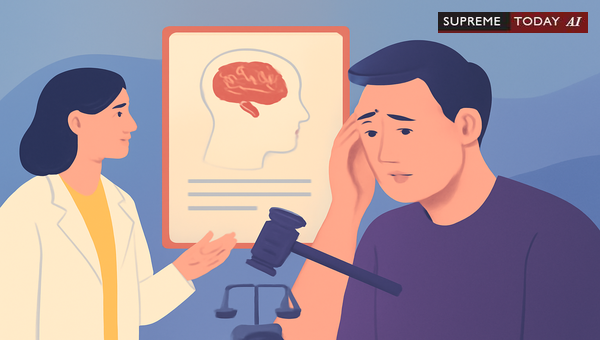
Proving Mental Illness in Court: Key Ingredients
In legal proceedings, particularly criminal cases involving defenses like insanity, establishing mental illness is crucial. But what does it take to prove it? The question to prove mental illness what are ingredients often arises when accused individuals seek to demonstrate that a recognized mental disorder impaired their capacity at the time of the offense. This blog post breaks down the core elements, drawing from judicial precedents and legal standards, typically under frameworks like .
Disclaimer: This is general information based on legal principles and should not be considered specific legal advice. Consult a qualified attorney for your situation.
Understanding the Legal Standard for Mental Illness
Proving mental illness in court requires more than a mere claim—it's about establishing, through credible medical evidence and expert testimony, that the accused was suffering from a recognized mental disorder at the relevant time, which impacted their mental capacity to understand the nature and wrongfulness of their actions. Courts emphasize the distinction between (a clinical diagnosis) and (incapacity to know the act's nature or wrongfulness) 2008 7 Supreme 351.
The lies on the accused or the propounder of the insanity plea. This is typically on a , akin to civil proceedings, not 2008 7 Supreme 351 2008 7 Supreme 493. As one judgment notes, the rests on an accused to prove his insanity 2008 7 Supreme 493.
Key Ingredients to Prove Mental Illness
Here are the essential components:- Medical Evidence: Psychiatric reports, treatment history, and diagnoses like paranoid schizophrenia or persistent delusional disorder are vital 2018 6 Supreme 377 2015 0 Supreme(P&H) 841. For instance, evidence of regular treatment and continuous mental sickness can suffice 2018 6 Supreme 377.- Expert Testimony: Courts rely on psychiatrists' opinions assessing the mental state at the time of the offense. Questions like What was the mental condition of the accused, when the crime took place? guide evaluations 2023 1 Supreme 405.- Conduct and History: Behavior before, during, and after the incident, prior treatments, and family testimonies corroborate claims 2018 6 Supreme 377 2023 0 Supreme(AP) 638.- Timing: Proof must relate to the exact time of the act, not just post-offense recovery 2008 7 Supreme 351.
Under , ingredients include: (i) or mental illness at the time of the act (medical requirement); and (ii) incapacity to know the nature of the act or that it was wrong/contrary to law
.
The : On the Accused
The onus is squarely on the defense. Mere assertions, like I was suffering from mental illness, fail without substantiation 2016 0 Supreme(Gau) 537. In one case, the accused's self-statement was rejected as relatives denied any history, and no medical evidence was produced 2016 0 Supreme(Gau) 537.
Courts assess via a preponderance standard: The nature of the burden on the accused is no higher than that which rests upon a party to civil proceedings 2008 7 Supreme 351. In a murder trial, the defense failed to prove despite claims, as they couldn't show loss of cognitive faculties
. The prosecution still needed a case, but the insanity plea crumbled without substantial evidence (Paras 42, 89)
.
Role of Medical Evidence and Experts
Medical evidence is pivotal. In a schizophrenia case, proof of ongoing treatment established mental illness 2018 6 Supreme 377. Similarly, diagnoses like acute mental illness and mild mental retardation with hospital admissions supported claims, though insufficient alone without tying to the offense time 2023 0 Supreme(AP) 638.
Expert panels are preferred: The present appellant/respondent was examined by a team of doctors... suffering from mental illness called 'Persistent Delusional Disorder' 2015 0 Supreme(P&H) 841 2015 0 Supreme(P&H) 848. Dr. B.S. Chavan, Head of Psychiatry, confirmed this via psychological evaluation 2015 0 Supreme(P&H) 848.
However, ≠ . Mere cannot be said to mean ... test is one of (Paras 4, 5) 2023 1 Supreme 405. Courts probe: Is the person incapable of knowing the act's nature or wrongfulness? (Paras 6, 8) 2023 1 Supreme 405.
Evidence from Conduct, History, and Exceptions
Courts infer mental state from:- Prior history: Previous treatments or violent behavior 2023 0 Supreme(AP) 638.- Post-incident conduct: Recovery might indicate prior insanity, leading to acquittal if probable (Paras 27-30) 2023 1 Supreme 405.- Motive absence: Relevant but not conclusive; must pair with evidence 2014 0 Supreme(Bom) 1660.
Limitations: - Bald claims without reports fail 2016 0 Supreme(Gau) 537.- No expert testimony weakens cases 2025 0 Supreme(Ker) 2870.- Direct eyewitness evidence overrides unsubstantiated pleas 2023 0 Supreme(AP) 638.
In labor contexts, medical certificates proved mental illness for procedural relief 2014 0 Supreme(Mad) 3012. For property management, require similar proof for guardians 2015 0 Supreme(P&H) 841.
Case Studies: Successes and Failures
Success: Appellant acquitted under ; no motive, recovery post-trial indicated insanity at offense time. Burden discharged on preponderance (Paras 17, 21) 2023 1 Supreme 405.
Failure: Accused convicted for murders; insanity plea unsupported—no medical evidence, relatives contradicted claims 2016 0 Supreme(Gau) 537. Another murder case: Failed to prove unsound mind despite hospital history, as not linked to offense time 2023 0 Supreme(AP) 638. Eyewitnesses sealed guilt
.
These illustrate: Medical evidence, including psychiatric reports, expert opinions, and conduct, play a pivotal role 2018 6 Supreme 377.
Recommendations for Legal Practitioners and Accused
- Seek timely psychiatric evaluations post-incident.
- Secure expert testimony pinpointing mental state at offense time.
- Gather history and conduct evidence (treatment records, witness statements).
- Distinguish medical from in arguments.
Courts should weigh probabilities fairly, avoiding over-reliance on act's brutality 2023 1 Supreme 405.
Key Takeaways
- Burden on accused: Preponderance of evidence via medical proofs 2008 7 Supreme 351.
- Core ingredients: Recognized disorder + incapacity at offense time + expert backing
.
- Pitfalls: Unsupported claims lead to rejection 2016 0 Supreme(Gau) 537.
- Holistic proof: Combine medical, expert, and behavioral evidence 2018 6 Supreme 377.
Proving mental illness demands rigorous, targeted evidence. While challenging, success can alter outcomes dramatically. For tailored guidance, reach out to legal experts.
References:- 2025 0 Supreme(Ker) 2870, 2008 7 Supreme 493, 2018 6 Supreme 377, 2008 7 Supreme 351,
, 2023 1 Supreme 405, 2023 0 Supreme(AP) 638, 2016 0 Supreme(Gau) 537, 2015 0 Supreme(P&H) 841, 2015 0 Supreme(P&H) 848, 2014 0 Supreme(Mad) 3012, 2014 0 Supreme(Bom) 1660.
This post draws from analyzed judgments for educational purposes.
#InsanityDefense, #MentalHealthLaw, #ProveMentalIllness















