


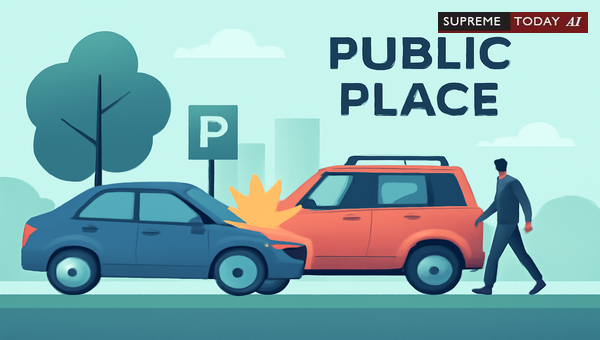
What is '' Under MV Act? Full Guide
In the realm of traffic laws and accident claims in India, one term frequently sparks debate: under the (MV Act). Whether you're a driver facing a challan, an accident victim seeking compensation, or a business owner with premises near a road, understanding this definition can make all the difference. The question as in MV Act often arises in courtrooms, insurance disputes, and regulatory enforcement. This post breaks down the legal meaning, key judicial rulings, real-world examples, and practical implications—drawing from statutory provisions and case law.
Note: This is general information based on legal precedents and statutes. It is not specific legal advice. Consult a qualified lawyer for your situation.
The Statutory Definition:
Section 2(34) of the , provides a broad and inclusive definition: means a road, street, way or other place, whether a thoroughfare or not, to which the public have a right of access, and includes any place or stand at which passengers are picked up or set down by a stage carriage.2021 0 Supreme(Gau) 577 2021 0 Supreme(Del) 117
Saurabh Sharma VS
This wording emphasizes , not ownership. Courts have consistently interpreted it liberally to ensure the MV Act's regulatory and liability provisions apply widely, protecting road users and victims. The intent is to cover scenarios beyond traditional public roads, extending to areas where public interaction with vehicles occurs.
Key Judicial Interpretations: Broad and Inclusive Scope
Indian courts, including High Courts like Andhra Pradesh, , and others, have reinforced that isn't confined to government-owned roads. It's any location where the public or has access, even if private property. No strict legal right is required—mere permissive, habitual, or unregulated access suffices. 2021 0 Supreme(Gau) 577
- Habitual Public Resort: The held that a place qualifies if the public is in the habit of resorting to it, and no one prevents them from doing so, regardless of whether they have a legal right. 2021 0 Supreme(Gau) 577
- Irrespective of Ownership: Private properties become public places if accessible to the public without interference. This aligns with common law views: a is one to which the public can and does have access. 1997 0 Supreme(Ker) 44
- Purpose of Breadth: Such interpretation facilitates MV Act enforcement, like in motor accident claims under , ensuring insurers and owners are liable even off public roads.
1993 0 Supreme(Raj) 725
The , supports this by defining as any place which is open to use and enjoyment of the public whether it is actually used or enjoyed by the public or not.1997 0 Supreme(Ker) 44
Real-World Examples from Case Law
Judicial decisions illustrate how courts apply this definition practically:
Private Lands and Roadside Areas
- In a compensation claim, a bus parked in a roadside small type of wooden shop garage was deemed a because the garage was on the public road, not private property. The court rejected the insurer's defense, upholding MV Act applicability as a for victims. 2021 0 Supreme(Guj) 1002
- An accident on private land beside a highway was ruled a due to no evidence of public prohibition and its highway proximity. The insurer's claim of non-liability failed, as the land fit Section 2(34)'s access criterion. 2019 0 Supreme(Kar) 563
Vehicles Themselves as Public Places
- During the COVID-19 pandemic, cases clarified that a privately owned car, even with one occupant and closed windows, constitutes a . Why? Due to risk of exposure while moving through the city: A vehicle which is moving across city, even if occupied at a given point in time by one person, would be a owing to the immediate risk of exposure to other persons under varying circumstances. Mask-wearing was mandatory, and challans valid. 2021 0 Supreme(Del) 117
Saurabh Sharma VS
These rulings highlight that context matters—virus spread risks or accident potential determine public exposure.
Other Contexts: Gymnasiums and Regulated Access
- Places like gymnasiums operating on contracts aren't automatically places of public resort under related laws, but if public access is habitual, MV Act scrutiny may apply. 2023 Supreme(Online)(Ker) 74163
- Driving regulations prohibit stopping or parking in public places endangerously, reinforcing the definition's role in safety rules. 2019 0 Supreme(Ker) 380
Exceptions and Limitations
The definition isn't unlimited:- Actual Access Required: Mere private ownership without public resort doesn't qualify. There must be evidence of public access or habit. 2021 0 Supreme(Gau) 577- No Prohibition Evidence: Courts check for barriers; absent them, especially near roads, it's likely public. 2019 0 Supreme(Kar) 563- Regulated vs. Free Access: Access can be permissive, ticketed, or fee-based—still counts as a right of access. 2019 0 Supreme(Kar) 563
Implications for Drivers, Owners, and Claimants
This broad scope has key ramifications:- Accident Liability: Insurers can't evade claims by claiming private place. Victims benefit from MV Act remedies. 2021 0 Supreme(Guj) 1002 2019 0 Supreme(Kar) 563- Regulatory Violations: Fines for no masks in cars or rash driving in accessible private areas apply.
Saurabh Sharma VS
- Business Premises: Owners of garages, parking lots, or shops near roads must comply with MV Act rules. 2019 0 Supreme(Ker) 380Legal practitioners should collect evidence of public access (photos, witness statements) to argue classification. Policymakers note private-public overlaps for better enforcement. 2021 0 Supreme(Gau) 577
Key Takeaways
- under MV Act is expansively defined by public access, not ownership—covering roadsides, private lands, and even solo-driven vehicles in public view. 2021 0 Supreme(Gau) 577
- Courts prioritize habitual resort and safety, as in pandemic mask rules or accident claims. 2021 0 Supreme(Del) 117
Saurabh Sharma VS
- Always assess actual use and access; gather evidence for disputes.
Understanding empowers better compliance and stronger claims. For tailored advice, reach out to a legal expert familiar with MV Act jurisprudence.
References
- 2021 0 Supreme(Gau) 577: Section 2(34) and judicial views on access.
: Broad inclusion of accessible places.
- 1997 0 Supreme(Ker) 44: Common law and statutory alignments.
- 2021 0 Supreme(Guj) 1002: Roadside garage case.
- 2021 0 Supreme(Del) 117,
Saurabh Sharma VS
: Vehicles as public places. - 2019 0 Supreme(Kar) 563: Private highway-adjacent land.
- Others as cited.
Last updated based on available precedents. Laws evolve—verify current status.
#PublicPlaceMVAct, #MotorVehiclesAct, #MVActGuide















