


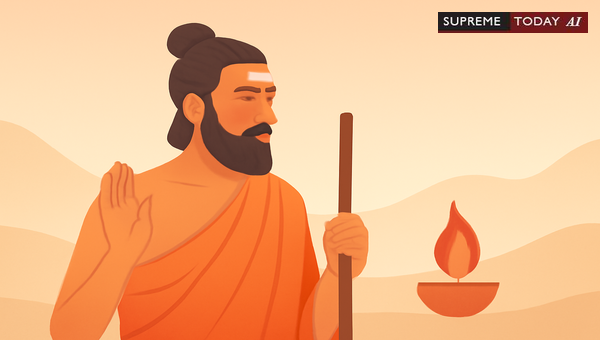
Renounce the World: Legal Meaning Explained
In a world where spiritual pursuits often intersect with legal realities, the phrase Renounce of the World carries profound significance. What does it truly mean to renounce the world legally? This concept, rooted in religious traditions like Hinduism and Buddhism, has far-reaching implications for marriage, inheritance, property rights, and even citizenship. While many view it as a personal spiritual choice, courts interpret it through a legal lens, often linking it to .
This blog post dives deep into the legal dimensions of renouncing the world, drawing from statutes, case precedents, and scholarly interpretations. Note: This is general information and not specific legal advice. Consult a qualified attorney for personalized guidance.
Defining Renounce and Renounce the World
The term renounce is legally defined as to give up a right, surrender, or abandon or to formally decline to recognize or observe a right or authority 2012 0 Supreme(Del) 924 2012 0 Supreme(Del) 2563. In a broader spiritual context, renounce the world signifies withdrawing from worldly interests to lead a spiritual life or abandoning society or material affairs 2012 0 Supreme(Del) 924 2012 0 Supreme(Del) 2563.
Lexicographical sources reinforce this: Renounce means to give up a right; surrender; abandon, refuse to recognise any longer (as) to renounce treaty principles, authority, heirship, etc. and specifically Renounce the world refers to a complete withdrawal from material ties 2024 0 Supreme(P&H) 907. This act is not casual—it's often formalized through ceremonies, vows, or affidavits.
Legal Context in Hindu Law
Under Hindu law, renouncing the world is most prominently addressed in the , particularly , which allows for divorce if a spouse has renounced the world by entering any religious order 2012 0 Supreme(Del) 924 2012 0 Supreme(Del) 2563. This provision underscores how spiritual renunciation can dissolve marital bonds.
A key consequence is . Upon performing sanyasi ceremonies, an individual is deemed to have undergone , severing inheritance rights and familial ties 1971 0 Supreme(J&K) 36. Courts have held: The courts have recognized that once a person has formally renounced the world and performed the necessary ceremonies, they cannot claim inheritance from their previous life 1971 0 Supreme(J&K) 36.
Sanyasis are expected to renounce all worldly possessions and connections, yet disputes arise when they retain property, leading to inheritance battles 2011 0 Supreme(P&H) 1992. As one observation notes: A Sanyasi, who is said to renounce the world, cannot be attached to property 2014 0 Supreme(Del) 1326.
Landmark Case Law and Precedents
Sanyasis and Inheritance Disputes
In cases involving sanyasis, courts scrutinize the authenticity of renunciation. For instance, if Bhola renounced the world and became a sanyasi, it will be his and consequences thereof will immediately follow 2023 0 Supreme(All) 1739. However, proof of formal ceremonies is crucial—mere claims may not suffice.
Child Controversies
Concerns escalate with minors. Encouraging children to take (initiation into renunciation) raises capacity issues: There are serious concerns regarding minors being encouraged to renounce the world and take '', which raises questions about their capacity to understand such decisions 2015 0 Supreme(Guj) 2326. This has prompted calls for protective legislation against coercion or forged documents.
Divorce and Maintenance Claims
In matrimonial disputes, an affidavit stating intent to renounce can impact maintenance. One party expressing a desire to renounce worldly life via affidavit may weaken maintenance claims 2004 0 Supreme(Ori) 61. Similarly, claims of renouncing for spiritual purposes, like moving to a village for meditation, are contested for bona fides 2023 0 Supreme(Bom) 1862.
Broader Implications from Other Legal Contexts
Renunciation extends beyond Hinduism. In citizenship law, applicants must provide an undertaking to renounce the citizenship of a foreign country 2022 0 Supreme(All) 470 2022 Supreme(Online)(All) 19136. For minors or adults, formal renunciation is required before acquiring new citizenship 2025 0 Supreme(Ker) 2372.
Buddhist contexts allow a bhikkhu (monk) as to renounce his office of , affirming freedom to renounce rights
. In Malaysian Syariah law, applications to renounce Islam involve procedural scrutiny
. Even adoption laws note that an adopted child cannot unilaterally renounce his or her status without limits 2023 0 Supreme(All) 1739.
These examples highlight that renunciation demands formality: The act of renouncing can also have implications on citizenship, religious status, and legal rights 2024 0 Supreme(P&H) 907. Courts probe for voluntariness, especially amid challenges like the COVID-19 pandemic, where resignations or withdrawals were scrutinized 2023 0 Supreme(All) 2889.
Practical Implications for Legal Practice
- Property and Inheritance: Post-renunciation, individuals typically forfeit claims. Legal practitioners must verify ceremonies to advise on validity.
- Family Law: In divorces, renunciation affidavits may bar maintenance but require judicial review for genuineness.
- Minors and Coercion: Examine circumstances closely; There should be a careful examination of the circumstances surrounding any claims of renunciation, especially in cases involving minors or allegations of coercion.
- Recommendations: Ensure clients grasp implications on property and obligations. Advocate for legislative safeguards for vulnerable groups.
Key Takeaways and Conclusion
Renouncing the world is a multifaceted concept blending spirituality and law. In Hindu contexts, it triggers , affecting marriage under the Hindu Marriage Act and inheritance rights 2012 0 Supreme(Del) 924 2012 0 Supreme(Del) 2563 1971 0 Supreme(J&K) 36. Courts uphold formal renunciation but challenge dubious claims, particularly for minors 2015 0 Supreme(Guj) 2326. Broader applications span citizenship and religious offices, always requiring proof of intent and procedure.
Ultimately, while spiritually liberating, legally it's a irrevocable step with severe consequences. Legal disputes often hinge on authenticity—rituals matter. For those contemplating this path or facing related claims, professional counsel is essential to navigate these complexities.
References: 2012 0 Supreme(Del) 924 2012 0 Supreme(Del) 2563 1971 0 Supreme(J&K) 36 2004 0 Supreme(Ori) 61 2015 0 Supreme(Guj) 2326 2011 0 Supreme(P&H) 1992 2023 0 Supreme(All) 1739 2024 0 Supreme(P&H) 907 2023 0 Supreme(Bom) 1862 2014 0 Supreme(Del) 1326
#RenounceTheWorld, #HinduLaw, #CivilDeath












