


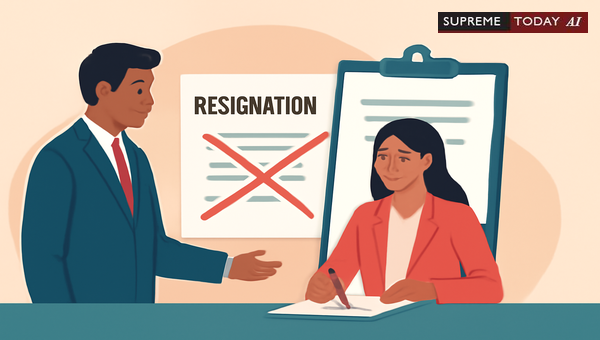
Letter Not Enough: Must Be Accepted for
Introduction
In the fast-paced world of employment, deciding to resign can feel like a straightforward step toward new opportunities. However, many employees and employers alike misunderstand a critical aspect: simply submitting a letter does not automatically end your employment. This common misconception can lead to disputes, unpaid dues, or even continued service obligations.
The legal question at the heart of this issue is clear: Mere Submission of Letter by Petitioner will Not be Sufficient he has to be Officially Terminated. Drawing from precedents and various judgments, this blog post delves into the principles governing effectiveness, withdrawal rights, and the necessity of formal acceptance. Whether you're an employee contemplating or an employer managing exits, understanding these rules is essential to avoid legal pitfalls.
Note: This article provides general information based on legal precedents and is not a substitute for professional legal advice. Consult a qualified attorney for your specific situation.
Key Legal Principles on and
Effectiveness of
A is not a ; it requires acceptance by the competent authority to take effect. Until formally accepted, the employee retains full rights and can withdraw the . The has firmly established that the determination of employment through is contingent upon its acceptance, and an employee can withdraw their before it is accepted 2021 0 Supreme(Gau) 533 1972 0 Supreme(SC) 170.
This principle underscores that mere submission of a letter leaves employment intact. As highlighted in judicial rulings, mere submission of a letter does not suffice for of employment; official acceptance by the employer is necessary for the to take effect 2007 3 Supreme 660 1972 0 Supreme(SC) 170.
From additional case insights, mere tabling of in the meeting will not be sufficient, the will have to be accepted by the members of the , so as to make it effective 2013 0 Supreme(Bom) 1780. This reinforces that provisional steps like submission alone do not sever the employment bond.
Withdrawal of
Employees hold significant leverage before acceptance. An employee can withdraw their at any time before it is officially accepted. This is viewed as a requiring mutual consent. Courts emphasize: is a and requires acceptance to be effective 2007 3 Supreme 660 1968 0 Supreme(SC) 119 2017 0 Supreme(Pat) 306.
If withdrawal is communicated first, any subsequent acceptance becomes invalid: If a is accepted after a withdrawal has been communicated, the acceptance is rendered invalid 2000 0 Supreme(Kar) 648 2013 0 Supreme(Del) 1834.
In practice, prompt communication of withdrawal is key. For instance, cases show that where was tendered but not accepted—or acceptance was delayed—the employee's service continued 2025 0 Supreme(Ori) 151 2023 0 Supreme(Raj) 222.
Official Requirement
via demands formality. letters must be and intended to operate as such. Once accepted, withdrawal is typically barred unless specific rules allow it 2023 0 Supreme(Raj) 222 2021 0 Supreme(Del) 2121.
Courts distinguish from : is a requiring acceptance, whereas can be unilateral or involuntary. Without acceptance, does not automatically terminate employment
2023 0 Supreme(Guj) 1261. Without proper procedure—like deposit of dues or —the process falters 2022 0 Supreme(P&H) 683
.
In one scenario, Admittedly, the petitioner did not leave the service of the respondent Corporation on acceptance of . In fact, the petitioner did not submit any letter, before his services were severed nor has there been a formal submitted by him 2008 0 Supreme(Mad) 3801. This highlights how absence of formalities prevents deeming it a voluntary exit.
Relevant Case Law
Indian courts have consistently upheld these principles across contexts:
- : For public servants, once accepted cannot be withdrawn without rules permitting it 2021 0 Supreme(Gau) 533.
- : Reinforces that must be and with intent to relinquish 2023 0 Supreme(Raj) 222.
- Context: A director's is effective only when recorded with the , stressing formal acceptance 2016 0 Supreme(Mad) 2448.
Further precedents affirm: The date of is when is formally accepted; otherwise, service persists 2024 0 Supreme(Gau) 106 2025 Supreme(Online)(Guj) 12782 2023 0 Supreme(Raj) 222. Disputed acceptances, lacking communication or procedure, keep employment ongoing
2023 0 Supreme(Bom) 1305.
In a CRPF-related matter, hasty discharge without procedure was challenged, noting submitted but formalities bypassed 2021 0 Supreme(Gau) 219. Similarly, technical terminations without show-cause notices were quashed 2010 0 Supreme(Pat) 1258.
Practical Implications for Employees and Employers
For Employees
- Before Resigning: Ensure your letter is clear, , and aligns with company policies. Understand notice periods and dues.
- Withdrawing : Act swiftly—communicate withdrawal in writing before acceptance. Document everything to prevent disputes.
- Risks of Hasty Submission: As in cases where counsel's mere representation wasn't binding, informal steps fall short 2010 0 Supreme(Ker) 244.
For Employers
- Acceptance Process: Respond promptly and formally. Communicate acceptance clearly to avoid claims of continued service.
- Procedural Compliance: Follow rules on notice, dues, and authority. Incomplete processes can lead to .
Analysis and Key Takeaways
The core principle across precedents is unequivocal: mere submission of a letter by the petitioner is insufficient; he must be officially and properly terminated through acceptance of his to effectuate the end of employment. This protects employees from impulsive decisions and ensures employers handle exits methodically.
Key takeaways:1. is provisional until accepted 2007 3 Supreme 660 1968 0 Supreme(SC) 119 2017 0 Supreme(Pat) 306.2. Withdrawal is possible pre-acceptance; post-acceptance, it's restricted.3. Formal communication and procedure are non-negotiable.4. Courts prioritize intent, conditionality, and bilateral nature.
In summary, while submitting a letter is the first step, it's far from the last. The legal framework demands formal acceptance for , safeguarding employment relationships. Employees should maintain records, and employers must adhere to protocols. For tailored guidance, seek expert legal counsel.
This post is for informational purposes only and reflects general legal trends in India.
#ResignationLaw, #EmploymentTermination, #LaborRights















