




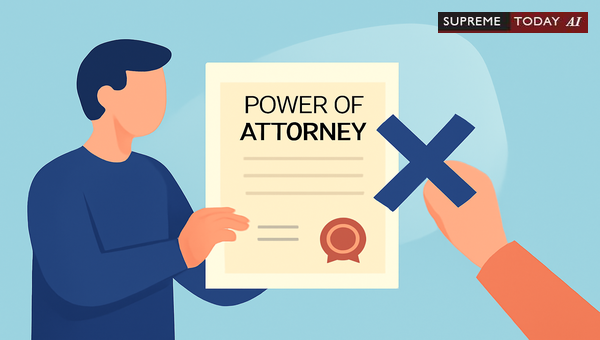
How to Revoke a in India: Full Guide
(POA) documents are powerful legal tools that grant someone else the authority to act on your behalf. But what happens when you need to take back that power? Many individuals search for the procedure to revoke a PA after circumstances change, such as trust issues, completion of tasks, or shifting priorities. Understanding the correct process is crucial to avoid disputes or unintended legal consequences.
In this comprehensive guide, we'll break down the revocation procedure under Indian law, primarily governed by the . We'll cover formal steps, exceptions for irrevocable POs, notification requirements, and insights from related legal contexts. Note: This is general information based on legal precedents and statutes. It is not specific legal advice—consult a qualified lawyer for your situation.
Main Legal Finding on Revoking a
The procedure to revoke a (PA) under Indian law primarily involves strict compliance with statutory requirements, notably . Revocation must be made in a manner that is clearly communicated to all relevant parties and recorded in accordance with legal procedures. Importantly, it cannot be implied solely through conduct unless explicitly recognized by law
.
A valid POA remains in force until properly revoked, emphasizing the need for formal action over informal steps
.
Key Steps in the Revocation Procedure
Here's a clear outline of the essential steps:
- Prepare a Formal Written Notice or Deed: A valid revocation must be made through a formal, written notice or , which should be deposited in the appropriate office
.
- Deposit in Relevant Offices: Under Section 5 of the PA 1949, revocation is achieved by depositing a written notice of revocation in every office where the original or office copy of the PA was deposited
. Section 5 explicitly states: every instrument purporting to create a ... shall, so far as the said instrument is valid and so far as may be compatible with the terms of the instrument, continue in force until notice in writing of the revocation thereof by the donor... has been deposited in every office in which the office copy or true copy thereof has been so deposited
.
- Notify the Donee and Third Parties: Revocation is effective only upon proper notification to all parties who rely on the PA, especially the donee or agent
. This must be communicated effectively, as revocation notified only to the agent may not bind unaware third parties
.
- Execute and Register a Deed if Needed: Alternatively, a formal , properly registered, serves as valid proof
.
Detailed Analysis: Formal Procedure Under Section 5
The cornerstone of revocation is , which mandates depositing written notice in all relevant offices. This ensures the revocation is public and verifiable, preventing the agent from continuing to act under the old authority.
Once deposited, the POA ceases to have effect from that point, but prior acts by the agent in good faith may still be protected. The law stresses that revocation is not effective merely through conduct or informal actions unless specified
. For example, acts inconsistent with the authority (like selling property yourself) do not automatically revoke the POA without formal steps
.
Handling Irrevocable Powers of Attorney
Not all POs are created equal. An , especially one , cannot be revoked without the consent of the donee or through compliance with the statutory process
. In such cases:
- Obtain the donee's consent in writing.
- Communicate the revocation to all third parties who have acted on the PA
.
(from referenced Indonesian context, analogous in principle) highlights: revocation notified only to the mandatary may not be argued against third parties unaware of the revocation
. This principle aligns with Indian law's emphasis on broad notification.
Effectiveness and Common Pitfalls
Revocation becomes effective only after proper deposit and communication. Common mistakes include:
- Relying on implied revocation by conduct, which is generally not recognized
.
- Failing to notify third parties, leaving the POA valid against them.
- Overlooking registration for deeds, reducing enforceability
.
In related contexts, revocation of grants (like ) requires from close relatives and questioning document genuineness, showing courts scrutinize formal processes strictly 2014 0 Supreme(Mad) 13. Similarly, in proxy revocations for court proceedings, discretion lies with the court under procedural codes, but formal applications are key
.
Insights from Related Legal Contexts
Revocation principles extend beyond standard POs. For instance:
- Proxies in Court: Executors seeking to revoke a joint proxy must apply to the court, as the provides discretion without specified grounds
.
- Revocation: Close blood relatives can challenge and revoke if the will's genuineness is in doubt, underscoring notification and party inclusion 2014 0 Supreme(Mad) 13.
- Licenses and Tenancies: Courts look at substance over form; a so-called license deed granting exclusive possession may be deemed a tenancy, affecting revocation rights 2012 0 Supreme(All) 1625.
These cases reinforce that formal, documented revocation with proper notice is universally emphasized in Indian jurisprudence.
Bar council matters also highlight procedural rigor—enrollments based on fraud lack revocation mechanisms under the , prompting calls for better scrutiny 2013 0 Supreme(All) 1919 2013 0 Supreme(All) 1201.
Summary of Revocation Procedure
To recap the process:
- Draft Written Notice or Deed: Clearly state revocation details.
- Deposit in Offices: File in every office holding the original PA copy
.
- Notify Parties: Send to agent and relevant third parties
.
- Handle Irrevocable PAs: Secure donee consent
.
- Register if Applicable: For added validity
.
Exceptions and Limitations
- : Requires donee consent
.
- No Informal Revocation: Conduct alone insufficient
.
- Third-Party Protection: Unnotified parties may rely on the POA.
In development permissions, authorities must follow due process under acts like before revoking, mirroring POA formalities 2017 0 Supreme(Bom) 1964.
Practical Recommendations
- Issue a clear, written notice and keep records.
- Deposit promptly in all relevant offices.
- Notify the donee and third parties via registered post or publication.
- For irrevocable POs, negotiate consent and document it.
- Retain copies of all documents for disputes.
- Seek legal review to tailor to your POA's terms.
Conclusion and Key Takeaways
Revoking a in India demands precision to ensure it's binding and dispute-free. By following —through written notice, deposits, and notifications—you protect your interests effectively
. Remember, irrevocable POs add layers of consent, and informal steps rarely suffice.
Key Takeaways:- Always use formal written revocation.- Notify everyone involved.- Consult professionals for complex cases.
For personalized guidance, reach out to a legal expert. Stay informed and empowered!
References:1.
: Statutory requirements under PA 1949.2.
: example.3.
: Irrevocable PAs.4.
: Notification to third parties. #RevokePOA #PowerOfAttorneyIndia #LegalGuide















