


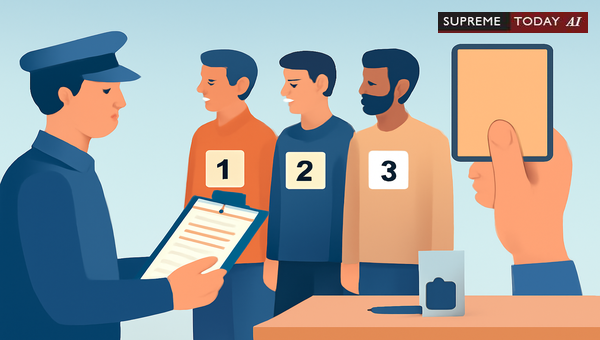
Identification in Court: Are Similar Objects Mandatory?
In criminal trials, the identification of —such as seized property, weapons, or victim belongings—plays a pivotal role in establishing links to the crime. But a common question arises: In the identification of in courts, whether similar objects are to be placed before the witness? The answer is generally yes, particularly during , to ensure reliability and prevent fabrication. This practice is rooted in , which mandates mixing disputed items with similar objects. Failure to do so can render the evidence unworthy of credence. This post delves into the procedure, judicial scrutiny, consequences, and practical tips, drawing from key case laws.
Why Proper Identification Matters in Criminal Cases
serve as , corroborating witness testimonies and recoveries. However, their hinges on fair identification processes. Courts emphasize that mere recovery or exhibition without witness verification creates doubt. For instance, in cases involving child victims' clothes or seized vehicles, not showing items to family members or owners during trial has led to skepticism about authenticity. 2025 6 Supreme 705 2014 0 Supreme(Ker) 91
The and have stressed that identification tests the witness's memory, akin to accused parades. Without safeguards like mixing similar items, evidence risks being dismissed as coached or unreliable. This aligns with broader principles under , where identification is a relevant fact but requires procedural integrity. 2021 0 Supreme(MP) 517
The Mandated Procedure Under Rule 35
Core Requirements of Rule 35
outlines a strict protocol for property identification parades:- Venue: Held in the where properties are lodged.- Mixing Protocol: Each item must be presented separately, mixed with four or five similar objects to avoid easy picking. 2017 0 Supreme(AP) 849 2024 0 Supreme(AP) 985- Witness Preparation: Before viewing, witnesses must state identifying marks of their property.- Sequencing: Witnesses are called one by one, with no communication allowed between them.
This Magistrate-led process ensures impartiality. Deviations, like conducting parades by a Revenue Inspector or Panchayat Secretary, invalidate the evidence. 2017 0 Supreme(AP) 849
Exact Quote from Rule 35: (1) Identification parades of properties shall be held in the where the properties are lodged; (2) Each item of property shall be put up separately for the parade. It shall be mixed up with four or five similar objects. (3) Before calling upon the witnesses to identify the property, he shall be asked to state the identification marks of his property. Witnesses shall be called in one after the other and on leaving shall not be allowed to communicate with the witness not yet called in. 2017 0 Supreme(AP) 849 2024 0 Supreme(AP) 985 2022 0 Supreme(AP) 98
In-Court and Pre-Trial Identification
Beyond formal parades, (marked as MO-1, MO-2, etc.) must be shown to relevant witnesses during trial. Witnesses identifying accused or objects in court, like naming persons or picking items, strengthens the case—but only if procedurally sound. 2021 4 Supreme 555 2009 0 Supreme(Mad) 5650
Consequences of Non-Compliance: Judicial Precedents
Courts rigorously scrutinize compliance, rejecting flawed identifications.
In one case, the parade at a Grampanchayat office failed to mix each item separately with similar objects: ...each item of property was not put up separately in the parade after mixing with 4 or 5 similar objects as required under ... Thus, it is clear that the test identification in respect of the properties are not conducted in accordance with the procedure prescribed... Therefore, much credence cannot be given. 2017 0 Supreme(AP) 849
Another highlighted dissimilarity: mixed items were not similar items to the identified items... the primary ingredient of mixing articles to be identified with articles of similar nature, has been complied with... the identification of property... cannot be accepted. 2022 0 Supreme(AP) 98
Even outside court (e.g., under police manuals), mixing similar articles is essential, though Magistrate oversight is preferred for lodged properties. Recovery from the accused without proper parades does not sustain conviction alone. 2008 0 Supreme(Mad) 4353 2018 4 Supreme 652
Relatedly, in accused identification contexts, courts warn against without prior tests, as witnesses may be overawed by courtroom dynamics. Professor Glanville Williams noted: Since this is obviously far more dangerous to the accused than taking part in a parade, the choice of a parade is almost always accepted. 2021 0 Supreme(MP) 517 2018 0 Supreme(MP) 193
Failure to secure independent witnesses or explain lapses, like unsealed seizures, further dents prosecution cases.
2017 0 Supreme(Mad) 1914
Exceptions and Related Practices
- No Parade Needed: If objects are undisputed or self-evident (e.g., unique serial numbers), formal tests may be unnecessary.
- Police Manuals: For pre-court identifications, similar mixing applies, but court parades take precedence.
- Vehicles and Documents: Noting registration numbers by witnesses or distinguishing from documents is key. 2020 1 Supreme 82
In corruption or rape cases, courts demand via independent witnesses and proper handling of , echoing property identification standards. Mere in-court picks without prior verification weaken cases. 2017 0 Supreme(Mad) 1914
Best Practices and Recommendations
To bolster prosecutions:- Adhere Strictly: Conduct Magistrate-led parades in court with 4-5 similar objects per item; have witnesses state marks first.- Trial Verification: Always exhibit objects to owners/victims for in-court ID to dispel doubts.- Documentation: Meticulously record compliance; train officers on accused vs. property parades.- Avoid Tutoring: Prevent witness communication to ensure genuine memory-based identification.
Non-compliance risks acquittal, as suspicion cannot replace proof. 2021 0 Supreme(MP) 517
Key Takeaways
- Similar objects are typically required under Rule 35 for reliable material object identification, testing witness memory fairly.
- Procedural lapses lead to evidence rejection, as seen in multiple judgments. 2017 0 Supreme(AP) 849 2022 0 Supreme(AP) 98
- Integrate with broader evidence; identification corroborates but does not standalone convict.
This post provides general insights based on reported cases and is not legal advice. Consult a qualified lawyer for case-specific guidance.
References
- 2017 0 Supreme(AP) 849: Rule 35 non-compliance in venue and mixing.
- 2024 0 Supreme(AP) 985: Reiterates mixing requirement.
- 2022 0 Supreme(AP) 98: Similarity and procedure emphasis.
- 2025 6 Supreme 705: Doubt from not showing to witnesses.
- 2014 0 Supreme(Ker) 91: Vehicle identification lapses.
- 2021 4 Supreme 555: Material object marking.
- 2008 0 Supreme(Mad) 4353: Insufficient for conviction alone.
- 2018 4 Supreme 652: Needs .















