
SupremeToday Landscape Ad
AI Thinking

AI Thinking...

Searching Case Laws & Precedent on Legal Query.....!

Scanned Judgements…!

Checking relevance for ANKITA KAILASH KHANDELWAL VS STATE OF MAHARASHTRA...

2020 0 Supreme(SC) 579 : The court held that the Order of Suspension dated 27.05.2019 was not based on the provisions of the 1999 Act or the 2000 Regulations, and therefore constituted an illegal and excessive punishment. The court concluded that suspending the appellants from academic activities without a basis in the statutory provisions violated their rights under Article 21 of the Constitution, and granted redress by allowing them to re-enter the College and Hospital to pursue their studies, subject to certain conditions. This establishes that a suspension from academic activities without legal basis is unlawful and constitutes an excessive punishment.Checking relevance for Director (Studies) VS Vaibhav Singh Chauhan...

2008 0 Supreme(SC) 1603 : The court held that disqualifying a student for one academic session under Rule 9.2 of the Examination Rules was not illegal or excessive punishment, as the student was found in possession of a slip containing examination-relevant material, which constitutes malpractice under Rule 8.1. The court emphasized that possession of unauthorized material during an exam, regardless of whether it was used, amounts to malpractice. The punishment of disqualification for one academic session was the minimum allowed under Rule 9.2 and was upheld as lawful. The court rejected arguments that the punishment was disproportionate or arbitrary, noting that the rules do not violate Article 14 or any constitutional provision, and that academic authorities have discretion to impose penalties within the framework of established rules. Therefore, a disqualification without reason or based on arbitrary grounds would be illegal, but in this case, the disqualification was based on clear rules and factual findings.Checking relevance for Vishwa Jagriti Mission Through President VS Central Government Through Cabinet Secretary...

Checking relevance for Bachan Singh VS State of Punjab...

Checking relevance for Bachan Singh: Mal Singh: Sunil Batra: Nathu Singh: Kartar Singh And Ujagar Singh: Sher Singh: Sunil Batra: Mal Singh: Nirpal Singh: Jagmohan Singh: Ujjagar Singh VS State Of Punjab: Union Of India: Union Of India: Union Of India: Delhi Administration: State Of Punjab: Delhi Administration: State Of Haryana: State Of Haryana: State Of Haryana: State Of Punjab...

Checking relevance for Sunil Kumar Singh VS Bihar Legislative Council (Through Secretary)...

Checking relevance for Raunak Mishra VS Banaras Hindu University...

2023 0 Supreme(All) 2097 : The court held that suspension orders passed without adhering to principles of natural justice are arbitrary and disproportionate, and therefore illegal. The court emphasized that disciplinary actions in universities must balance punitive measures with reformative opportunities, and that debarring a student from academic activities without proper procedure or justification violates principles of natural justice and constitutes excessive punishment. The court set aside the suspension orders and directed the establishment of a reform programme, affirming that the duty of the court is to nurture the student''''s career rather than damage it.Checking relevance for Vineet Mishra VS Banaras Hindu University, Varanasi...

2023 0 Supreme(All) 2082 : The court held that a punishment such as debarring a student from academic activities without proper justification or opportunity to be heard is illegal and constitutes a violation of principles of natural justice. Furthermore, the court emphasized that any punishment imposed must be proportionate to the misconduct; otherwise, it is arbitrary and excessive. In this case, the suspension was set aside because it was disproportionate and lacked a fair hearing, establishing that debarring students without reason or due process is unjust and unlawful. The court also mandated a reformative approach over purely punitive measures, reinforcing that students should not be treated as criminals and must be given opportunities to rehabilitate rather than face permanent exclusion.Checking relevance for Shahzaman Khan VS Union of India...

2023 0 Supreme(All) 2865 : The court held that debarring a student from academic activities without a proper hearing or justification violates principles of natural justice and constitutes arbitrary action. In particular, the court emphasized that expulsion or suspension without an opportunity for a hearing is illegal and excessive punishment, especially when it results in the loss of years of academic progress and future prospects. The judgment in Prabhat Kumar Singh v. Army College of Medical Science (2018 SCC OnLine Del 9619) explicitly stated that permanent expulsion is ''''unduly harsh and shockingly disproportionate'''' when imposed without considering the student''''s age, background, academic record, and potential for reform. The court further ruled that such punitive measures must be balanced with opportunities for rehabilitation, and that students should not be treated as criminals. The court also affirmed that the interest of justice demands that courts may modify excessive penalties, even without remanding the matter, when the punishment is disproportionate to the offense and the student has already suffered significant consequences.


AI Overview

AI Overview...

  • Illegal and Excessive Punishment - Lack of Reason and Natural Justice Several sources highlight that ordering a student to be debarred from academic activities without providing reasons or affording a fair hearing constitutes illegality and excessive punishment. For instance, ["2023 0 Supreme(All) 2865"] states that an order does not recite any reason and is vitiated for absence of reasons, violating principles of natural justice. Similarly, ["2023 0 Supreme(All) 134"] emphasizes that disciplinary proceedings must involve assessment of evidence and reasonable opportunity of hearing, and orders that lack these violate legal standards.Analysis and Conclusion: Imposing bans or debarments without proper reasoning or opportunity to be heard is unlawful and disproportionate, undermining natural justice and students' rights ["2023 0 Supreme(All) 2865"], ["2023 0 Supreme(All) 134"].

  • Disproportionate and Harsh Nature of Punishments Multiple references criticize severe penalties such as expulsion or long-term debarment as excessively harsh and potentially counterproductive. For example, ["2010 0 Supreme(Del) 601"] and ["2017 0 Supreme(All) 972"] describe punishments like debarring students from examinations for several years as shockingly disproportionate and harsh. The courts have held that such punishments can ruin a student's career and are unjustified, especially when they are not commensurate with the misconduct.Analysis and Conclusion: Courts and authorities recognize that punishments which do not aim at correction but instead cause undue hardship are illegal, and in many cases, such penalties are set aside or modified ["2010 0 Supreme(Del) 601"], ["2017 0 Supreme(All) 972"].

  • Punishments Must Aim at Correction and Not Rebellion The principle that disciplinary actions should serve to correct student behavior rather than incite rebellion is emphasized. As noted in ["2023 0 Supreme(All) 2865"], punishment that does not correct, that can merely rouse rebellion...is a piece of gratuitous infamy. Similarly, the importance of providing opportunities for reform rather than harsh exclusion is underscored throughout the sources.Analysis and Conclusion: Disciplinary measures should be constructive and corrective; punitive actions that are excessively severe or unjustified violate this principle and are considered illegal ["2023 0 Supreme(All) 2865"].

  • Procedural Violations and Lack of Fair Hearing Many sources mention that orders imposing bans or suspensions are often passed without giving students a fair opportunity to defend themselves. For instance, ["2024 0 Supreme(Gau) 244"] and ["2022 Supreme(Online)(Mad) 66695"] point out that orders without hearing or proper procedure are illegal. The requirement that students be given a chance to show cause before punishment is emphasized across multiple references.Analysis and Conclusion: Orders imposing debarment or suspension without following due process are invalid and can be challenged successfully ["2024 0 Supreme(Gau) 244"], ["2022 Supreme(Online)(Mad) 66695"].

  • Legal Precedent and Authority Courts have consistently held that penalties such as debarment from examinations or academic participation must be within the powers conferred by law or regulations. Arbitrary or unauthorized sanctions are illegal, as seen in ["2017 Supreme(Online)(ALL) 10"] and ["2017 0 Supreme(All) 972"], which state that such punishments are without any jurisdiction and arbitrary.Analysis and Conclusion: Without explicit legal or regulatory authority, issuing bans or debarments is unlawful; authorities must act within their legal powers and follow procedural fairness ["2017 Supreme(Online)(ALL) 10"], ["2017 0 Supreme(All) 972"].

Overall Conclusion:Order debarring a student from academic activities without providing reasons, fair hearing, or proportional punishment is illegal and constitutes an excessive penalty. Disciplinary actions must be justified, proportionate, and follow due process to be valid. Arbitrary or disproportionate sanctions violate students' rights and are subject to legal challenge.

Legality of Student Debarment without Hearing and the Doctrine of Natural Justice

Is Student Debarment Without Hearing Illegal?

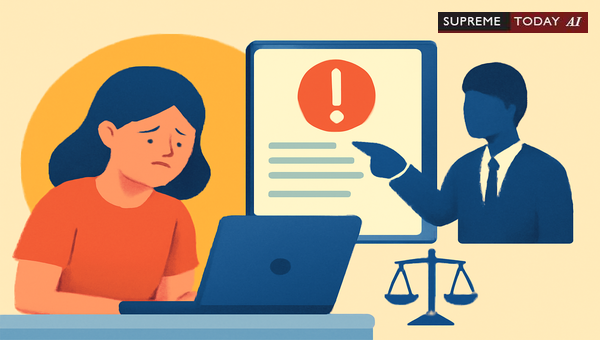
In the realm of education law, few issues strike at the heart of fairness like arbitrary disciplinary actions against students. Imagine a student suddenly barred from classes, exams, or campus activities—with no explanation or chance to defend themselves. This raises a critical question: order debarring student from academic activities without any reason is illegal and it is excessive punishment. Generally speaking, courts in India have consistently ruled that such orders are unlawful, as they flout core principles of natural justice and proportionality. This blog post dives deep into the legal reasoning, landmark cases, and practical guidance for students, parents, and educational institutions.

Understanding the Core Legal Principles

Disciplinary measures in educational settings, such as suspension or debarment, are not absolute powers. They must align with constitutional safeguards and established judicial doctrines. Two pillars stand out:

  • Natural Justice: This demands a fair hearing (audi alteram partem) and reasoned decisions. Without giving the student an opportunity to present their side, any punitive order is arbitrary. As highlighted in key judgments, the petitioner was not given an opportunity for a hearing before expulsion, violating natural justice principles and making the expulsion arbitrary. 2023 0 Supreme(All) 2865
  • Proportionality: Punishments must match the misconduct's severity, factoring in the student's age, background, and circumstances. Excessive penalties, like blanket debarment without justification, shock the judicial conscience. Courts have noted that the penalty of permanent expulsion imposed on him was unduly harsh and shockingly disproportionate. 2023 0 Supreme(All) 2082

Arbitrary debarment deprives students of their fundamental right to education under Article 21 of the Indian Constitution, making it typically illegal.

Violation of Natural Justice: No Hearing, No Validity

The Right to a Fair Hearing

Educational institutions cannot act as judge, jury, and executioner. Before debarring a student from academic activities, they must issue a show-cause notice, conduct an inquiry, and allow representation. Failure to do so renders the order void ab initio.

In one case, suspension orders were struck down because they were passed without adhering to principles of natural justice, and were arbitrary and disproportionate to the alleged misconduct. 2023 0 Supreme(All) 2082 Similarly, courts emphasize that a punitive approach must be balanced with opportunities for rehabilitation and reform. 2023 0 Supreme(All) 2865

From other precedents, this principle holds firm even in exam malpractice cases. While boards may debar candidates for tampering, they must follow due process. In a Maharashtra Board case, debarment was upheld only because petitioners were informed of allegations, appeared before an inquiry officer, and gave explanations—despite lacking a formal notice, no prejudice was found. 1991 0 Supreme(Bom) 466

Lack of Reasons Makes It Arbitrary

Unreasoned orders are a hallmark of caprice. Courts demand transparency: why the debarment? What evidence? Without this, the action is liable to be set aside. As one ruling critiqued, orders without reasons force coerced confessions, undermining fairness. 2023 0 Supreme(All) 2865

Excessive and Disproportionate Punishment

Punishments like debarment can derail a student's future, so courts scrutinize their proportionality. A five-year debarment for mark-sheet discrepancies was quashed for breaching natural justice and lacking proportionality assessment. The court directed a fresh hearing, noting authorities must weigh involvement degree before maximum penalties. 2008 0 Supreme(Guj) 48

In ragging cases, harsh measures like one-year debarment were set aside if overly punitive, stressing punishment should correct, not rebel-rouse. 2023 Supreme(Online)(Mad) 84228

AKSHAY CHAUDHARY & ANR. vs UNIVERSITY OF DELHI & ANR.

Even in university discipline under specific acts, suspensions amounting to debarment required Executive Council approval and show-cause opportunities—bypassing this made orders void. 2002 0 Supreme(Kar) 487

Contrastingly, where process is followed, debarment stands. For SSC exam malpractices covering evaluation stages, the Board's power was affirmed, including debarment, as examination broadly includes all processes. 1991 0 Supreme(Bom) 466

Key takeaway: Excessiveness is judged holistically—student's background, reform potential, and misconduct gravity. 2023 0 Supreme(All) 2082

When Is Debarment Permissible?

Debarment isn't inherently illegal; context matters:- With Due Process: Post-inquiry, for proven serious misconduct like malpractice or ragging, proportionate debarment (e.g., one exam cycle) may hold. Regulations often list it as an option. 1991 0 Supreme(Bom) 466 2018 Supreme(Online)(DEL) 2660- Proportional Limits: Maximum penalties for extreme cases only. A one-year bar might be softened if unintentional, like unknowingly carrying a phone. 2023 Supreme(Online)(Mad) 84228- Institutional Autonomy vs. Fair Play: Universities have discipline powers, but academic excellence doesn't shield injustice. Judicial review ensures balance. 2002 0 Supreme(Kar) 487

However, without reasons or hearing, even minor infractions justify quashing. Post-facto approvals don't cure root flaws. 2007 0 Supreme(Pat) 1596

Practical Recommendations for Institutions and Students

For Educational Bodies

  • Always provide written reasons and a show-cause notice.
  • Conduct impartial inquiries with student representation.
  • Assess proportionality: Consider age, priors, and rehabilitation.
  • Document everything to withstand judicial scrutiny.

For Affected Students

  • Challenge via writ petitions under Article 226 if principles are breached.
  • Gather evidence of no hearing or disproportion.
  • Seek interim relief to resume studies.

Courts urge reform over retribution: Every harsh order results in bitterness... turns a student into an anti-social element.

AKSHAY CHAUDHARY & ANR. vs UNIVERSITY OF DELHI & ANR.

Conclusion: Upholding Fairness in Education

Generally, an order debarring a student from academic activities without reason or hearing is illegal and excessively punitive, violating natural justice and proportionality. As affirmed across cases, orders made without reasons or opportunity violate principles of natural justice and are illegal. 2023 0 Supreme(All) 2865 2023 0 Supreme(All) 2082

Key Takeaways:- Demand due process—it's non-negotiable.- Proportionality prevents injustice.- Institutions: Prioritize fairness to foster growth.- Students: Know your rights; seek legal recourse promptly.

This post provides general insights based on judicial precedents and is not legal advice. Consult a qualified lawyer for specific cases.

References

  1. 2023 0 Supreme(All) 2865Arbitrary expulsion without hearing.
  2. 2023 0 Supreme(All) 2082 – Disproportionate punishment quashed.
  3. 1991 0 Supreme(Bom) 466 – Due process upholds debarment.
  4. 2008 0 Supreme(Guj) 48 – Five-year bar set aside for no hearing.
  5. 2002 0 Supreme(Kar) 487 – Jurisdiction and show-cause required.
  6. 2023 Supreme(Online)(Mad) 84228 – Excessive debarment modified.
#StudentRights, #EducationLaw, #NaturalJustice
Chat Download
Chat Print
Chat R ALL
Landmark
Strategy
Argument
Risk
Chat Voice Bottom Icon
Chat Sent Bottom Icon
SupremeToday Portrait Ad
logo-black

An indispensable Tool for Legal Professionals, Endorsed by Various High Court and Judicial Officers

Please visit our Training & Support
Center or Contact Us for assistance

qr

Scan Me!

India’s Legal research and Law Firm App, Download now!

For Daily Legal Updates, Join us on :

whatsapp-icon Back to top







