


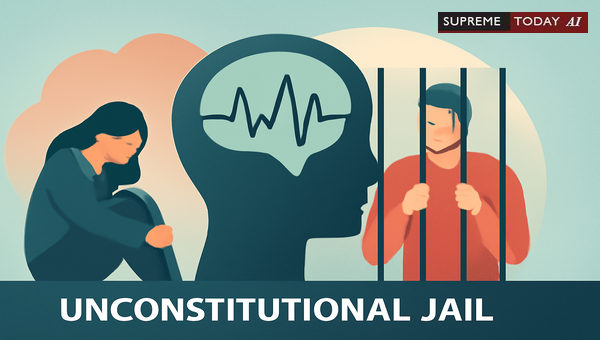
: Landmark Ruling on Mentally Ill Detention
In the realm of human rights and mental health law in India, few cases have had as profound an impact as . This () addressed a grave injustice: the detention of mentally ill individuals in jails without any criminal suspicion or charges. The declared such practices unconstitutional, reinforcing under . But what exactly did the court decide in Sheela Barse v. State of Maharashtra ? Let's dive into this pivotal judgment and its lasting implications.
Background of the Case
Sheela Barse, a journalist and activist, filed a highlighting the plight of mentally ill persons languishing in jails across Maharashtra, particularly in Bombay (now Mumbai). These individuals had not been suspected, accused, charged, or convicted of any offence—yet they were treated as prisoners. 2018 1 Supreme 642 The petition exposed systemic failures in mental health care, where psychiatric patients were housed in prisons due to a lack of proper facilities.
The treated the letter as a , a tool it has since refined to address public welfare issues. This case built on earlier interventions, such as protecting children from jail detention, underscoring the judiciary's role in safeguarding vulnerable groups. 2018 1 Supreme 642 The detention of mentally ill persons without suspicion or criminal charges is unconstitutional, the Court firmly held, violating the right to personal liberty. 2018 1 Supreme 642
Main Legal Findings
The core holding was straightforward yet revolutionary: Jailing non-criminal mentally ill persons is unconstitutional and breaches . Specifically:
- Mentally ill individuals not involved in any criminal proceedings cannot be detained in jails. This contravenes Article 21, which guarantees life and personal liberty.
- Such detention amounts to illegal and inhumane treatment, as prisons are not equipped for psychiatric care. 2018 1 Supreme 642
The judgment emphasized that mental health care must occur in specialized facilities, not correctional institutions. It reinforced the state's duty to protect vulnerable populations, drawing from broader human rights principles.
Court's Directions and Reforms
The issued proactive directives to remedy the issue:
- Upgrade infrastructure: States must improve hospitals, establish psychiatric units, and appoint qualified psychiatrists.
- Integrate services: Mental health care should be part of primary health systems. 2018 1 Supreme 642
- Prevent unlawful detention: Immediate release of non-criminal mentally ill persons from jails, with transfer to appropriate care centers.
These orders exemplified the Court's in PILs, where letters spark systemic change. Related cases, like those protecting children from jails, echo this: children should not be kept in jail and highlights the importance of mental health rights. 2018 1 Supreme 642
The ruling also affirmed the judiciary's power to issue binding directions on executive reforms, even without specific legislation. 2018 1 Supreme 642 In (a connected matter), the Court further addressed against women, showing consistency in protecting the marginalized. 2010 0 Supreme(Ori) 32
Broader Implications and Judicial Activism
This decision had ripple effects:
- Human Rights Reinforcement: It linked mental illness to dignity, influencing later privacy and liberty jurisprudence. For instance, in evolving under Article 21, Sheela Barse is cited alongside cases implying privacy from . 2017 0 Supreme(SC) 772 Over time, the has been able to imply... that several including the emerge out of expressly stated . 2017 0 Supreme(SC) 772
- Evolution: Sheela Barse pioneered PILs for mental health, curbing abuses like indiscriminate filings while encouraging genuine ones. Courts now verify credentials and public interest before entertaining PILs. 2010 0 Supreme(Ori) 32
- Mental Health Policy: Prompted infrastructure upgrades, though challenges persist. Exceptions apply to mentally ill persons suspected of crimes, focusing solely on non-criminals. 1997 1 Supreme 157
Other judgments reference it for systemic reforms, like in SRI JAYANNA Vs THE GENERAL MANAGER ADMIN AND HR - Karnataka_HC_KAHC010028532022: In view of the law laid down by the in 'SHEELA BARSE Vs. highlighting its precedential value.
SRI JAYANNA Vs THE GENERAL MANAGER ADMIN AND HR
Exceptions, Limitations, and Recommendations
While transformative, the ruling has boundaries:
- Applies only to non-suspects; criminal cases follow separate procedures.
- Focuses on infrastructure, not comprehensive mental health law (later addressed by the ).
Recommendations from the judgment remain relevant:- Strict compliance with directives.- Regular inspections to prevent unlawful detentions.- Enact legislation protecting mentally ill rights. 2018 1 Supreme 642
In SRI JAYANNA Vs THE GENERAL MANAGER ADMIN AND HR - Karnataka_NGT_070111000292_, Sheela Barse's withdrawal grounds were deemed untenable, affirming durability.
Modern Relevance and Key Takeaways
Today, amid rising mental health awareness, Sheela Barse reminds us of state obligations. It paved the way for decriminalizing mental illness and prioritizing care over custody. The judgment's legacy endures in privacy rights evolution, where dignity underpins Article 21. 2017 0 Supreme(SC) 772
Key Takeaways:- Non-criminal mentally ill cannot be jailed—release and rehabilitate.- Judiciary can mandate public health reforms.- PILs drive change but must be bona fide. 2010 0 Supreme(Ori) 32
This analysis is for informational purposes only and does not constitute legal advice. Consult a qualified lawyer for specific situations. Laws and interpretations may evolve. References: 2018 1 Supreme 642 1997 1 Supreme 157 2017 0 Supreme(SC) 772 2010 0 Supreme(Ori) 32 SRI JAYANNA Vs THE GENERAL MANAGER ADMIN AND HR












