


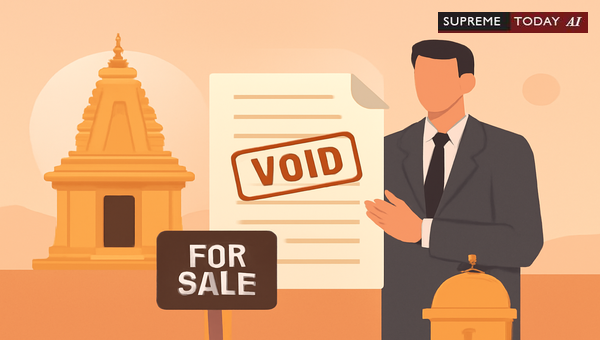
Trustee Sells Temple Property Without Permission: Is the Deed ?
In the management of religious institutions, trustees hold a sacred duty to safeguard temple properties. But what happens when a trustee decides to sell such property without the required approvals? This raises a critical legal question: If the Trustee Sells the Temple Property Without Permission, will the Deed be Considered ?
This blog post delves into the legal framework under the , examines key court precedents, and integrates insights from various legal documents. Whether you're a trustee, devotee, or potential buyer, understanding these principles can prevent costly disputes. Note: This is general information and not specific legal advice—consult a qualified attorney for your situation.
The Mandatory Approval Requirement Under HR & CE Act
At the heart of this issue is , which explicitly states that any sale, exchange, or mortgage of immovable property belonging to a religious institution is unless sanctioned by the Commissioner of HR & CE. This provision acts as a robust safeguard to protect temple assets from unauthorized alienation. 2010 0 Supreme(Mad) 16
The law underscores that trustees are mere custodians, not owners. They must prioritize the temple's enduring interests over personal or short-term gains. Without prior Commissioner approval, no transaction can confer valid title to the buyer. 2022 0 Supreme(Mad) 2010
Court Precedents: Invalidating Unauthorized Sales
Judicial rulings consistently reinforce this statutory mandate. In the landmark case of , the court held that neither the trustee nor the manager has the authority to sell temple property without the Commissioner’s permission. The sale deed executed without such permission was declared . This decision clarifies that no rights can flow from an unauthorized transaction. 2010 0 Supreme(Mad) 16
Similarly, courts have declared sales ab initio—as if they never happened—due to non-compliance. One ruling emphasized: The absence of approval from the Commissioner renders the sale ab initio, meaning it is treated as if it never occurred. 2018 0 Supreme(Mad) 4393 2008 0 Supreme(Mad) 3472
Other cases highlight procedural lapses. For instance, in a matter involving endowment properties, the court noted that permission granted without notice to temple authorities was . 2023 0 Supreme(Mad) 3195 or collusive sales fare no better: The Temple Authorities filed a counter affidavit stating that the Sale Deed was executed in a manner and in with the erstwhile trustee... Such a Sale Deed executed is not binding on the temple. 2024 0 Supreme(Mad) 676
Consequences of Non-Compliance and Trustee Responsibilities
When a trustee bypasses these requirements, the repercussions are severe:- Deed Invalidity: The sale deed is , leaving the property with the temple. Buyers acquire no enforceable rights.- No Possible: Transactions by statute cannot be validated later by any authority. 2018 0 Supreme(Mad) 4393 2008 0 Supreme(Mad) 3472- : Trustees accused of mismanaging assets face scrutiny. As one document states: The Trustees were stated to be mismanaged the property of the Temple and under those circumstances, one cannot expect that the Trustee would execute a deed for suit property. 2020 0 Supreme(Mad) 1020
N. Chandrasekaran VS Arulmighu Thiruvatteeswarar Thirukkoil - Current Civil Cases
Trustees must perform poojas, festivals, and maintenance duties, as seen in cases involving multiple temples on trust land. Unauthorized sales undermine this . 2023 0 Supreme(Mad) 1022
Additional sources echo these themes. of a related Act declares transfers neither necessary nor beneficial to the Temple as , with strict compliance required under . 2011 0 Supreme(Kar) 611 Even power of attorney-based sales without valid title are : Therefore, any registered sale deed executed by the respondent without any valid title over the property become . 2007 0 Supreme(Kar) 58
Insights from Broader Legal Documents
Legal records reveal patterns in unauthorized dealings:- : Claims that property isn't temple-owned often fail if dedication is proven. As I have found on Point No.2 that the dedication was complete, Easwarier and his descendants had no right to deal with the property. 2023 0 Supreme(Mad) 35- : Sales under public trusts require court permission under ; absence renders applications non-maintainable.
- : Properties enjoyed as tenancies don't override temple title, especially without hereditary trustee links. 2021 0 Supreme(Mad) 1454
and fraud are recurrent: Multiple documents note sales executed in a manner or against temple interests, leading to invalidation. 2024 0 Supreme(Mad) 676 2025 0 Supreme(Mad) 2538 2025 0 Supreme(Mad) 3099
Exceptions? Rare and Procedural
Courts rarely uphold sales without approval. Even constructions or long leases on temple land without permission are . 2024 0 Supreme(Mad) 2396 2025 0 Supreme(Mad) 3099 Public notices and objections further scrutiny transfers, ensuring they benefit the temple. 2011 0 Supreme(Kar) 611
Key Takeaways and Recommendations
- For Trustees: Always secure Commissioner or court permission before any alienation. Prioritize temple welfare to avoid personal liability.
- For Buyers/Purchasers: Verify approvals meticulously. Demand proof of sanction to mitigate risks of deeds.
- General Advice: Unauthorized sales protect temple integrity but can lead to protracted litigation. Early compliance prevents disputes.
In summary, under the HR & CE Act and supporting precedents, a trustee selling temple property without permission typically results in a deed. Statutory protections like Section 34(1) and judicial oversight ensure religious endowments remain secure. 2010 0 Supreme(Mad) 16 2022 0 Supreme(Mad) 2010 2018 0 Supreme(Mad) 4402 2008 0 Supreme(Mad) 3472
Disclaimer: This analysis draws from general legal principles and cited documents. Laws vary by jurisdiction, and outcomes depend on specifics. Seek professional legal counsel for tailored advice.
#TemplePropertyLaw #HRCEAct #VoidDeed















